Kitchen Tip of the Week: Making a Grill Pan for the Barbeque

23 06 2009

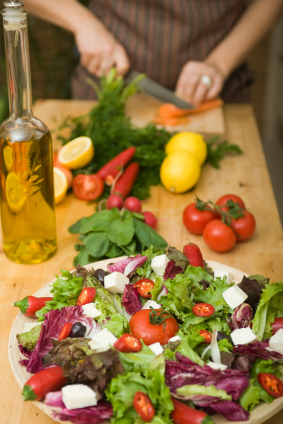
iStock_000007977215XSmallNow that summer has finally arrived, the weather is nice enough that cooking often moves outdoors to the barbeque.  Whether you cook on gas or charcoal, there is nothing like a nice steak or ribs cooked to perfection on the ‘que.  In addition to the usual burgers and meats, I also like to grill vegetables and fish.  To do this, you may need a grill pan so your meal doesn’t wind up falling through the grate and getting charred to a crisp.

Grill pans can usually be found for less than $15 at many hardware stores and supermarkets

Grill pans can usually be found for less than $15 at many hardware stores and supermarkets

Inexpensive grill pans can be found at hardware stores, supermarkets, kitchen stores and places that specialize in barbeque equipment.  They are typically metal with medium sized holes along the bottom so smaller items can cook efficiently and still get a great smokey flavour (particularly if you’re cooking over charcoal).  There are also mesh grill pans available from stores such as Williams Sonoma.  They are a bit more expensive but come in a variety of shapes and sizes.  I like the mesh ‘skillet’ I got last year because it cleans easily and the handle doesn’t get too hot (although I usually use an oven mitt anyway, just to be safe).


A mesh grill pan keeps cut up vegetables from falling through the grate

A mesh grill pan keeps cut up vegetables from falling through the grate

If you don’t have a grill pan and find yourself in a situation where you need one, it’s easy to improvise one for very little cost. Here’s what you’ll need:

  • A disposable aluminum foil pan, any size and shape you choose
  • A sharp pointed knife or scissors
  • Cooking spray or neutral oil
  1. Pierce the  bottom of the foil pan with the tip of your knife. Twist the tip so that it makes a hole about 1/2″ around.  Repeat over the bottom of the pan. Carefully fold any sharp jagged edges under.  
  2. Spray pan with cooking spray or rub a small amount of neutral oil on the bottom of the pan.  Grill items on the barbeque as desired.
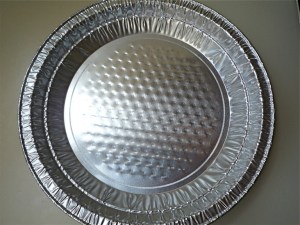
Use a disposable foil pan in any shape and size you wish

Use a disposable foil pan in any shape and size you wish

Use the tip of a sharp knife to pierce the foil pan, twisting it to make the hole bigger
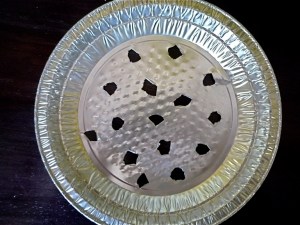
Use the tip of a sharp knife to pierce the foil pan, twisting it to make the hole bigger

The finished product doesn't look fancy but it gets the job done

The finished product doesn't look fancy but it gets the job done

   A word of caution: Be careful when removing the foil pan from the hot grill.  They are flimsier than metal pans so use oven mitts and transfer the pan immediately to a baking sheet or large plate to carry.

Enjoy!

There is a new Kitchen Tip of the Week posted each week.  You can also check out the archives for more tips and tricks.


Tuscan Lemonade

21 06 2009

iStock_000006261201XSmall

Welcome to summer, at long last!  This year the first day of summer also coincides with Father’s Day (and my parents’ 40th wedding anniversary – Happy Anniversary!). Now that the weather is warming up and casual entertaining is moving outdoors, a sweet-tart adult lemonade is the perfect drink to get festivities rolling.

This refreshing version of lemonade draws its inspiration from the idyllic notion of Tuscan afternoons amongst the olive and lemon groves, sipping chilled limoncello. Limoncello is a lemony Italian liqueur that is actually from the Amalfi coast in Southern Italy but it is enjoyed throughout Italy and around the world.  I have to admit to shamelessly adopting the ‘Tuscan’ descriptor to make it sound more appealing.  It’s a bit of  a joke that anything labelled ‘Tuscan’ tends to sell, whether or not it actually has anything to do with Tuscany (As an example, see  ‘Tuscan’ frozen pizzas, or an article from the satirical magazine The Onion: “Area Woman Will Eat Anything with ‘Tuscan’ in Name“).  Call it what you will, this is a great summer sipper that is perfect as an afternoon drink or pre-dinner aperitif.


Dream of the Tuscan countryside while sipping a pre-dinner 'Tuscan' lemonade

Dream of Tuscan sunsets while sipping a pre-dinner adult lemonade

This can be made for 2 people, or served by the pitcher for a crowd – I have given instructions for both.  You can also lighten it up by using sparkling water in place of the prosecco/sparkling wine.

Helpful tip: Use fresh lemon juice instead of the bottled kind if possible.  To get the most juice from a lemon, roll it on the countertop before cutting it open, pressing down on it so the insides break up a bit.  Keep lemons at room temperature instead of in the fridge.

Tuscan Lemonade

Makes 2 drinks – see below for pitcher proportions to serve a crowd

  • 3 oz. limoncello liqueur
  • 2 oz. fresh lemon juice
  • About 200 to 250 ml / approximately 1 cup (8 oz.) prosecco, cava or other inexpensive sparkling wine to top drink (substitute sparkling water for a lighter drink)
  • Ice
  • Lemon slices to garnish
  1. Fill a cocktail shaker with ice and add limoncello and lemon juice.  Shake well and strain into lowball glasses or small wine glasses.  
  2. Top with prosecco/cava/sparkling water and garnish with a lemon slice.  
  3. Serve with a dish of olives, if desired.

To Make a Pitcher of Lemonade:

The proportions for 2 drinks are 3:2:8 so you can adjust it accordingly for a group.  For 8 people, you would need:

  • 12 oz. (1-1/2 cups) limoncello
  • 8 oz. (1 cup) fresh lemon juice
  • 32 oz. (4 cups) sparkling wine or water
  1. Instead of mixing in a cocktail shaker, just mix in a pitcher, add a few ice cubes and chill in the fridge until serving. Cut lemons into slices and toss into the pitcher.  Garnish glasses with lemon slices for serving, if desired.

Cheers and Enjoy!


A refreshing adult lemonade that's perfect for hot summer days.

A refreshing adult lemonade that's perfect for hot summer days.


Radishes

18 06 2009

bundled radish isolatedRadish season is in full swing right now and the vegetable store near my house has a giant basket of them piled high.  They are inexpensive to buy and easy to grow but they’re also a bit of an acquired taste.  Their peppery bite is a bit unusual and sometimes radishes get overlooked because people don’t really know what to do with them.  Typically they get sliced up into a salad but they are also delicious on their own with sea salt or pickled with herbs.  
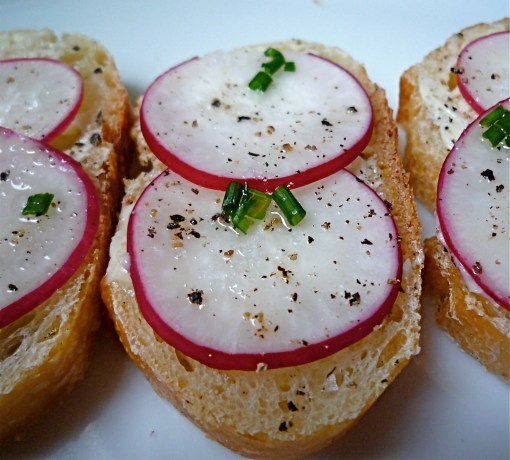
A few weeks ago I was at a pre-dinner reception and one of the appetizers that came around was a platter of buttered bread topped with radish slices and sea salt.  At first I thought it was a bit odd but the flavour was delicious and made me re-think radishes. It’s actually a classic way to serve radishes and it’s so easy that anyone can pull it together in seconds.  Simply slice some good white bread, top each piece with a healthy slather of butter (do NOT use margarine!), top with thinly sliced radishes and sprinkle with sea salt.  Garnish with chopped choves and fresh ground pepper if desired.


A simple appetizer of sliced radishes on bread with butter and sea salt is classic and delicious

A simple appetizer of sliced radishes on bread with butter and sea salt is classic and delicious

Another way to enjoy radishes is to pickle them.  Their sweet/sour/peppery bite makes them an excellent addition to sandwiches, salads or even eaten on their own. This only takes a few minutes to pull together and is a nice change from the usual cucumber based pickles.

Pickled Radishes

Yields about 1-1/2 cups

(VEGETARIAN)

  • 8 large or 16 small radishes (about 2 cups when sliced)
  • 1/4 cup sugar
  • 1/2 cup white wine vinegar
  • 2 Tablespoons fresh lemon juice
  • 2 sprigs fresh thyme
  • 1 teaspoon finely chopped chives (plus extra for garnish, if desired)
  • 1/2 teaspoon coarsely ground black pepper (plus extra for garnish, if desired)
  • Sea salt, to sprinkle over finished pickles
  1. Trim roots and greens from radishes.  Using a sharp knife or mandolin, cut the radishes into thin slices about 1/8″ thick.  Set aside.
  2. In a medium saucepan, add sugar, vinegar, lemon juice, thyme, chives and pepper.  Cover and bring to a gentle simmer over medium-high heat.
  3. Add radish slices and stir to ensure all slices are immersed in liquid.  Reduce heat to medium, cover and simmer for 3 minutes. Remove pan from heat and set aside to cool for about 15 minutes.
  4. After 15 minutes, drain the liquid from the radishes, remove thyme sprigs and put into a bowl to cool further.  Once cooled, sprinkle with sea salt and garnish with chopped chives and black pepper as desired.  Use as you would regular pickles – on sandwiches, salads, etc.  Radishes will keep covered in the fridge for a few days.

Bon Appétit and Enjoy!


Pickled radishes are great on sandwiches or in salads

Pickled radishes are great on sandwiches or in salads


Farmer’s Market Report – June 17, 2009

17 06 2009

iStock_000003650280XSmall

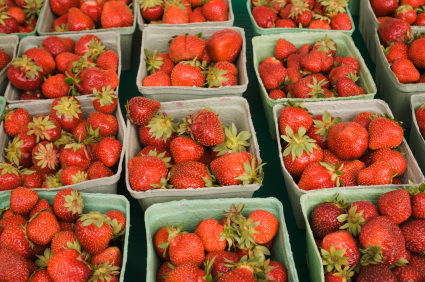
I visited a local farmer’s market this morning for the first time this season.  Of course, where I live (Southern Ontario), the growing season is just getting under way so the options were still fairly limited.  The weather has been unseasonably cool this year so some fruits and vegetables may be a bit behind.  However, I was pleased to see lots of strawberries and asparagus as well as radishes, green onions, spinach, baby cucumbers, peas, fresh herbs and rhubarb.  The fun thing about visiting the market on a regular basis is that the offerings change from week to week and get better as the summer progresses.  I like to select what looks good and then decide what to do with them when I get home.  Some ideas I had for this week’s purchases include:

For more ideas, check out the list of fruits and vegetables listed under ‘Categories’ on the right side of the screen.  Clicking on ‘Rhubarb’, for example, will give you all the rhubarb recipes on the site.

Enjoy!

Trish


Kitchen Tip of the Week – Improvising a Trivet

10 06 2009


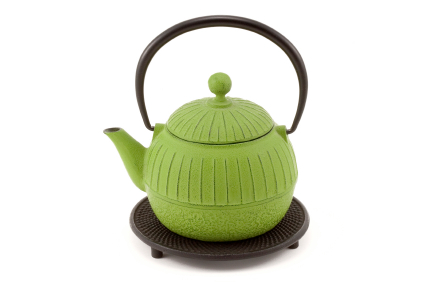
Metal or ceramic trivets protect your counters and tabletop from hot pots but you can improvise one in a pinch

Metal or ceramic trivets protect your counters and tabletop from hot pots but you can improvise one in a pinch

Many kitchens these days have gorgeous kitchen countertops made from marble, slate, granite or engineered stone.  While they are tough, they are not indestructible so it’s important to take care of them.  This means not putting hot pots and dishes down without some sort of barrier between the pot bottom and the counter.  Trivets are heat-proof ‘coasters’ that you can set a pot on so it doesn’t damage the countertop or wood furniture.  They are generally inexpensive and readily available at kitchen stores or grocery stores.  However, if you don’t have one or do not have enough to accommodate all of your hot pots and casserole dishes, you can improvise a trivet very simply.

To Improvise a Trivet:

1.  Unroll 2 feet (24″ or 60 cm) of aluminum foil and cut along the ‘teeth’ of the box.

p1000416

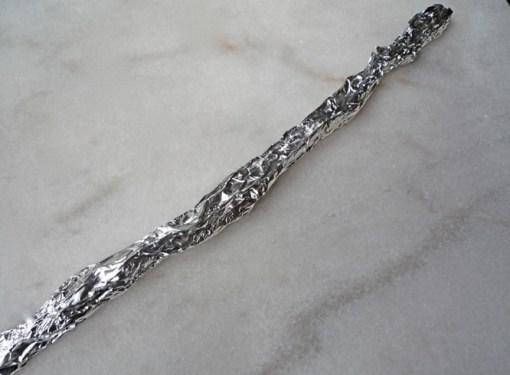
2. Roll the foil into a ‘snake’. 

p1000419

3. Bend the foil tube into a coil.

p1000426

4.  Place hot pots or pans on the coil, pressing down lightly so the foil conforms to the shape of the pot and is sturdy.  Et voila-instant trivet!

p1000428


Slow Food

3 06 2009


The Slow Food movement encourages taking time to cook and enjoy meals

The Slow Food movement encourages taking the time to cook and enjoy meals

I recently became a member of Slow Food International.  Slow Food is the name of a non-profit organization founded in 1986 by a man named Carlo Petrini in Bra, Italy. It started as a reaction to the opening of a McDonald’s near Rome’s famous Spanish Steps but has grown to a worldwide following of more than 100,000 members in 132 countries.  Basically, Slow Food is the opposite of fast food – it advocates taking time to cook and enjoy meals rather than gulping down a hamburger and fries on the go. There is also an emphasis on where food comes from, how it tastes and how our choices impact the world. I’m not a humorless militant about it (and yes, I do eat fast food on occasion) but I think that many of us have become a little disconnected from the idea of savouring and enjoying our meals the way many cultures do.  

I was particularly impressed (and somewhat envious) when traveling in Italy a couple of years ago and observed Italians on holiday.  My husband and I were visiting a resort town on the Tuscan coast and it was Ferragosto (August 15th), a major national holiday.  We spent the morning lounging on the beach at a local beach club but at lunchtime the lounge chairs emptied and everyone gathered to eat.  As we made our way to a nearby restaurant we watched Italian families seated at long tables heaping with bowls of homemade pastas, fish, vegetables, fruit and wine.  They took a couple of hours to enjoy their meal together before returning to the beach for the rest of the afternoon.  To me, this was a far more appealing way to enjoy a meal than shoveling in dinner while in front of the tv (which happens more than I’d like to admit). Granted, the Italian scenario was an ideal notion (on a holiday, no less) but even if we take the time now and again for a slow meal,  it’s a step in the right direction.  

If you’re interested in learning more about Slow Food, you can check out their website: www.slowfood.com. I’m not going to lie – the membership is a bit expensive and it may not be for everyone but I think it’s worth embracing at least a few of the ideas. After all, we have to eat every single day so we might as well enjoy it!

Ciao,

Trish


Viareggio, Italy - August 15th, 2008

Viareggio, Italy - August 15th, 2007


Kitchen Tip of the Week – Anchoring Serving Bowls

2 06 2009

iStock_000006218581XSmall

Last year I had started doing a weekly post on Kitchen Tips (search ‘Kitchen Tip of the Week’ to view archives).  I stopped doing them in November because frankly, no one was reading them.  However, my readership has grown a great deal since them (May 2009 was my best month to date – yay!) so I’ve decided to start featuring a weekly tip again.  So if you’re interested in learning some new tricks and advice for the kitchen, please check back each week.

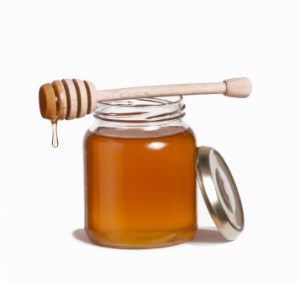
This week’s kitchen tip can help solve a common dilemma when entertaining guests. Have you ever prepared a platter of hors d’oeuvres with a side bowl of dipping sauce, only to have the smaller plate slide around as you’re transporting or serving the food? To prevent this, use a dab of honey (about 1/2 to 3/4 teaspoon) under the smaller bowl to ‘glue’ it to the larger serving platter.  Et voila!  No more sliding around and spilling.

(Source: How to Break an Egg: 1453 Kitchen Tips, Food Fixes, Emergency Substitutions and Handy Techniques, Taunton Press)


A small amount of honey can be used to 'glue' platters together for easy entertaining

A small amount of honey can be used to 'glue' platters together for easy entertaining


New Feature: Getting Inspired

28 05 2009

iStock_000006963987XSmall

Have you ever been in a cooking slump and lost all inspiration in the kitchen?  If you’re like most people (including me), you have. I am also guilty on occasion of making my favourite dishes over and over instead of branching out and trying new things. Even the most passionate and innovative cooks can run low on ideas and need something to spark their creativity.  

I’ve prepared a list of my favourite ways to break out of a creative rut: Getting Inspired.  I link to some of my favourite websites, newspapers, restaurants and tv shows.  Perhaps some of these will be helpful and inspirational to you as well!

The page can be found be clicking the link above or on the menu under Pages at the top right of the screen.  Unfortunately, it doesn’t show up on the heading bar due to lack of space.

Enjoy!

Trish


Asparagus Orzo

27 05 2009


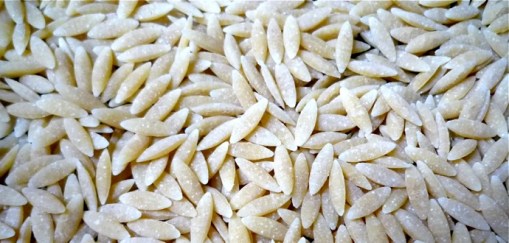
Uncooked orzo pasta

Uncooked orzo pasta

Ah, asparagus!  It’s possibly my favourite vegetable and where I live, it’s season is short.  As a result, I eat it almost every day when it’s available.  This, of course, leads my poor husband to comment at dinnertime:  ‘Oh, we’re having asparagus… again…” Luckily, it’s very versatile and can be used in everything from quiches to stir-fries and lasagna.  This simple orzo recipe makes a great spring side dish that goes particularly well with grilled or roasted chicken.

Orzo is a tiny, rice shaped pasta (see photo, above).  The orzo pieces are slightly larger and flatter than rice and are made from durum wheat.  I’ve had trouble finding it on occasion until I realized that some stores stock it with the rice instead of in the pasta section.  You can substitute another small pasta or rice for the orzo but may have to adjust the butter and seasonings.

Whenever I create pasta recipes, I always debate about how many people it serves because North Americans usually eat larger portions of pasta than Italians.  We also tend to eat pasta as a side dish or main course as opposed to a small starter course as the Italians do.  In this case, I divided the recipe into half-cup servings.  The portion size can be adjusted if the orzo is being served as a starter, side dish or main course.

Helpful Tip: Zest the lemon before cutting it open to juice.  You can always add more lemon to taste – I’ve added just enough to brighten up the orzo without making it too lemony.

Asparagus Orzo

Makes approximately 8 half-cup servings

(VEGETARIAN)

  • 1 lb. (454 g) asparagus of medium thickness (equals about 3 cups of cut up asparagus)
  • 1-1/2 cups uncooked orzo
  • 2 Tablespoons butter
  • 1-1/2 teaspoons lemon juice
  • 1/2 teaspoon (packed) grated lemon zest
  • 1/2 cup (packed) grated fresh parmesan cheese + extra for garnish
  • Salt and pepper, to taste
  1. Trim any woody ends from the asparagus spears and discard.  Cut asparagus into lengths about 1″ long.  Set aside.
  2. Bring a large saucepan of salted water to a boil.  Add orzo.  Cook for two minutes and add asparagus pieces.  Continue to cook for another 5 minutes or until the orzo and asparagus are just tender.
  3. Drain orzo and asparagus mixture and return to pot.  Add butter, lemon juice, lemon zest and grated parmesan.  Stir until thoroughly combined and the butter and parmesan have melted.  
  4. Season with salt and pepper.  Grate extra parmesan over each serving if desired.

Bon Appétit and Enjoy! 

p1000377_2


Happy Anniversary!

27 05 2009

iStock_000005804050XSmall

A year ago today I launched The Seasonal Gourmet.  I was full of ideas but had no previous experience doing anything like this.  It has been a lot of fun and I’ve enjoyed every minute of it.  I’ve also been grateful to everyone for their feedback and support.  In the coming year I hope to bring you more great recipes and information about seasonal eating.  I also have a few new ideas that I might be trying out so stay tuned!  

I’d like to thank everyone who has been supportive of me, from trying my ‘experimental’ recipes to giving me ideas and inspiring me.  A very special thanks to Ronnie, Jenn, Allan and Judi for your encouragement. 

Meanwhile, to celebrate The Seasonal Gourmet’s first year, here are the top five most popular posts from the last 12 months:

Top Five Most Popular Posts – May 2008 to May 2009

5.  Peach Chutney

This summery condiment was first posted last August and has gotten a steady stream of hits ever since.  It’s a great accompaniment to grilled meats so give it a try once peaches come back into season!

iStock_000006589976XSmall


4.  Caprese Salad

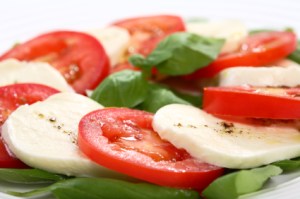
Another popular summer dish, my post on caprese salad was more of a guideline to presenting caprese salad in creative ways than an actual recipe.  A well-made insalata caprese with in-season tomatoes is a classic for a reason – it’s simple and delicious.

iStock_000008147975XSmall

3.  Sausage and Mushroom Lasagna

I posted this lasagna in November and it proved popular through the winter when people were craving hearty comfort food.  It’s a bit heavy for summer but do try it once the weather turns cool again – it’s divine.

P1020127

2. Leek and Ham Tart

This savoury pie is a great dish at any time of the day, from breakfast to dinner. Served with a salad or fresh fruit, it’s an elegant dish that can be made in advance so it’s ideal for casual brunches.

P1010480


And the number one most popular post this year…..

1.  Braised Short Ribs

Hands down, this was the runaway hit recipe of the past year by a 2 to 1 margin. And with good reason – the ribs are absolutely delicious.  It’s ideal for winter entertaining because it can be made in advance and actually tastes even better the second day.

P1010861

Thanks for your support and here’s looking forward to another delicious year!

Cheers,

Trish