Corn Scallop

15 10 2008

Corn scallop is classic comfort food.  I recently made it for Thanksgiving dinner and it was a hit.  It’s quick and easy to prepare and can be assembled in advance and baked when guests arrive, allowing you to focus on other last-minute tasks.  I was fortunate enough to find some local corn (likely the very last of the season) but you can easily use canned or frozen corn if it’s no longer available fresh in your area.  It’s an appropriate dish for both summer and early fall.

This makes quite a bit of casserole, about enough for 10 as a side dish, assuming there will be other vegetables and side dishes as well.

Corn Scallop

Makes about 10 servings as a side dish

(VEGETARIAN)

  • 14 fl. oz. (398 ml) can creamed corn
  • 2 cups corn (about 3 cobs of roasted, grilled or boiled corn)
  • 1/2 cup diced red pepper 
  • 2 eggs
  • 1 cup evaporated milk (NOT sweetened condensed milk)
  • 2 Tablespoons butter, melted
  • 1/2 medium onion, finely diced
  • 2 cups crushed unsalted soda crackers (1 sleeve of crackers)
  • 1 cup grated swiss cheese (Emmental, gruyere, etc)
  1. Preheat oven to 350 degrees Fahrenheit.
  2. Butter a casserole dish and set aside.  In a large mixing bowl, add all ingredients and stir until well combined.
  3. Pour mixture into casserole dish and bake for 45 minutes to 50 minutes or until cheese is bubbling and it’s starting to brown.  
Variations:
  • You could add some chopped jalapenos or other hot peppers to spice it up a little.  
  • If you’re serving non-vegetarians, it can be adapted into a heartier main course by adding some chopped ham or bacon.

Bon Appetit and Enjoy!

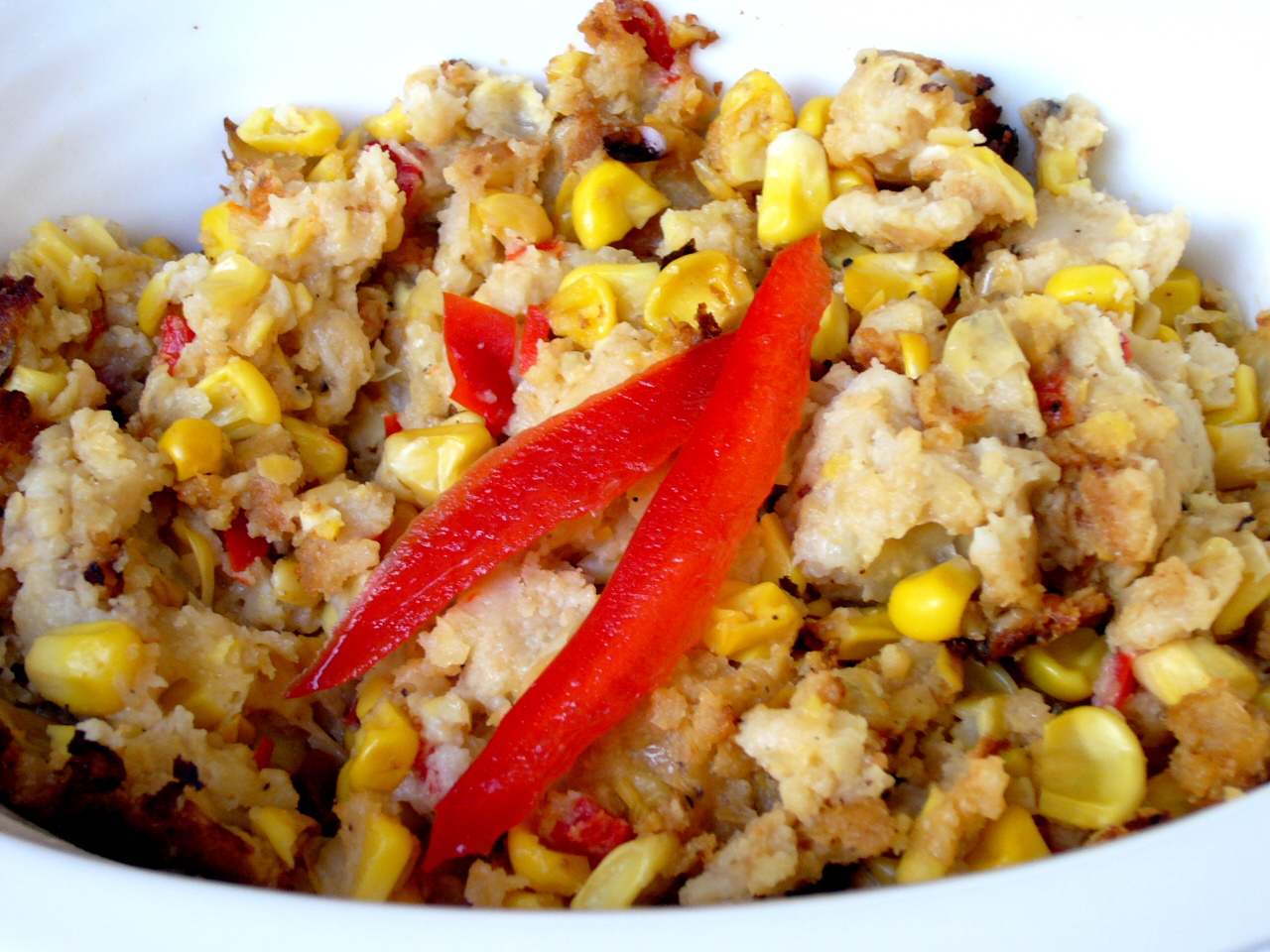
Corn Scallop.  Not the most elegant looking dish but tasty nonetheless!

Corn Scallop. Not the most elegant looking dish but tasty nonetheless!


Kitchen Tip of the Week – Melting Chocolate

14 10 2008

It’s the day after Thanksgiving and I’m in recovery mode from a weekend of cooking and good eating so I’m keeping things simple. Today’s tip is one that can be used for baking and dessert preparation throughout the year: melting chocolate.  Plus, I’m including a delicious recipe for chocolate pudding that is low in fat! Or at least lower in fat than regular pudding, which usually calls for eggs and cream.  Cornstarch is the secret ingredient, making the pudding taste thick and rich with out excessive amounts of fat.  Perfect for those of us who had too much turkey and pumpkin pie over the weekend!

Tips for Melting Chocolate

Chocolate will burn very easily if exposed directly to heat so you can’t just throw it in a pot and turn up the burner.  It has to be melted with indirect heat, which can be done in the microwave or with a double boiler.  Chopping the chocolate first helps it melt faster.

Microwave Method: Chop your chocolate into chunks and put into a microwave safe bowl.  On medium power (5), heat for 1 minute.  Check chocolate and stir.  Return to microwave and heat on medium for another minute and check again.  Repeat until chocolate is shiny and melted (the length of time will depend on how much chocolate you have and how powerful your microwave is).  Note: it is possible to burn chocolate in the microwave so don’t just put it in for 5 minutes without checking on it!

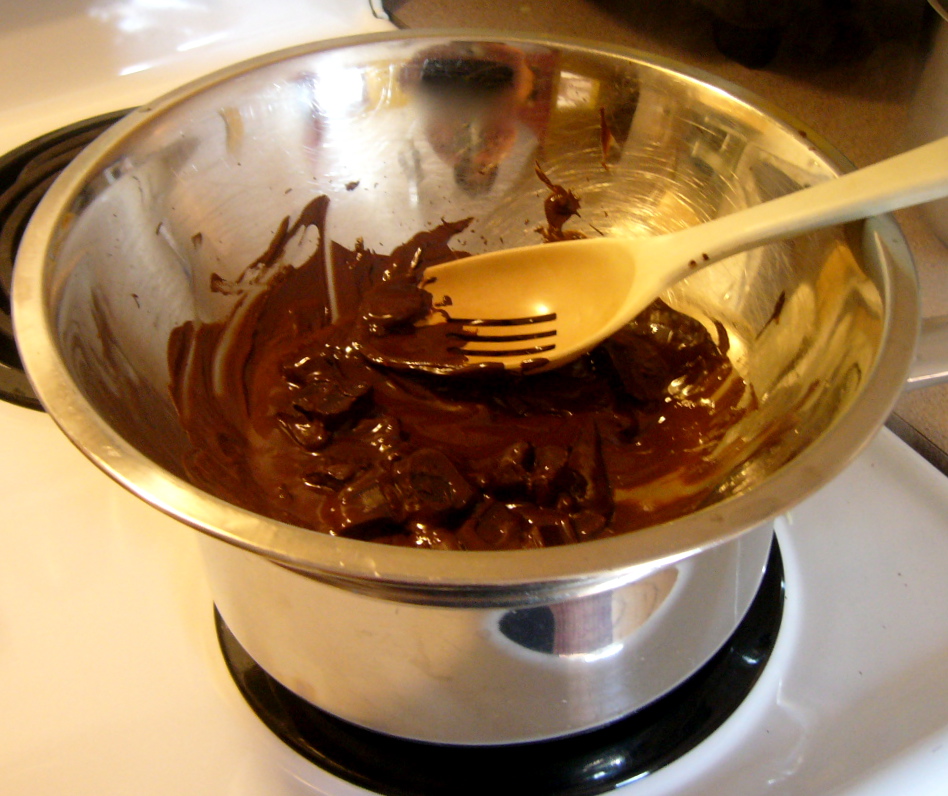
Stove-top Method: If you have a double-boiler pot, that’s great but it’s not necessary. You can easily improvise using a regular saucepan and a metal mixing bowl.  Pour about 2-1/2″ of water into the saucepan and heat until it is simmering gently (not a hard boil).  Place a metal mixing bowl over the boiling water and put your chopped chocolate into the bowl.  Make sure the bowl isn’t touching the water. Stir chocolate until it melts, holding the bowl steady if necessary (wear an oven mitt – the bowl may get hot!). Watch the steam – water will ruin your melted chocolate (see below).

An improvised double-boiler, using a saucepan and metal bowl

An improvised double-boiler, using a saucepan and metal bowl

You can use your favourite chocolate for melting but avoid using chocolate chips if you want your chocolate to melt smoothly. They are designed to keep their shape while baking in cookies and contain an ingredient to keep them from melting completely.

Make sure no water gets into your chocolate as it’s melting.  It will ‘seize’, meaning it will turn lumpy and grainy.  If water does accidentally get into the chocolate, you can try to save it by adding vegetable oil or vegetable shortening to it and stirring until combined.

‘Tempering’ the chocolate is a technique that prepares the chocolate for dipping or coating items so it retains a gloss.  For detailed instructions on tempering chocolate, check out Tempering Instructions from Godiva Chocolatier.

Chocolate Pudding

This is a great alternative for people who can’t eat eggs, as well as anyone who wants to avoid the high fat content in traditional custard-based puddings.  It’s so creamy and chocolate-y, you won’t even miss the eggs and cream!

Makes 4 servings

  • 1/2 cup sugar
  • 2/3 cup cocoa powder
  • 3 Tablespoons cornstarch
  • 1 teaspoon flour
  • Pinch of salt
  • 2 cups milk (low fat is ok)
  • 1 Tablespoon strong coffee OR coffee liqueur such as Kahlua
  • 1/2 cup melted chocolate (about 5 oz. before melting)
  • 1 teaspoon vanilla
  • 1 teaspoon butter
  1. In a large saucepan on medium heat, whisk together sugar, cocoa powder, cornstarch, flour and salt with 1 cup of the milk.  Whisk hard until all of the cocoa powder has dissolved.
  2. Stir in the remaining 1 cup of milk, coffee, melted chocolate and vanilla.  Whisk briskly so the melted chocolate stays smooth and is thoroughly incorporated.
  3. Simmer the pudding mixture on medium-high heat, stirring continuously until it becomes quite thick, about 5 minutes.  At the last minute, whisk in the butter. Pour pudding into individual cups (see below for serving suggestions).  Refrigerate for at least 2 hours before serving.

Serving suggestions:

  • Pour into individual martini glasses, wine glasses or other attractive glassware.
  • Pour into small bowls or ramekins.
  • You can layer pudding with crumbled cookies in a glass serving dish for an attractive presentation.
  • Sprinkle with chopped nuts, shaved white chocolate, your favourite fruit or berries, a dollop of whipped cream, etc.
  • Instead of coffee or coffee-liqueur, use orange-flavoured liqueur such as Grand Marnier.  Garnish with a tangerine or clementine slice.

Bon Appetit and Enjoy!

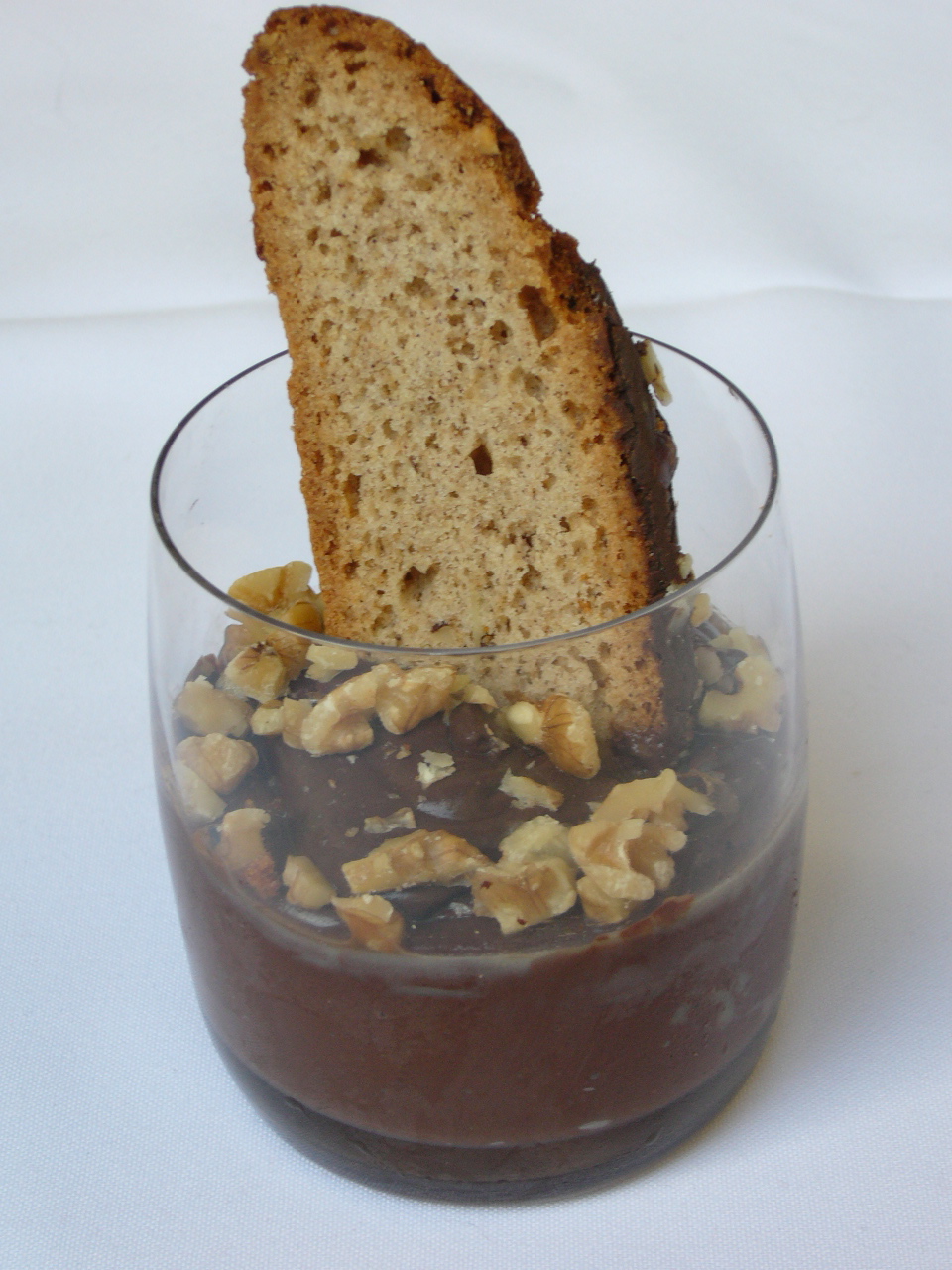
Chocolate pudding garnished with chopped nuts and hazelnut biscotti

Chocolate pudding garnished with chopped nuts and hazelnut biscotti


Cranberry Sauce

14 10 2008

As promised, I’m featuring a few of my Thanksgiving recipes this week. Cranberry sauce is a must for the holidays and making it from fresh cranberries barely takes any more effort than opening a can of jellied sauce. The results are definitely worth it!  Fresh cranberries are available at most grocery stores around Thanksgiving and Christmas (they usually come in small bags) but you can use frozen berries if you can’t find fresh.  Any leftover fresh cranberries can be frozen.

Cranberries have a lot of natural pectin (the component that makes jam thick) so you don’t have to add any.  Just cook them down and the sauce will thicken easily.  If you use frozen cranberries, they will take a bit longer so adjust your cooking time accordingly.

Cranberry Sauce

Makes about 1 cup sauce (can easily be doubled)

(VEGETARIAN)

  • 1-1/2 cups fresh OR frozen cranberries
  • 1/2 cup water
  • 1/4 cup + 2 Tablespoons sugar
  • 2 teaspoons orange juice
  • 1/2 teaspoon finely grated orange peel (optional)
  1. In a medium saucepan, combine all ingredients.  Heat on medium high.  Stir to ensure all ingredients are combined and the sugar dissolves.
  2. Let simmer on medium heat until the cranberry skins begin to crack, about 5 minutes (it will take longer if cranberries are frozen).  Mash cranberries with a potato masher until cranberries are mashed up.
  3. Continue to simmer for another few minutes, until sauce has begun to thicken.  Cool and serve.   Can be made in advance and stored in the fridge.
Bon Appetit and Enjoy!
Cranberry Sauce

Cranberry sauce made with fresh cranberries


Happy (Canadian) Thanksgiving!

13 10 2008


My Thanksgiving turkey - 2008

My Thanksgiving turkey - 2008

To all my Canadian friends and family – Happy Thanksgiving!  I prepared a big feast yesterday for my husband Allan, his brother Dan, Dan’s wife Jenn and my mother-in-law Joyce.  I used it as an opportunity to experiment with a few recipe ideas I’ve had (most of which worked out well, which I’m sure was a relief for everyone!).  We had turkey, of course, as well as mashed potatoes, gravy, cranberry sauce, corn scallop, butternut squash gratin, lemon green beans, pumpkin pie and an apple caramel tart. We paired the meal with some Ontario wines, including the 2007 Twisted from Flatrock Cellars in the Niagara wine region and a By Chadsey’s Cairns riesling from Prince Edward County.  Dessert was accompanied by an iced apple cider from County Cider in Waupoos.  


The view from Flatrock Cellars, Jordan, Ontario - October 11, 2008

The view from Flatrock Cellars, Jordan, Ontario - October 11, 2008

I will be posting some of the recipes in coming days, with the exception of the butternut squash gratin, which requires further testing.  It tasted ok, but had some texture issues so it will go back to the drawing board (or kitchen, as it so happens). Many thanks to Jenn for her assistance in the kitchen yesterday and to everyone else for being a good sport and putting up with my culinary experiments!  

I have a lot to be thankful for in my life, including great friends and family so it’s nice to take the time to stop and reflect upon that.

Ciao, best wishes and bon appetit!

Trish


Kitchen Tip of the Week – Garlic 101

7 10 2008

Garlic is one of my favourite recipe additions.  I even own a couple of cookbooks dedicated to garlic, including ‘Garlic, Garlic, Garlic’ by Linda and Fred Griffith.  Garlic is very versatile:  from roasting it to bring out its sweetness to rubbing it raw on bruschetta toasts, it can be used in an endless number of dishes. There are even dessert recipes that use garlic, although they’re a bit extreme for my tastes!

Garlic is closely related to the onion family.  It is used around the world for both culinary and medicinal purposes.  China is the world’s largest producer of garlic, growing over 20 billion pounds a year, which they export worldwide.  Garlic is also grown in Canada and the United States and can often be found at farmer’s markets in the summer.  It keeps well in a cool, dry, open place but do not refrigerate or freeze it.  I keep mine in a basket in the kitchen so it’s always accessible.

Here are some garlic facts and tips you can use in your kitchen:

Garlic 101

To separate a head of garlic into cloves, peel off the papery outer layers and smash the top of the garlic head with the heel of your hand.  It should separate, allowing you to pull apart the individual cloves.

***

To peel the cloves, use the flat side of a large knife to lightly smash the side of the clove.  The skin will easily peel away.  The fresher the garlic is, the more the skin will stick to the cloves.

***

To chop garlic, peel the clove.  Using a sharp knife, cut into thin slivers and then chop up the slivers.

***

A microplane grater can be used if you need to mince garlic finely.  Just run a peeled clove over the microplane and put the grated garlic into your dish.

***

Another way to mince garlic is as follows: Put a pinch of salt on a cutting board. Place a peeled garlic clove on its side and smash hard with the side of a large chef’s knife.  Use the knife to chop it finely.

***

Avoid using a garlic press if possible.  A lot of people swear they change the taste of garlic.  This is debatable but they are definitely a pain to clean.  It’s much easier to use a knife or microplane.

***

Avoid pre-minced garlic that comes in a jar.  Compared to fresh garlic, it’s very expensive and will not have the same pungent flavour as fresh.  Likewise, don’t use garlic powder or salt – fresh is better!

***

If you’re following a recipe that calls for garlic powder or garlic salt, you can make the following substitutions:  1/8 teaspoon garlic powder = 1 small fresh garlic clove.  1/2 teaspoon garlic salt = 1 small fresh garlic clove.  

***

Garlic burns very easily which can ruin a dish.  Watch it very carefully when sauteeing.  If I’m also browning onions, celery, etc.  I will add the garlic toward the end.

***

It’s difficult to get garlic off your breath but chewing on a sprig of parsley can help.  There are also parsley oil capsules you can take that will help with garlic breath.  

***

To get garlic smells off your fingers after working with garlic, rub your fingers on something stainless steel, such as the blade of a knife.  You can buy stainless steel ‘stones’ that have been marketed specifically for this use but you can save yourself some money by using what you have on hand.

***

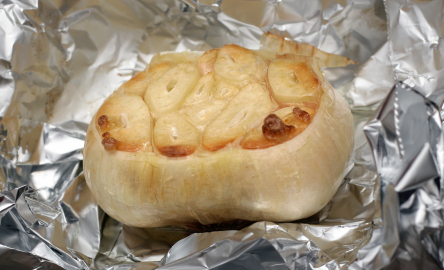
Roasting garlic mellows and sweetens its flavour.  It can be used in a number of ways, such as spreading on fresh bread, mixing with mashed potatoes and mixing with mayonnaise to make a delicious spread for sandwiches.

Roasted Garlic

  • Whole heads of garlic (as many as you need)
  • 1 Tablespoon neutral oil OR olive oil per garlic head
  1. Preheat oven to 325 degrees Fahrenheit.
  2. Peel the outer layer off the garlic heads.  Slice the top 1/4 off each head, revealing the cloves.  Place them in an oven-proof dish and drizzle each head of garlic with oil. 
  3. Cover the dish with a lid or foil and roast for about 1 hour.  Check on after and hour and spoon any juices over the cloves.  Return to the oven and bake for another 20 to 30 minutes or until the cloves are tender. 
  4. Let cool and squeeze garlic out of the cloves and use as desired.


Bon Appetit and Enjoy!


Kitchen Tip of the Week – How to Cook Perfect Pasta

30 09 2008

Dried pasta is an excellent option for dinner: it’s quick, delicious, versatile and very economical.  It has suffered from a bit of a bad reputation in recent years as people steered away from carbohydrates in favour of low-carb, meat-heavy diets but in moderation, pasta can be incorporated into most diets.  There are also high fibre pastas made with whole wheat and grains that are a welcome option for many people.

The key to a successful pasta dinner is to cook the noodles properly.  At the Italian table, the pasta is the star, not the sauce.  The pasta should not be drowned out in sauce – it should merely be dressed with enough to compliment it.  Therefore, it is important that we cook the pasta properly.

How to Cook Perfect Pasta

The following pointers apply to dried pasta (spaghetti, penne, etc), as opposed to fresh. Fresh pasta has a much shorter cooking time and the texture is quite different from dried.

What You’ll Need:

  • Dried pasta – any type, such as penne, spaghetti, bucatini, etc.  See below for tips on what types of pasta to use.
  • Lots of water
  • Salt
  • A large stockpot with a cover
  • A strainer
  • Large spoon
  • Kitchen timer

Select your pasta.  There are literally hundreds of kinds of dried pastas available and they are all made of the same basic ingredients (flour/durum semolina, water and sometimes egg).  The shape you choose will depend on what type of sauce you’re serving with it.  For example, chunky sauces work well with pastas that can catch the sauce, such as rigatoni or orecchiette.  For a creamy sauce, you might want to choose a penne or macaroni so the creamy goodness gets inside the tubes of pasta.  For more information about pasta shapes, check out The National Pasta Association’s website.

 
Add water to stockpot.  The amount you will need will depend upon how much pasta you’re using.  However, it’s important that you use enough.  Some guidelines are as follows:

  • For each pound of pasta, use 4 to 6 quarts of water.  The rough metric translation is about 4 to 5-1/2 litres of water per 450 grams of pasta.  Adjust amounts according to the amount of pasta you are cooking.

Salt the water – generously.  Salt will help flavour the pasta.  Again, the amount of salt will depend upon how much pasta you’re making but the water should be almost as salty as seawater.  For the proportions given above (6 to 8 quarts) add about 2 Tablespoons of salt.  

 
Don’t add any oil to the water!  This is a kitchen myth that persists.  There is a belief that if you add oil, it will keep the pasta from sticking together.  The truth is, if you use a pot that is the correct size and enough water, the pasta shouldn’t stick together.  Adding oil to the water will only make the pasta oily, keeping any sauces from sticking to it.  

 
Bring water to boil on high heat with the stockpot lid on.

 
Add pasta to boiling water and turn down heat to medium-high so it doesn’t boil over. It should still be a gentle boil.  Stir pasta to separate it.  If you’re making long pasta, such as spaghetti, it will cook down so it’s fully submerged in about 30 seconds.  Cook with the lid off.

 
Using the cooking time on the package as a guideline, set your kitchen timer for 2 minutes less than the recommended time (which is usually between 9 and 13 minutes). Test a piece of pasta at this point. Properly cooked pasta is called al dente, which is Italian for ‘to the tooth’.  This means that the pasta has a little bit of a bite in the middle of it.  It’s not crunchy but it’s not completely limp and soggy either.  If it is not ready, cook for another minute and test again.  Cook until desired tenderness.

 
Once pasta is ready, carefully scoop out about 1/4 cup of the cooking water and set aside.  Add a cup of cold water to the pasta pot to stop the water from boiling and turn off heat.

 
Carefully drain pasta into a strainer in the sink.  Do not rinse!  (Note: if you are making a cold pasta salad, it’s ok to rinse the pasta to stop the cooking and cool the pasta for dressing).


In a separate pan, heat your sauce.  Add pasta and a few spoonfuls of the pasta cooking water you set aside. The cooking water contains starch and will help pull your sauce together.  Pour pasta into sauce and toss to coat.  Serve immediately. Enjoy!


Welcome to Fall!

24 09 2008

In Canada, there are four very distinct seasons.  Almost everyone loves summer and winter has its charms but without a doubt, my favourite season is fall.  The crisp weather, colourful foliage and an excuse to shop for a new wardrobe are all great reasons to enjoy autumn but let’s not forget about the food!  Hearty soups, rich braises, spiced cider and pumpkin treats are only some of the culinary delights fall has to offer. Many of the farmer’s markets will be running for another month or so, their stalls overflowing with pumpkins, squash and apples.  Thanksgiving offers a chance to make your favourite autumn dishes such as pumpkin pie and juicy herb-roasted turkey. And of course, there’s Hallowe’en, which falls on a Friday this year so it’s a great excuse for the adults to get together and celebrate the season with spooky cocktails and snacks.  

So get ready for fall and check back for lots of great autumn recipes and techniques. To get things started for the season, here is a quick recipe for a cider spice mix so you can whip up a cup of hot apple cider to enjoy after a brisk autumn walk or an afternoon of raking leaves.  It can be used with apple cider or, as Christmas nears, hot cranberry juice.

Spiced Cider

(VEGETARIAN)

Makes 4 cups of cider – can easily be doubled

Spice Packet:

  • 2 cinnamon sticks, broken in half + 4 whole sticks for garnish
  • 6 whole cloves
  • 1 strip orange peel, about 1″ X 2″ – peel only, make sure white pith is cut off
  • 4 whole allspice 
  • Cheesecloth, doubled and cut into a 6″ X 6″ square
  • Kitchen string – about 3″ long


  • 4 cups (1 liter) non-alcoholic apple cider OR cranberry juice
  1. Lay cheesecloth flat on the counter and add all ingredients.  Fold up corners and tie tightly with kitchen string.
  2. In a large saucepan, add cider and spice packet.  Heat on medium-high until simmering then reduce to medium-low (do not boil).  Simmer for about 30 minutes, until spices permeate the cider.
  3. Remove spice packet and discard, pour cider into mugs and garnish with cinnamon sticks.
Bon Appetit and Enjoy!


Kitchen Tip of the Week – Stuffing Chicken Breasts

16 09 2008


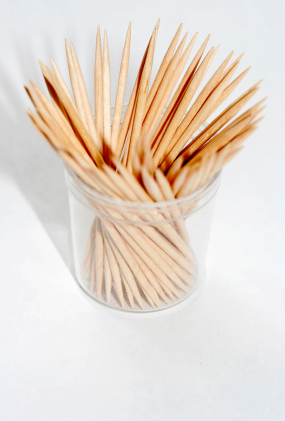
You won't need these anymore when stuffing meat or vegetables!

This week’s tip is a great trick that I use quite often.  When making stuffed chicken breasts or pork tenderloin, I used to use a couple of toothpicks to hold things together. However, there is always the danger that you might forget to remove them all or that the toothpick will leave little wood splinters in your dish. The last thing you want is for your dinner guests to injure themselves on an errant toothpick! Here is what you can do instead:

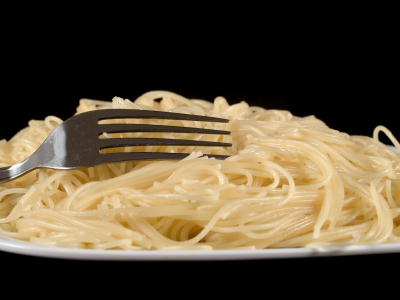
Use a piece of dry spaghetti in place of toothpicks.

Dry spaghetti works as a perfect substitute for toothpicks.  It’s sturdy enough to hold things together and you can break it into any length you need (do not use thinner pasta, such as angel hair, because it is too brittle).  Use the spaghetti as you would a toothpick and break off any excess so you only use as much as necessary.  The spaghetti will cook with the dish so there is no need to remove anything.  And here’s the surprising part: you will not even notice a small piece of spaghetti in the finished dish (at least I never have!)  

Using dry spaghetti as a toothpick to hold a stuffed chicken breast together

To test out my suggestion, here are a few ideas for stuffing chicken breasts.  You could also use the spaghetti to hold together vegetarian dishes such as stuffed roasted peppers or cabbage.

Stuffed Chicken Breasts

Makes two large chicken breasts (quantities can easily be doubled or tripled)

  • 2 boneless, skinless chicken breasts
  • Approximately 4 large pieces of saran wrap
  • Meat tenderizing mallet OR heavy bottle, such as a full wine bottle
  • 1 or 2 pieces dry spaghetti
  • 1/2 cup flour
  • Salt and pepper
  • 2 Tablespoons neutral oil, such as safflower or canola
  • Filling – see below for suggestions
  1. Trim chicken breasts of any tendons and unwanted fat, particularly on the underside. Trim off the tenderloin – a small flap of flesh on the bottom of the chicken breast. Set aside to cook separately.
  2. Spread two or three sheets of saran on a clean countertop.  Place one chicken breast on saran and lay more saran on top, so it is completely covered.  Pound chicken breast with a meat tenderizer mallet or heavy bottle until breast is thin and of even thickness.   Put flattened breast on a plate and repeat with the second piece of chicken.
  3. Place your choice of filling on chicken breast and roll up tightly.  Secure roll with a piece or two of spaghetti, as needed.  Repeat with other chicken breasts.
  4. Roll chicken breasts in flour, salt and pepper mix.  Saute in a skillet until browned on all sides. Transfer to a pan and bake in oven at 425 F for approximately 20 minutes, or until chicken is no longer pink in the middle.
  5. Cut breasts into slices and serve.

Filling Suggestions:

Ham & Cheese – A slice or two of ham with a few slices of your favourite cheese (ham and swiss, ham and brie or ham and cheddar are all good combinations)

Feta and Spinach – Mix a few teaspoons crumbled feta cheese with some sauteed spinach.  

Tomato Mozzarella – Dice some tomatoes and cube a couple of slices of mozzarella.  Add a few torn basil leaves and season with salt and pepper

Mushroom and Rice – Mix some sauteed mushrooms with leftover rice or wild rice mix.  Add some finely chopped herbs (rosemary, sage or thyme are nice).  

Blue Cheeese and Onion – Crumble some blue cheese and mix with some pickled red onion.

Pesto Ricotta – Mix a spoonful of pesto with a scoop of ricotta.

Proscuitto, Mozzarella and Sage – One of my favourite combinations, it’s flavours are similar to a classic Italian dish called saltimbocca.  Layer a couple of prosciutto slices, some torn fresh sage leaves and fresh mozzarella.

Use your imagination – the possibilities are practically endless!

Variations:

  • Serve chicken with your favourite sauce, for example, mushroom cream sauce with ham and cheese or tomato sauce with mozzarella stuffed breasts.
  • Add a glaze to your chicken, such as honey-mustard or balsamic vinegar
  • You could also dip breasts in the following for a cripsy crust: 1) flour, 2) 1 egg beaten with 1 teaspoon water and 3) seasoned bread crumbs.  Saute in oil and bake in the oven as above.

Bon Appetit and Enjoy!


Farmer’s Market Report

11 09 2008

As summer winds down and crops are being harvested, there is still a lot going on at the farmer’s markets in Southern Ontario.  Here are some observations about what’s happening this week:

  • Strawberries – I’ve been ignoring strawberries since June, when they were at their traditional seasonal peak.  I’ve seen them at one of the markets throughout the summer and assumed that they were some sort of import or hydroponic strawberry.  I finally asked one of the vendors what the story is.  It turns out that they’re a type of strawberry called Everbearing.  Everbearing strawberries are grown just like traditional June Bearing strawberry plants (ie, in fields) but they produce berries throughout the summer.  I bought a few to see how they compared to June Bearing strawberries but unfortunately the batch I got were sour and white in the middle. However, that may have been an anomaly so if I see them again, I might give them another try.

  • Other Fruit – Apples are turning up everywhere but I think of them more as an autumn fruit so I haven’t purchased any for cooking yet.  Once the days cool down a bit, I will be testing some great apple recipes such as tarts, crumbles and applesauce.  I did buy some honeycrisps and cortland apples for eating last week and they were perfect – crisp, firm, tart and juicy. There were also lots of plums and pears, which I will be experimenting with in the weeks to come.  
  • Herbs – There was an abundance of herbs available, especially basil.  They were being sold in bunches with the roots still attached.  This is ideal for making large batches of pesto to freeze or can. For a tasty pesto recipe, see Ricotta Gnocchi with Pesto.  

  • Tomatoes, Corn and Peppers – The tomatoes I picked up yesterday were some of the best I’ve tried this summer.  They were juicy and sweet, unlike some of the mealy ones I had gotten earlier in the season.  Corn is still abundant, as are green and red peppers.  I picked up some red shepherd peppers and despite their crazy shape, they were very sweet.   For a great Roasted Red Pepper Soup recipe, you can check out one I developed for Suite101.com.   If you you’re looking for tomato recipes, why don’t you try a Caprese Salad, Tomato Salad with Goat Cheese, Tomato and Ricotta Tart, Corn and Tomato Salad or Slow Roasted Tomatoes (I really like tomatoes, if you hadn’t noticed!)

It’s a great time to enjoy the abundance of the season so take advantage of it if you can!

Ciao,

Trish


Heirloom Tomato Salad with Goat Cheese and Sherry Vinaigrette

11 09 2008

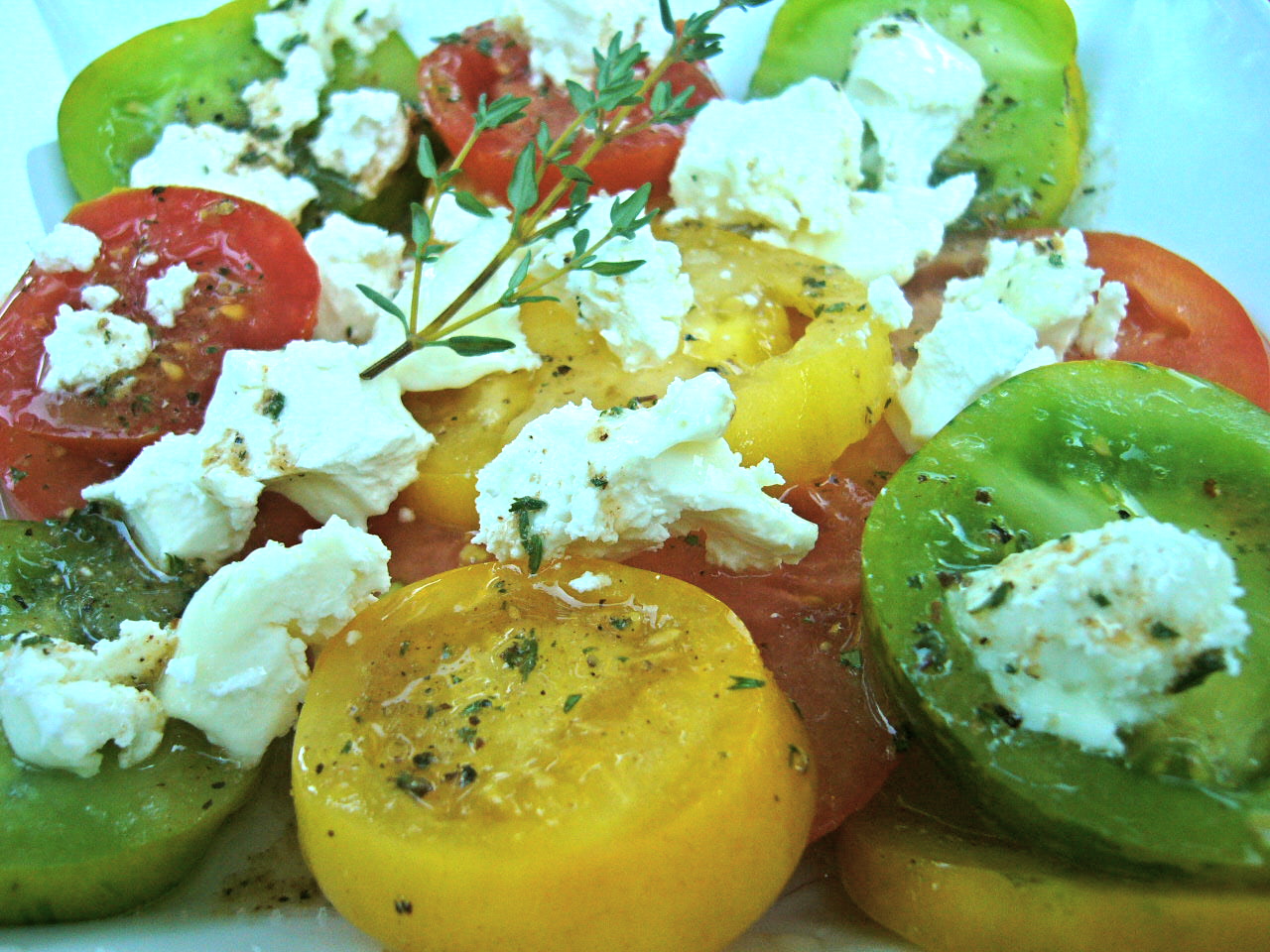
I recently paid a visit to Harvest restaurant in the bucolic countryside of Eastern Ontario (see Late Summer in Wine Country).  Chef/owner Michael Potters bases his menus on what is in season and available, sourcing as much as possible from local purveyors. One of the salads on the menu was an heirloom tomato and Fifth Town goat cheese salad with sherry vinaigrette.  It inspired me to come up with my own version.  It’s similar to a caprese salad but the goat cheese and dressing give it a bit of a different flavour.

If you don’t like goat cheese (and I must admit, it’s not my personal favourite), you can use any kind of creamy mild cheese, such as a creamy sheep’s milk cheese, mild feta or even fresh mozzarella.  Because this salad is so simple, it’s important to use the very best ingredients you can find so skip it if you can’t find good tomatoes.   Sherry vinegar should be available at most grocery stores.  This salad makes a great starter or light lunch with some crusty bread.

Heirloom Tomato Salad with Goat Cheese and Sherry Vinaigrette

Makes 4 appetizer sized servings

(VEGETARIAN)

  • 5 or 6 medium to large mixed heirloom tomatoes 
  • 4 oz. mild goat cheese OR other soft cheese, such as feta, sheep cheese or fresh mozzarella
  • Fresh ground pepper and sea salt, to taste
  • Fresh chopped thyme leaves, to sprinkle over and garnish salad
  • Sherry Vinaigrette (see recipe below)
Sherry Vinaigrette
  • 3 Tablespoons neutral oil, such as canola or safflower
  • 1 Tablespoon sherry vinegar
  • 1 teaspoon sugar
  • 1/2 teaspoon dijon mustard
  • 1/2 teaspoon fresh chopped thyme leaves
  • Pinch of salt
  1. To make vinaigrette: In a small bowl, add all ingredients and whisk until combined.  
  2. To assemble salad: Cut tomatoes into thick slices, discarding the part where the stem was attached. Arrange tomatoes on a serving platter OR as individual servings.
  3. Break goat cheese up with your fingers and sprinkle over tomatoes.  Spoon dressing over salad and sprinkle with sea salt and ground pepper.
  4. Garnish with thyme leaves.
Bon Appetit and Enjoy!