Arancini (Fried Risotto Balls)

9 02 2010


Arancini: A great way to use leftover risotto


I recently featured a primer on how to make basic risotto, a Northern Italian rice dish. It’s very versatile and is delicious as a base for braises or as a main course dish on it’s own. But what if you have some risotto left over at the end of the meal?  Not to worry  – it can be transformed into a delicious snack.

Arancini are small balls of risotto that have been rolled a crumb crust and lightly fried.  You can make them with plain or flavoured leftover risotto and I often make a simple tomato sauce to serve with them.  I like arancini so much that sometimes I deliberately prepare extra risotto just so I can make them!

You can find the recipe on Suite 101.com:  Arancini – Italian Fried Rice Balls Recipe

Bon Appétit and Enjoy!


Basic Risotto

28 01 2010

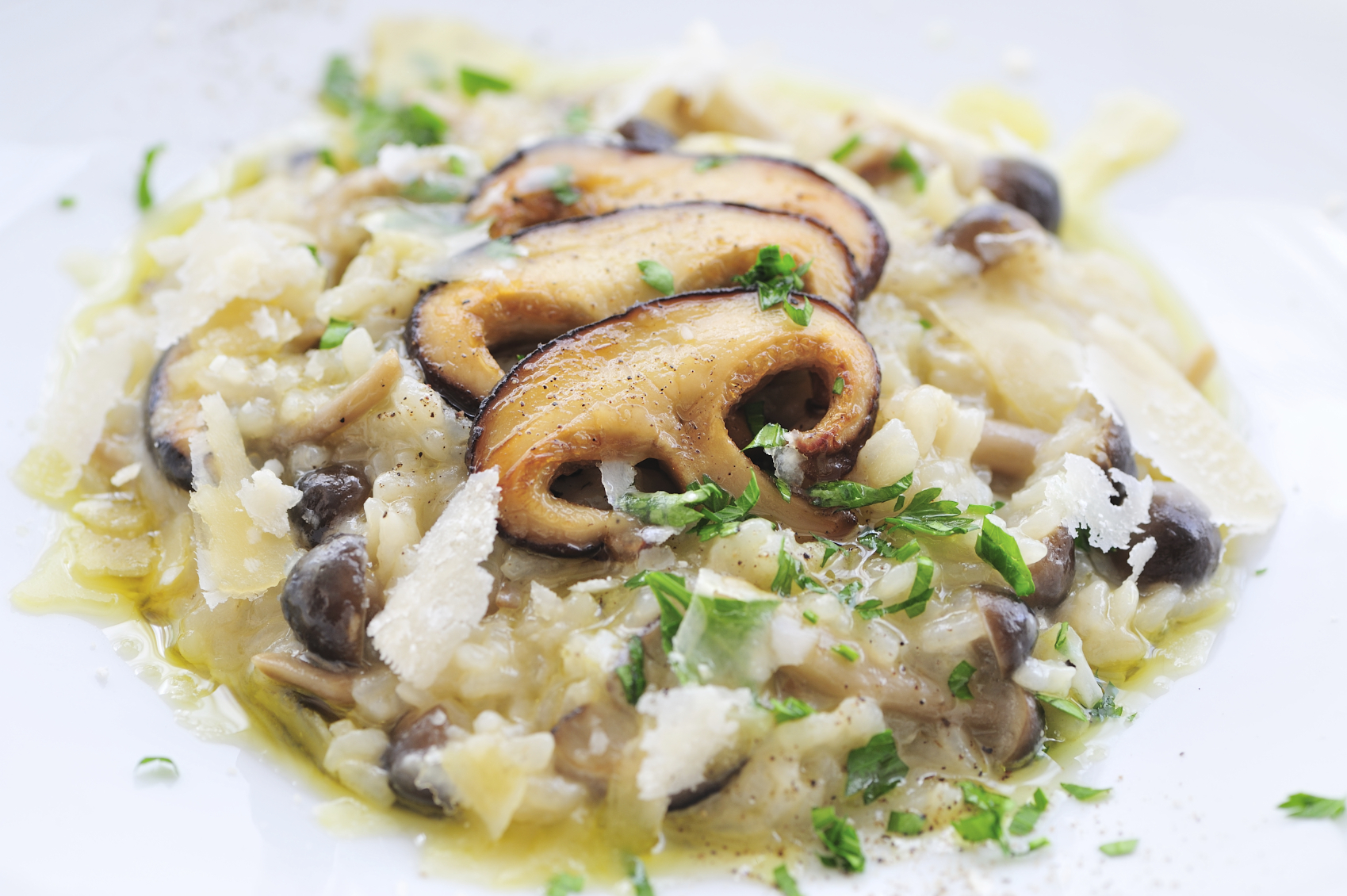
Mushroom risotto garnished with chopped parsley and shaved parmesan

We’re already at the end of January (yay!) and I’m getting back to the kitchen after a nasty cold and some unpleasant plumbing issues in my basement.  I’ve been experimenting with some new recipes and have been inspired by some great restaurants and books in the past month. Last weekend it was raining and cold here so I decided to do a comforting braise served over risotto. Risotto has a reputation for being time consuming and difficult to make but it’s actually very simple if you take it step by step and follow a few pointers.

Risotto is a Northern Italian rice dish that is typically creamy tasting with a very slight ‘bite’ to the rice when made properly. Unfortunately, there are a lot of bad examples of risotto out there (it can be difficult for restaurants to do right because it must be made to order).  The best restaurant risotti I’ve eaten were a braised oxtail version at XO Le Restaurant in Montreal and a seafood risotto at Imàgo at the Hotel Hassler in Rome. In both instances the rice had a creamy texture and lots of flavour.   Although the texture of risotto should be ‘creamy’, no cream or milk is ever added to the rice. Rather, the creaminess is a result of starch being released during cooking.  The key to creamy risotto is to use the right kind of rice and to take your time adding the liquid during the cooking process.

Regular long grain rice doesn’t work for risotto – you need to use specific types. Carnaroli, Arborio and Vialone Nano rice are most commonly used.  I prefer carnaroli rice but arborio is usually more readily available in many areas.  Using good quality stock is also important for good risotto.  Homemade or a high-quality boxed stock are best (low-sodium is preferable).  Many butchers sell tubs of good house made stock as well.  If your stock is very strongly flavoured, you may want to cut it with some water so it isn’t too overpowering.  I prefer chicken stock for most risotti but it depends on what you are adding to the basic recipe so choose your stock flavour accordingly.

This recipe is for a basic risotto which is the foundation for more exotic versions – I have suggested a few variations at the end. However, the possibilities for additions are almost endless so use your imagination!

Basic Risotto

Makes 2 to 3 servings (can be doubled)

(Can be made VEGETARIAN)

  • 1 medium onion, finely diced
  • 1 Tablespoon extra virgin olive oil
  • 1 cup raw carnaroli or arborio rice
  • 1/2 cup dry white wine
  • About 3-1/2* cups stock (chicken, beef, seafood or vegetable), heated in a sauce pot or microwave
  • 1/2 cup grated fresh parmesan cheese
  • 2 Tablespoons unsalted butter
  • Salt, to taste
  1. In a large deep skillet or enameled cast iron pot, heat olive oil on medium-high heat.  Add onion and cook until translucent, about 5 minutes.
  2. Add rice and sauté for another 2 minutes, stirring periodically.  Pour in wine and stir rice.  Reduce heat and let simmer gently until the wine is completely absorbed, about 3 minutes.
  3. Once the wine has completely absorbed, add 1/2 cup of the stock.  Let the rice simmer gently, stirring occasionally.  Once the stock has almost fully absorbed (about 4 minutes), add another 1/2 cup of the stock.
  4. Repeat the process of adding the stock a half cup at a time once it has almost absorbed. Continue until the rice is creamy and cooked through but still has a very slight ‘bite’ in the middle of the grains (al dente).  Stir the rice on occasion and keep an eye on it.  It will take approximately 7* additions of stock in half cup increments (*Note: the rice may require a little more or less stock, depending on how absorbent it is).
  5. Once the rice is cooked to the desired tenderness, remove the pan from the heat and add the butter and parmesan cheese. Stir into the risotto until completely melted.  Any additions can be added at this point (see below for suggestions). Season with salt to taste and serve.

Suggested Additions:

Mushroom – Sauté mixed mushrooms with herbs such as rosemary and thyme.  Stir into a basic risotto and finish with a small amount of truffle oil if desired.

Onion-Sage – Adding a few fresh sage leaves and caramelized onions makes a risotto that pairs well with poultry and pork.

Roasted TomatoSlow roasted plum tomatoes or cherry tomatoes are hearty additions.  Season with your favourite herbs such as oregano or basil.

Butternut Squash – Roasted butternut squash or pumpkin with crispy sage leaves turn risotto into an autumn masterpiece.

Seafood – Add your favourite shellfish such as cooked lobster, scallops or shrimp to risotto.  Use shellfish stock in place of chicken stock and leave out the cheese.

Asparagus – Add chopped cooked asparagus and season with a bit of lemon juice and zest for a delicious spring dish.

Saffron – Soaking a few strands of saffron in the chicken broth makes a traditional Risotto Milanese.

Bon Appétit and Enjoy!


Oysters

15 01 2010


Prince Edward Island oysters at St. Lawrence Market, Toronto

Prince Edward Island oysters at St. Lawrence Market, Toronto


Oysters tend to be a ‘love them or hate them’ proposition.  However, for those who do love them, they’re the perfect thing to serve at a cocktail party or as a first course at dinner.  I also think that a lot of people who claim to hate oysters have never really tried them – they just think they look ugly and slimy (which they do, truth be told). Freshly shucked oysters and their sweet, briny liquor go well with a squeeze of lemon, horseradish, cocktail sauce, hot sauce and mignonette sauce (see recipe below).

Finding Oysters

Oysters are in season right now and there should be a wide variety available at good fish markets.  The traditional wisdom was that oysters should only be consumed during months with an ‘R’ in their names (ie. the colder months, September to April), however, these days oysters can usually be found year round.  A few years ago, I was on Prince Edward Island for a family reunion and my husband and I were wondering if we’d be able to get oysters.  We were staying not far from Malpeque so of course we could!  We drove a few minutes down the road and found a small dockside fish shop selling fresh oysters for less than a dollar each.  We bought a couple dozen, stopped at the liquor store for some sparkling wine and returned to our cottage to feast with my parents (who had never really eaten oysters, despite living in the Maritimes their entire lives). Luckily you don’t need to live on the coast to enjoy them – oysters are shipped around the world and are readily available at most fish counters. Some of my favourite restaurants to order oysters ‘inland’ include: Joe Beef (Montreal), Rodney’s Oyster House and Rodney’s By Bay (Toronto), Starfish and The Ceili Cottage (Toronto).

I happen to be partial to oysters from Prince Edward Island and New Brunswick (Malpeques, Caraquet, Raspberry Points, Colville Bay, Lucky Limes, etc.) but oysters are harvested around the world, including in Japan, the Pacific Northwest, Ireland, the Gulf Coast of the U.S. and New England. 

How to Shuck an Oyster

A shucked oyster and oyster knife


Shucking oysters is not difficult but it does take some practice.  An excellent video from Chef Rich Vellante of Legal Sea Foods gives step-by-step instructions for shucking and preparing oysters: How to Shuck Oysters.  Oyster knives can be purchased at most kitchenware shops and cost as little as $10.           

Serving Oysters

To serve oysters, place ice in a large serving bowl or platter.  Shuck the oysters (see above) and arrange on the ice.  Accompany with fresh lemon wedges and small bowls of seafood cocktail sauce, fresh grated horseradish and mignonette (see below). When selecting a wine to go with oysters, choose a crisp, dry white such as riesling, muscadet, sauvignon blanc or champagne. Beer also works with oysters – try them Guinness for a delicious pairing.

Mignonette Sauce

Serve in a small bowl alongside a platter of oysters and spoon a small amount of sauce over each oyster before slurping it down.

Makes a scant 1/2 cup

  • 2 Tablespoons finely minced shallot (about 1/2 of a medium sized shallot)
  • 3 Tablespoons red wine vinegar
  • 1 Tablespoon white wine vinegar
  • 1 Tablespoon water
  • 1 teaspoon sugar
  • 1/4 teaspoon salt
  • 1/4 teaspoon fresh ground pepper
  1. In a small bowl, whisk together all ingredients.  Let sit for at least 15 minutes before using.

Bon Appétit and Enjoy!

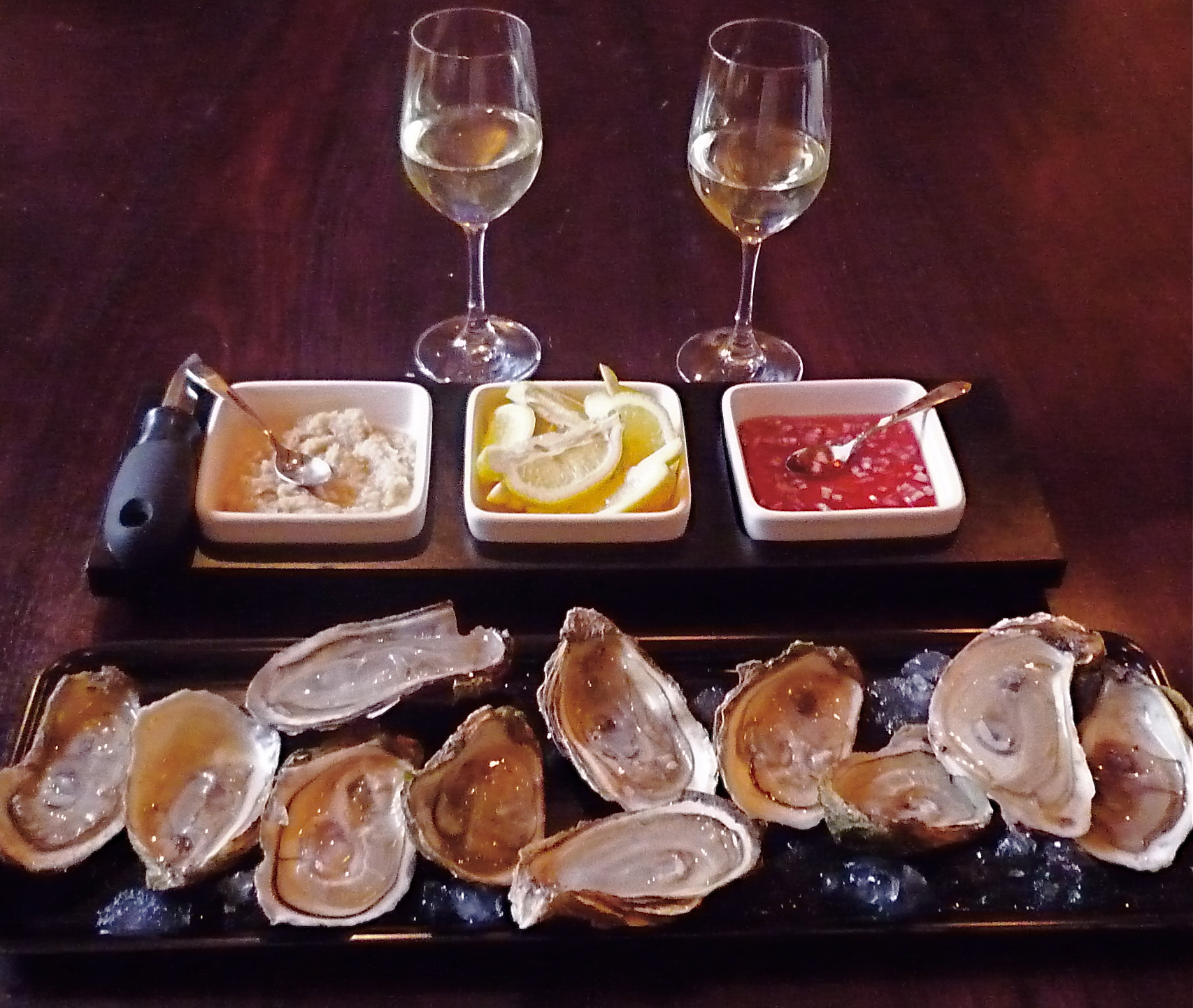
A platter of oysters with (from left to right) horseradish, lemon wedges and mignonette sauce. The wine is a Melon de Bourgogne from Norman Hardie Winery in Prince Edward County, Ontario.


Potato Latkes

15 12 2009

Tonight is the 5th night of Hanukkah, the Jewish celebration of lights. Potato latkes are traditionally eaten during the eight days of festivities but you certainly don’t have to be Jewish to enjoy them.  You can sometimes find them on menus at delis but they’re very easy to make at home. The potatoes and onions can be grated by hand or with a food processor. Latkes are best eaten fresh out of the pan – they don’t really re-heat very well.  Serve with sour cream or applesauce.

Potato Latkes

(VEGETARIAN)

Makes about 8 large latkes

  • 3 large russet potatoes, peeled
  • 1 small onion, peeled
  • 1/2 teaspoon salt
  • 1/4 teaspoon ground pepper
  • 1 egg
  • 3 Tablespoons flour
  • Neutral oil such as safflower, for pan frying latkes
  • Sour cream or apple sauce, to garnish (optional)
  1. Grate potatoes and onion and place in a large bowl.  Season with salt and pepper and let sit for five minutes.  
  2. After five minutes, use your hands to wring any liquid from the shredded potatoes and discard the liquid (you can also do this by pressing the potato mixture in a colander).
  3. Add egg and flour to the potato mixture and use your hands to thoroughly combine the ingredients.
  4. In a large, deep skillet, add oil so that is about 1/4″ to 1/2″ deep in the pan. Heat on high until ready to fry (to about 350 degrees Fahrenheit or until a small piece of potato dropped in sizzles and turns golden).  Be sure to watch the oil carefully!
  5. Use a 1/3 cup measuring cup to scoop out some potato mixture.  Carefully place in the oil and flatten slightly with a spatula. Repeat scooping the mixture but make sure the latkes are not crowded in the pan (you will likely have to do two batches).
  6. Let the latkes cook until browned on the bottom, about 3 minutes.  Carefully turn over with a spatula and cook the other side.  When the pancakes are dark golden and cooked through, remove from the pan and place on a paper-towel lined plate. 
  7. Season with additional salt to taste and serve with sour cream or applesauce, as desired.

Happy Hanukkah and Enjoy!

A Potato Latke topped with sour cream.


Apple-Caramel Tart

2 12 2009


Apple-Caramel Tart makes an impressive dessert for special occasions.


It’s already December and fall is drawing to a close.  Christmas is only a few weeks away and people are starting to think about their menus for the holidays.  I usually like to serve a couple of options at Christmas, typically an apple pie and maybe another kind of rustic fruit dessert (although last year I admit to serving lemon and chocolate tarts that I purchased).  There is nothing wrong with a basic apple pie but for a special occasion, why not serve something a bit fancier?  An apple-caramel tart looks impressive and tastes delicious.  There are a number of components to the recipe but none are difficult if you take it step by step.  The end result will wow your guests – you may never go back to making regular apple pie again!

Apple-Caramel Tart

The caramel can be prepared in advance and kept in the fridge.  Re-heat slightly to soften after refrigeration.

Makes one 10″ tart

  • ½ package of frozen puff pastry, thawed

Caramel:

  • ½ cup sugar
  • 3 Tablespoons water
  • ½ teaspoon vanilla
  • 1 Tablespoon butter
  • ¼ teaspoon salt
  • 2 Tablespoons whipping cream 

Apple Spice Layer:

  • 5 medium sized apples, such as McIntosh
  • ½ teaspoon cinnamon
  • ¼ cup sugar
  • 1/8 cup flour

Glaze:

  • 2 Tablespoons apricot jam
  • 1 teaspoon butter
  1.  Preheat oven to 350 degrees Fahrenheit.
  2. Roll puff pastry out to fit a 10″ tart pan. Place pastry in pan and crimp edges. Place the pan in the fridge until ready to use.

To make caramel:

  1. In a large saucepan, combine sugar and water and heat on medium-high, whisking until sugar is dissolved.
  2. Heat mixture until it begins to turn medium brown, about 10 minutes. Swirl pan to stir mixture and watch very carefully as it can burn in seconds.
  3. Once the sugar mixture reaches the desired colour, remove immediately from the heat and add the butter, salt and whipping cream. Whisk together until combined.
  4. Caramel can be made in advance and refrigerated until ready to use. It will get quite thick upon cooling so re-heat it before using.

Preparing the apples:

  1. Peel and core apples with an apple corer. Cut each apple in half lengthwise through the middle. Place the halves on a cutting board with the flat sides facing down. Cut into slices about 1/8″ thick.
  2. In a medium bowl, toss apple slices with cinnamon, sugar and flour until evenly coated with spice mixture. Assemble tart immediately (do not prepare apples in advance or they will turn brown).

To Assemble Tart:

  1. Spread caramel in an even layer on the uncooked puff pastry.
  2. Arrange apple slices in a spiral pattern around the tart, overlapping the slices slightly. Make sure the entire tart is covered with apple slices (see photo).
  3. Bake tart for about 50 minutes or until the pastry is beginning to brown around the edges. Remove tart from oven.
  4. Mix apricot jam with butter and heat in a saucepan or the microwave until melted and bubbling. Using a pastry brush, carefully brush apple slices with apricot mixture and return to the oven for another 7 to 10 minutes or until the top is golden brown and the pastry is browned along the edges.
  5. Slice and serve with lightly sweetened whipped cream or vanilla ice cream.

Bon Appétit and Enjoy!

This recipe first appeared on Suite 101.com


Spiced Apple Walnut Bread

30 11 2009


A bin of apples at the farmer's market


It’s a cool November morning and I’m sitting here staring at my bowl of Special K with low-fat milk feeling uninspired.  I’m craving something sweet and comforting and I’m afraid my healthy option just isn’t cutting it (little wonder, since I don’t really like cereal that much).  I’m tempted to make a run for the cafe near my house because they sell fantastic pastries including almond croissants, chocolate croissants and fruit danishes.  However, I don’t need to develop a daily pastry habit so perhaps I can whip up something that fits the criteria of being (relatively) healthy yet comforting. Apple Walnut Bread is the perfect solution.  It’s also a great idea for those of you who overindulged this past weekend and are looking for lighter options while recovering from turkey and pumpkin pie overload.

Using apple sauce in place of some of the fat keeps the bread moist and flavourful while whole wheat flour and oatmeal add fibre. Serve with a cup of coffee or tea for a great breakfast option that suits these grey days.

Spiced Apple Walnut Bread

Makes one loaf

  • 1 cup whole-wheat flour
  • ½ cup quick cooking oats, such as Quaker brand
  • 1-1/2 teaspoons baking powder
  • ½ teaspoon baking soda
  • ¾ cup sugar
  • ½ teaspoon salt
  • 1 teaspoon ground cinnamon
  • ½ teaspoon ground allspice
  • ½ teaspoon ground cloves
  • ½ teaspoon ground nutmeg
  • 2 eggs
  • ½ cup applesauce
  • 2 Tablespoons neutral oil, such as canola or safflower oil
  • ½ teaspoon vanilla
  • 2 medium apples, peeled, cored and grated (about 1-1/3 cups grated apple)
  • ½ cup chopped walnuts

Topping:

  • ¼ teaspoon ground cinnamon
  • 1 Tablespoon sugar
  • ¼ cup chopped walnuts
  1. Preheat oven to 350 degrees Fahrenheit. Grease a standard sized loaf pan and set aside.
  2. In a large mixing bowl, add dry ingredients (flour, oats, baking powder, baking soda, sugar, salt, cinnamon, allspice, cloves and nutmeg). Stir until thoroughly combined, making sure spices are evenly distributed.
  3. Add eggs, applesauce, oil, and vanilla. Mix to combine. Add grated apple and stir until well distributed through batter. Gently fold in walnuts but do not over mix batter. Pour into greased loaf pan.
  4. Prepare topping: in a small bowl, mix sugar and cinnamon until evenly combined. Sprinkle sugar mix and nuts over batter.
  5. Bake for 40 to 45 minutes or until a knife inserted in the middle of the loaf comes out clean. Let cool. Run a knife around the perimeter of the loaf before unmolding it from the pan. Slice and serve.


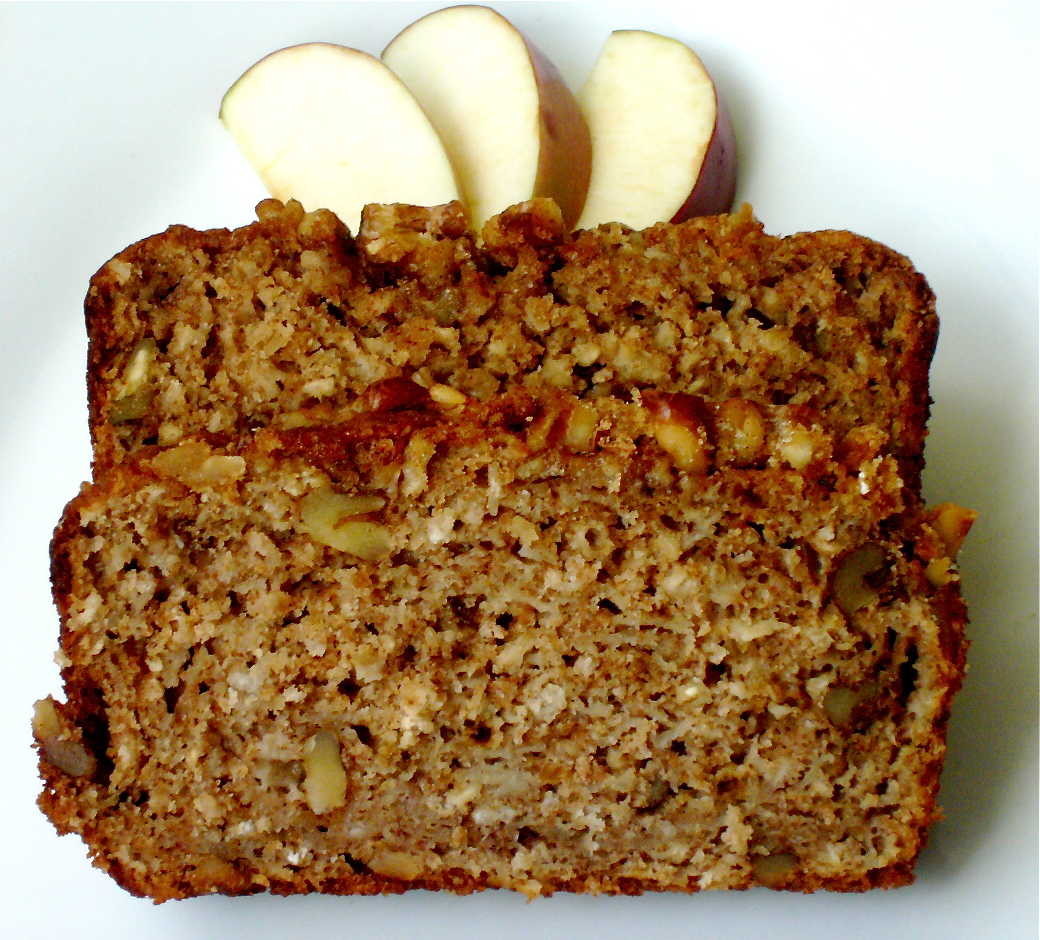
Spiced Apple Walnut Bread

Bon Appétit and Enjoy!

This article first appeared on Suite 101.com


Pumpkin Breakfast Treats

24 11 2009

Pumpkin: it's not just for pie!

With pumpkin pie on the Thanksgiving menu this week in millions of homes, there will likely be some leftover pumpkin purée. Why not put it to good use by whipping up some delicious breakfast treats for a house full of guests?  Try these delicious recipes I wrote for Suite 101.com:

Pumpkin Spice Muffins

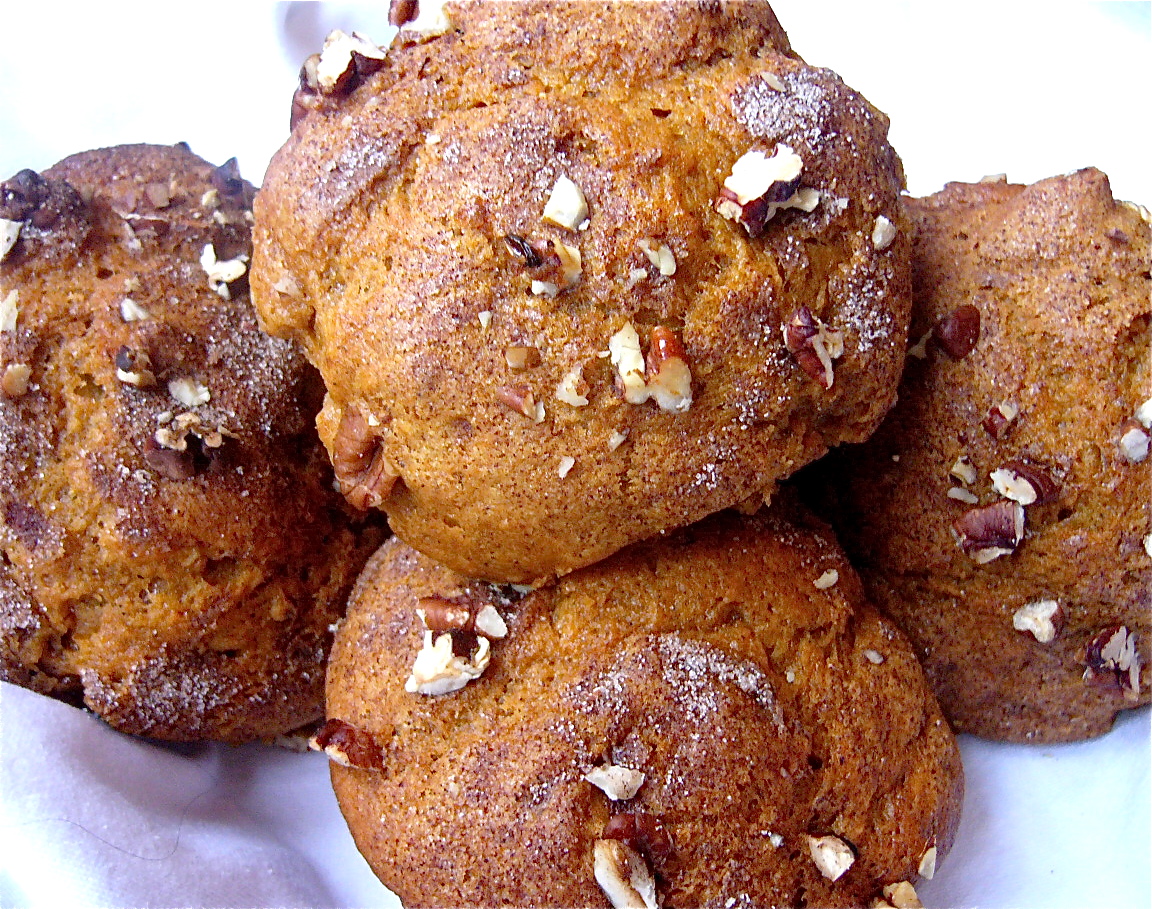
Pumpkin Spice Muffins – Pumpkin purée helps keep these muffins nice and moist. Filling the muffin cups almost to the top will make large, puffy bakery-style muffins. The recipe can easily be doubled to serve a crowd.

Pumpkin French Toast – French toast is always popular for breakfast but adding pumpkin and spices makes it even better. It’s also a great way to use up leftover bread. Serve with real maple syrup.

Pumpkin French Toast with maple syrup

Bon Appétit and Enjoy!


A Vegetarian and Vegan Thanksgiving

23 11 2009

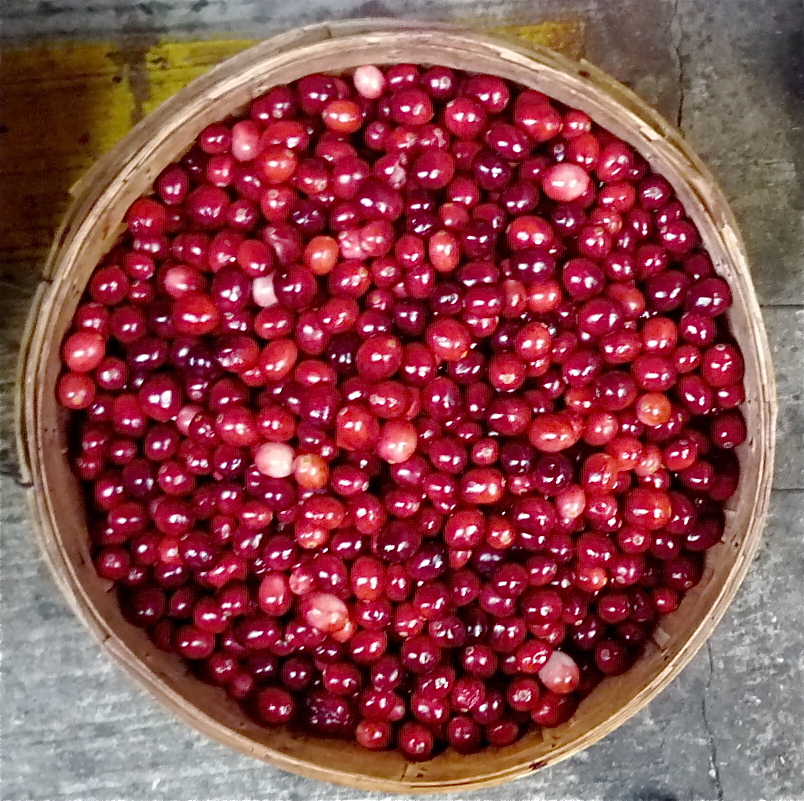
Fresh cranberries at the farmer's market

American Thanksgiving is this week and it’s the biggest food day of the year for millions of people. Cooks across America have been busy in on-line chat rooms and blogs discussing menus and what recipes they’ll be making for their feasts.  Turkey is usually the centerpiece of a traditional Thanksgiving meal but what if you or one of your guests don’t eat meat or poultry?  Not to worry – there are plenty of delicious options that everyone can enjoy without feeling like they’re missing out.

Many recipes can also be adapted for vegans (who don’t eat any animal products, including milk, cheese, butter and eggs).  To make a recipe vegan, sometimes all you have to do is substitute margarine or oil for butter and leave out any cheese the recipe may call for.  I have noted which recipes can easily be adapted for vegans. Here are some suggestions for a delicious, meat-free Thanksgiving dinner:

Stuffed Butternut Squash is an elegant vegetarian alternative to turkey.

White Bean Dip with Fresh Herbs – Get the party started with this vegan-friendly dip made with white beans and hearty autumn herbs. 

Mushroom Crostini – These make impressive hors d’oeuvres for any autumn dinner. Leave out the cream, parmesan and sour cream if serving vegans.  Adjust the flavour by adding more seasonings to taste.

Butternut Squash Soup – This low-fat soup is easy and delicious.  To adapt for vegans, omit the brown butter – use olive oil to sauté the sage leaves instead.

Peppery Leek and Potato Soup – Using vegetable stock instead of a chicken base makes this easy soup suitable for both vegetarians and vegans.

Stuffed Butternut Squash – This makes an impressive main course dish that easily takes the place of turkey.  Can be adapted for vegans (see pointers in the article).

Potato-Sage Dressing – Cooking the stuffing outside the bird means that everyone can enjoy it, including vegans.

Roasted Green Beans with Shallots – Take a break from the usual green bean casserole with this vegan-friendly dish.

Cranberry Sauce – Just because you don’t have turkey doesn’t mean you can’t enjoy some vegan-friendly cranberries with your meal.

Mashed Potatoes – Always a favourite, mashed potatoes can be adapted for vegans by nixing the butter and cream.  Use a little vegetable stock and a bit of olive oil to give them a creamy texture.

Mashed Potatoes are a must at any Thanksgiving table.

Butternut Squash Gratin with Sage and Parmesan – The key to this dish is the butter and parmesan so vegans may have to pass on this one but vegetarians and meat-eaters will no doubt enjoy it.

Corn Scallop – This dish is tasty and rich but unfortunately it’s not vegan-friendly. However, Roasted Corn with Red Pepper and Herbs is – just use olive oil in place of the butter. Fresh corn is not in season right now but canned corn works very well in this dish.

Roasted Beet Salad with Walnuts and Feta – This hearty winter salad is practically a meal on its own.  Leave out the feta for vegans.

Braised Garlic Swiss Chard – Cooking swiss chard in lots of garlic and stock makes eating your greens a lot more delicious.  Use oil in place of the butter for vegans.

Roasted Tomatoes – These sweet and addictive slow cooked tomatoes are great in salads, on pasta or even just eaten with bread. They are vegan-friendly as well. 

Celery Root Slaw – This tangy salad is the perfect accompaniment to rich dishes.  If serving vegans, use a vegan-friendly mayonnaise that doesn’t contain any eggs.

Salads – Mixed greens and other vegetables are a great option for vegetarians, vegans and health-conscious diners.  Recipes for Basic Vinaigrettes will give you  lots of ideas for dressings.

Pumpkin Pie with Maple-Walnut Praline – The pumpkin custard contains eggs and milk so it’s not vegan-friendly but everyone else will enjoy this dressed up version of a classic.

Apple Pie – Another classic.  Be sure to use a pastry recipe (or prepared dough) that doesn’t contain animal products if serving vegans.

Take a break from green bean casserole with vegan-friendly Roasted Green Beans and Shallots.

Many people are eliminating meat and animal products from their diets for both health and ethical reasons but there’s no reason why they can’t enjoy a tasty holiday meal as well.  

Bon Appétit and Happy Thanksgiving!


Pumpkin Pie with Maple-Walnut Praline

19 11 2009

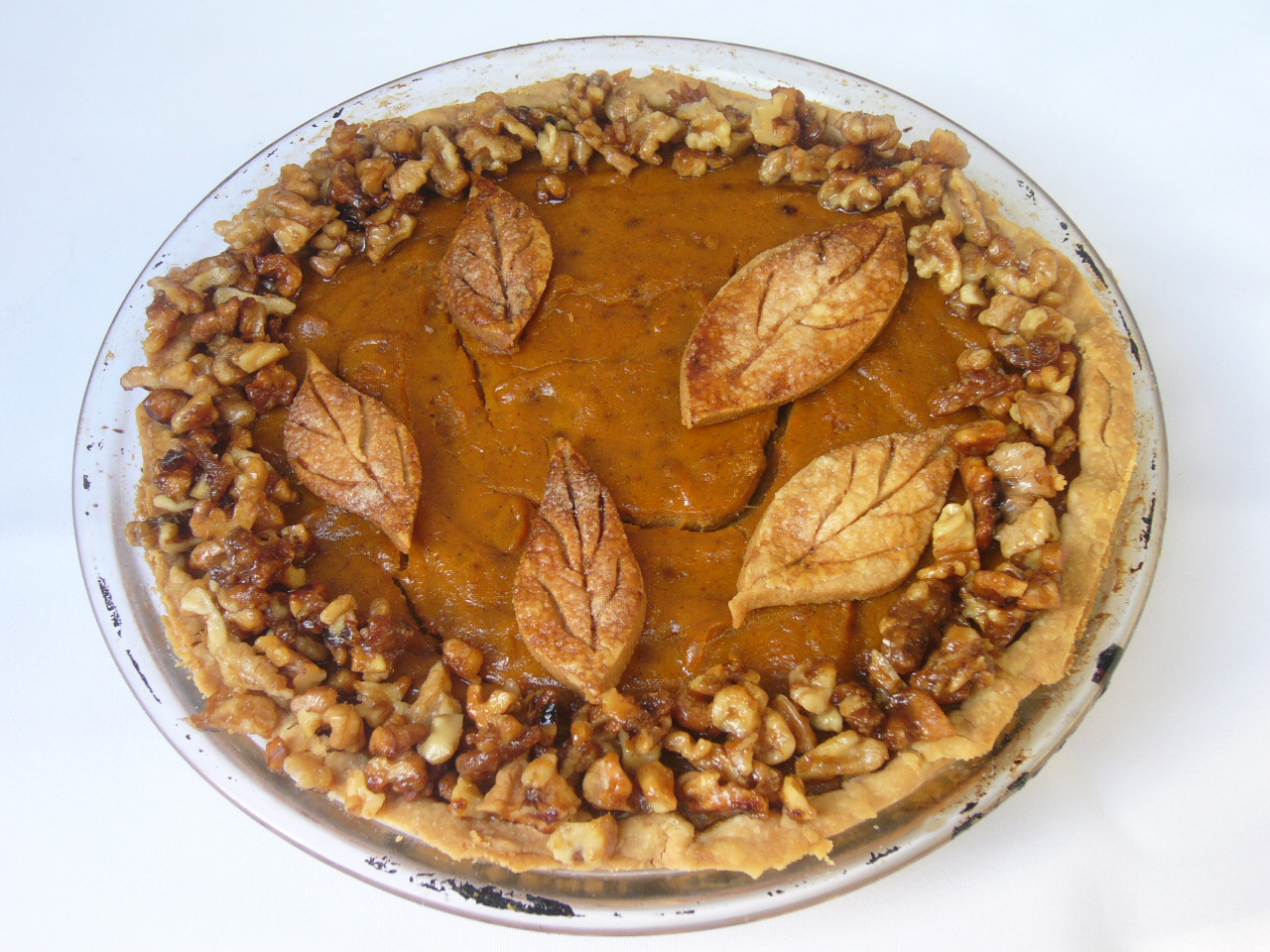
Pumpkin pie with maple-walnut praline and pastry leaves

No Thanksgiving table is complete without pumpkin pie.  Many places sell them but they are very easy to make and cost a fraction of what fancy bakeries will charge.  My version features a basic pumpkin custard that has been dressed up with a crunchy maple-walnut praline and cut out pastry ‘leaves’.  Of course, if you’re in a hurry, you can just make the basic pie without the additions – it will still be delicious.

Pumpkin Pie with Maple Walnut Praline

Makes one 9″ pie

Praline:

  • 1 cup chopped walnuts
  • ¼ cup maple syrup
  • 1/3 cup neutral oil such as canola or safflower

Pie Filling:

  • 2 cups plain pumpkin puree (not spiced pumpkin pie filling)
  • 2 large eggs
  • 1 cup heavy cream or evaporated milk (not sweetened condensed milk)
  • ¾ cups sugar
  • 1-1/2 teaspoons cinnamon
  • 1 teaspoon ground ginger
  • ¼ teaspoon ground nutmeg
  • 1/2 teaspoon ground allspice
  • ½ teaspoon ground cloves
  • 1/8 teaspoon salt
  • ½ teaspoon vanilla
  • Uncooked pie crust for two 9″ pies (see Basic Pastry Crust for a good recipe)
  • 1 egg beaten with 2 teaspoons water
  • ½ to 1 teaspoon sugar

To Make Praline:

  1. Heat oven to 350 degrees Fahrenheit.
  2. In a medium bowl, combine walnuts with maple syrup and oil. Toss to coat.
  3. Line a baking sheet with parchment paper or foil. Spread walnut mixture so it’s in an even layer. Bake for 12 to 15 minutes, making sure the walnuts do not burn.
  4. Remove nuts from the oven and let cool. Gently break up any pieces that have stuck together with your fingers. Praline may be made in advance and kept covered in the fridge until use.

Preparing the Pastry:

  1. Roll out one portion of pastry dough (enough to fit a 9″ pie plate). Place pastry in pie plate and crimp edges.
  2. Heat oven to 350 degrees Fahrenheit. Prick a few small holes in the bottom of the pastry and bake for 5 minutes. Remove from oven and set aside.
  3. Roll out second portion of pastry dough. Cut out leaf shapes using a cookie cutter or knife. Use knife tip to score leaf ‘veins’ into the pastry.
  4. Brush pastry leaves with beaten egg mixture. Sprinkle with granulated sugar and bake for 10 minutes or until they are golden brown. Set aside to decorate finished pie.

To Make Pie Filling:

  1. In a large bowl, combine pumpkin puree, eggs, cream, sugar, spices, salt and vanilla. Stir until thoroughly mixed and spices are evenly distributed. Set aside. Filling may be mixed in advance and refrigerated until use.

To Assemble Pie:

  1. Pour pie filling into pastry crust. Bake at 350 degrees for 40 to 50 minutes or until the centre has set.
  2. Remove pie from oven and let it cool completely. Sprinkle praline along edge of crust. Arrange pastry leaves decoratively in the centre of the pie. Serve pie with whipped cream.

Bon Appétit and Enjoy!

This article first appeared on Suite 101.com.


Butternut Squash Gratin with Sage and Parmesan

17 11 2009

Butternut squash at Jean Talon Market, Montreal


Squash and pumpkins are the superstars of fall.  They are cheap and readily available and can be used in both sweet and savoury dishes.  A butternut squash gratin makes a great side dish for Thanksgiving because it can be assembled in advance which makes one less thing to fuss with on the big day.  Because the ingredients for this dish are so simple, it’s important to use good quality products: fresh sage leaves, real parmesan cheese and real butter.  

Butternut Squash Gratin with Sage and Parmesan

(VEGETARIAN)

Makes 4 to 6 servings as a side dish

  • About ¾ of a medium butternut squash (enough to yield 4 generous cups of sliced squash)
  • ¼ cup (4 Tablespoons) unsalted butter
  • 20 small to medium sized fresh sage leaves or 10 large leaves torn in half
  • 1 cup (about 75 g / 2.5 oz.) grated Parmigiano-Reggiano or Grana Padano cheese
  • Salt and pepper, to taste
  1. Preheat oven to 375 degrees Fahrenheit. Grease a standard sized loaf pan and set aside.
  2. Using a very sharp chef’s knife, trim off both ends of the butternut squash and discard. Place the squash upright on a solid cutting board and peel it by cutting the skin off in a downward motion. Cut the peeled squash in half vertically down the middle and use a spoon to scoop out the seeds and any stringy flesh.
  3. Using a very sharp knife or mandoline, cut squash into thin slices, about 1/8″ thick. Slice enough squash to yield about 4 generous cups of squash slices. Set aside.
  4. In a medium saucepan, heat butter on medium-high heat. Once butter has completely melted, reduce heat to medium and add sage leaves. Watching carefully and swirling the pot frequently, heat butter for about 5 minutes, until it turns a dark golden brown and sage leaves are crispy. Remove from heat.
  5. In loaf pan, layer 1 cup of squash slices, overlapping them in 2 or 3 layers. Drizzle with 1 Tablespoon of butter-sage mixture and top with ¼ cup of grated cheese. Season with salt and pepper.
  6. Repeat layering until there are a total of four layers, finishing with cheese on top. Gratin can be assembled in advance and refrigerated.
  7. Bake gratin at 375 degrees for 30 minutes or until squash is tender and the top is bubbling and brown.

Bon Appétit and Enjoy!

This recipe first appeared on Suite 101.com

Butternut Squash Gratin with Sage and Parmesan