Seasonal Eating Through the Winter

2 12 2008

p1010773

It’s early December and we’ve already had our first snowfall in Southern Ontario.  The abundant farmer’s markets of last summer seem like a distant memory and spring is a long time away.  So what are those of us in northern climates going to do for the next 6 months if we’re interested in eating a seasonal diet?   Survive on a diet of meat and stored root vegetables?

Not to worry!  There are plenty of options for seasonal eaters in the north that don’t require eating potatoes and turnips at every meal.   Nor do we have to rely solely on imported fruit and vegetables.  It’s possible to strike a balance and eat meals that capture the essence of the season while still eating as local and fresh as we can. Here are some ideas:

Canned and Frozen Products

Previous generations planned for winter well in advance by preserving and freezing fruits and vegetables at their summer peak.  Jars of tomatoes, fruit, pickles and jams were put into cold storage for the winter. In 2008 many people don’t have the time or storage space to undertake such a project but there are a lot of decent options available at grocery stores and markets.  Canned tomatoes are an excellent substitute for fresh in soups, stews and sauces.  I try to find ones that are prepared relatively close by – Ontario Natural Food Co-op, for example, sells certified organic tomatoes grown locally.  I avoid canned peas, green beans and carrots however, as they just don’t have a very appealing taste or texture.  Canned legumes (such as kidney beans, cannelinis and chickpeas) are another good option for quick meals.  White Bean Dip with Fresh Herbs is a great example of a recipe you can make with canned beans.

Canned tomatoes are a decent alternative to fresh for winter sauces

Canned tomatoes are a decent alternative to fresh for winter sauces


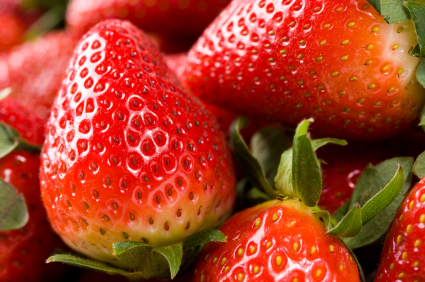
Likewise, frozen fruit and vegetables provide a way to enjoy the tastes of summer (and unlike canned, frozen baby peas are usually fairly decent).  Frozen blueberries are great for muffins, pancakes or coffee cake while frozen strawberries and raspberries can be turned into a sauce or quick jam in no time.  I also like the ease of frozen spinach when fresh isn’t available.

Greenhouse Produce

Green, red and yellow peppers, herbs  (if you have an indoor herb pot, that’s even better), tomatoes, celery, mushrooms, arugula and salad greens are just some of the things grown in local greenhouses. As a rule I avoid most types of greenhouse tomatoes because they have no real flavour, however, Sunset Campari brand tomatoes are quite good.  Another option is to roast greenhouse plum tomatoes to bring out their flavour  – see Slow Roasted Tomatoes for a great recipe. 
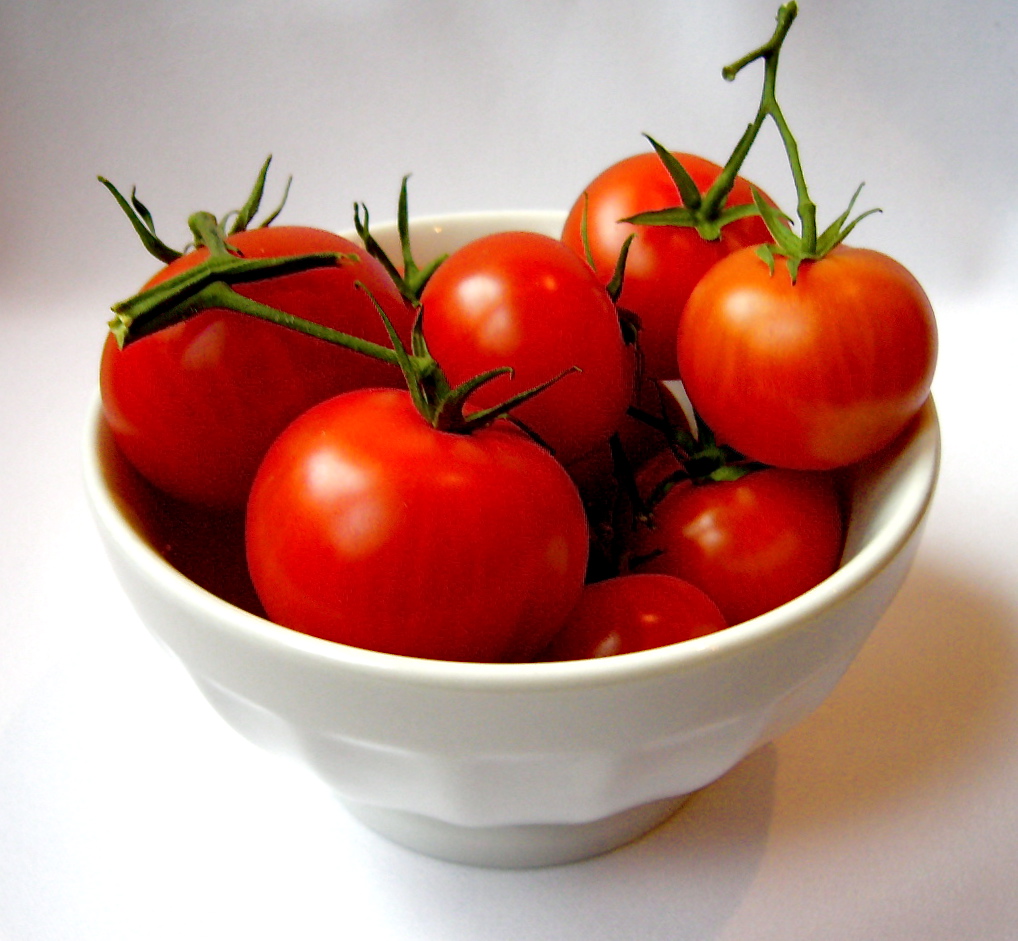
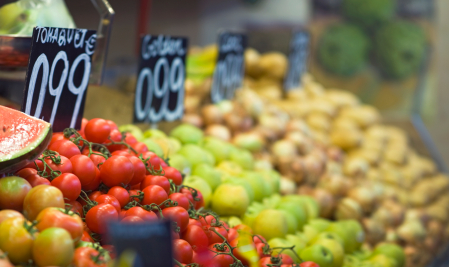
Sunset Campari tomatoes are greenhouse grown but are sweet and juicy

Sunset Campari tomatoes are greenhouse grown but still taste sweet and juicy


Making the Best of Long-Storing Fruits and Vegetables

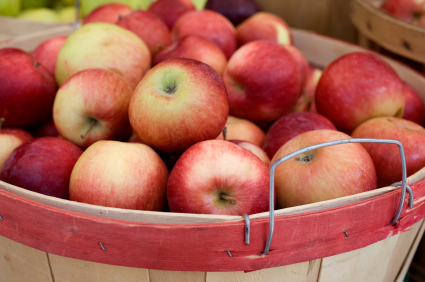
Vegetables such as pumpkin, squash, turnip, carrots, beets, celery root, parsnips, potatoes, apples and onions are typically available during the winter because they can be stored for long periods of time.  So make the best of them!  With a little creativity, there is a lot you can do with these great vegetables. Check out my recipes for an Apple Caramel Tart, Butternut Squash Gratin and Peppery Potato and Leek Soup.  A quick internet search will yield thousands of other suggestions and recipes. I’ll also be posting more ideas in the weeks to come as I experiment with winter produce.


Potatoes are a winter staple and extremely versatile

Potatoes are an extremely versatile winter staple

Cooking techniques can also help the home cook get the most out of seasonal products.  Techniques such as braising and slow cooking are great for cold nights and can turn a simple ‘meat and potatoes’ dinner into a rustic masterpiece.  You can check out ‘Williams Sonoma Slow Cooking Essentials’ from My Reading List for some great slow cooking tips and recipes and I’ll be posting some braising recipes in the near future.  Stews and soups such as are also ideal for cold weather cooking and make perfect comfort food for long winter evenings.  See my recipe for Chicken Noodle Soup for a quick and easy example.

Dry Pantry

Pantry staples such as dried lentils, beans, polenta, rice, barley, dried pasta, dried fruit and berries, nuts can be turned into great hearty dishes that are also budget-friendly.  Bucatini All’Amatriciana, homemade Gnocchi (serve with tomato sauce instead of fresh pesto), and White Bean Dip with Fresh Herbs are a few examples of recipes that can be made with pantry items.  Over the winter I’ll be working on some recipes for creamy risottos, polenta and some lentil and bean dishes so stay tuned.


An assortment of dried legumes

An assortment of dried legumes


Other Fun Options

Fondue or Raclette with local cheeses, homemade pizzas and chili are fun options for winter cooking, especially if you’re feeding a crowd.  You can usually buy pizza dough at pizzerias or bakeries (or make your own, of course) and have everyone top them with their favourite seasonal ingredients such as mushrooms, leeks, rapini, caramelized onions and sausage.  A staple of dinner parties in the 1970s, fondue is making a comeback.  After a day on the slopes or at the rink, gather some friends by the fire and dip bread cubes and blanched vegetables into a mix of your favourite local cheeses.  And don’t forget about chili – a big pot is the perfect meal for après-ski or while watching football.  It can be made in advance and feeds a crowd.  There are also a lot of vegetarian versions so all guests can enjoy the fun.
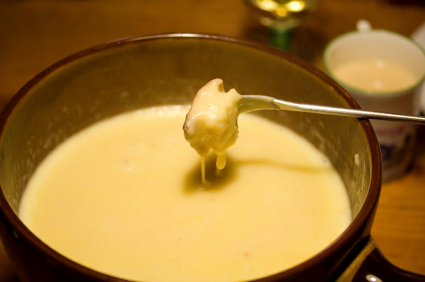
 

Fondue made with local cheese is a fun option for winter entertaining

Fondue made with local cheese is a fun option for winter entertaining

Relax

Even the most stringent locavores (people who eat only locally grown products) sometimes buy imported items.  However, during the winter I still try to keep my imported purchases seasonally appropriate, opting for vegetables such as swiss chard, beets, leeks, fennel, etc. and saving the asparagus and peaches for summer when I can get them close to home at their very best.

So the best advice is to make the most of the season and enjoy what we do have. Cozy dinners by the fire after a day of skiing, bold red wines, iced wines and ciders, mugs of hot chocolate following an afternoon of skating, hearty soups and stews and roasted vegetables are just a few of the things we can celebrate now. And before you know it, it will be summer again!


Waiting for summer...

Waiting for summer...

Happy Winter Eating!

Ciao,

Trish


New Feature – My Reading List

9 11 2008

p10106032

As an avid collector of cookbooks, I’m debuting a new feature: a list of my favourite cookbooks and cooking memoirs.  I have given a short summary of each book, provided a photo and marked those which are great basic building blocks for the beginner.  Of course, I’m constantly getting new books so I’ll be adding to the list as my collection grows and evolves.

My Reading List can be found by clicking on the icon at the top of page or at the right-hand side of the screen.

Enjoy!

Trish


A Message to My American Friends

4 11 2008

As you all know, today is Election Day in the United States.  This is not a political website – although I do have strong opinions on the subject, this is intended to be a forum to share recipes and food information, not espouse my political views. However, I encourage all Americans to vote today no matter what your political affiliation.  

For those of you, like myself, who will be watching the results this evening, there have been a number of articles recently about what to eat and drink in honor of the election and the candidates.  Here are a few great ideas:


And of course, don’t forget champagne,  to celebrate if the candidate of your choice wins (or drown your sorrows should he lose).  

In case you need further incentive to get out to vote, you may also be able to score some free food. Companies such as Starbucks to Ben and Jerry’s will be offering freebies to voters so visit Epicurious.com to find out more details.

Bon Appétit and don’t forget to vote!!


Fresh blueberries and strawberries make an attractive flag cake

Fresh blueberries and strawberries make an attractive flag cake


Happy (Canadian) Thanksgiving!

13 10 2008


My Thanksgiving turkey - 2008

My Thanksgiving turkey - 2008

To all my Canadian friends and family – Happy Thanksgiving!  I prepared a big feast yesterday for my husband Allan, his brother Dan, Dan’s wife Jenn and my mother-in-law Joyce.  I used it as an opportunity to experiment with a few recipe ideas I’ve had (most of which worked out well, which I’m sure was a relief for everyone!).  We had turkey, of course, as well as mashed potatoes, gravy, cranberry sauce, corn scallop, butternut squash gratin, lemon green beans, pumpkin pie and an apple caramel tart. We paired the meal with some Ontario wines, including the 2007 Twisted from Flatrock Cellars in the Niagara wine region and a By Chadsey’s Cairns riesling from Prince Edward County.  Dessert was accompanied by an iced apple cider from County Cider in Waupoos.  


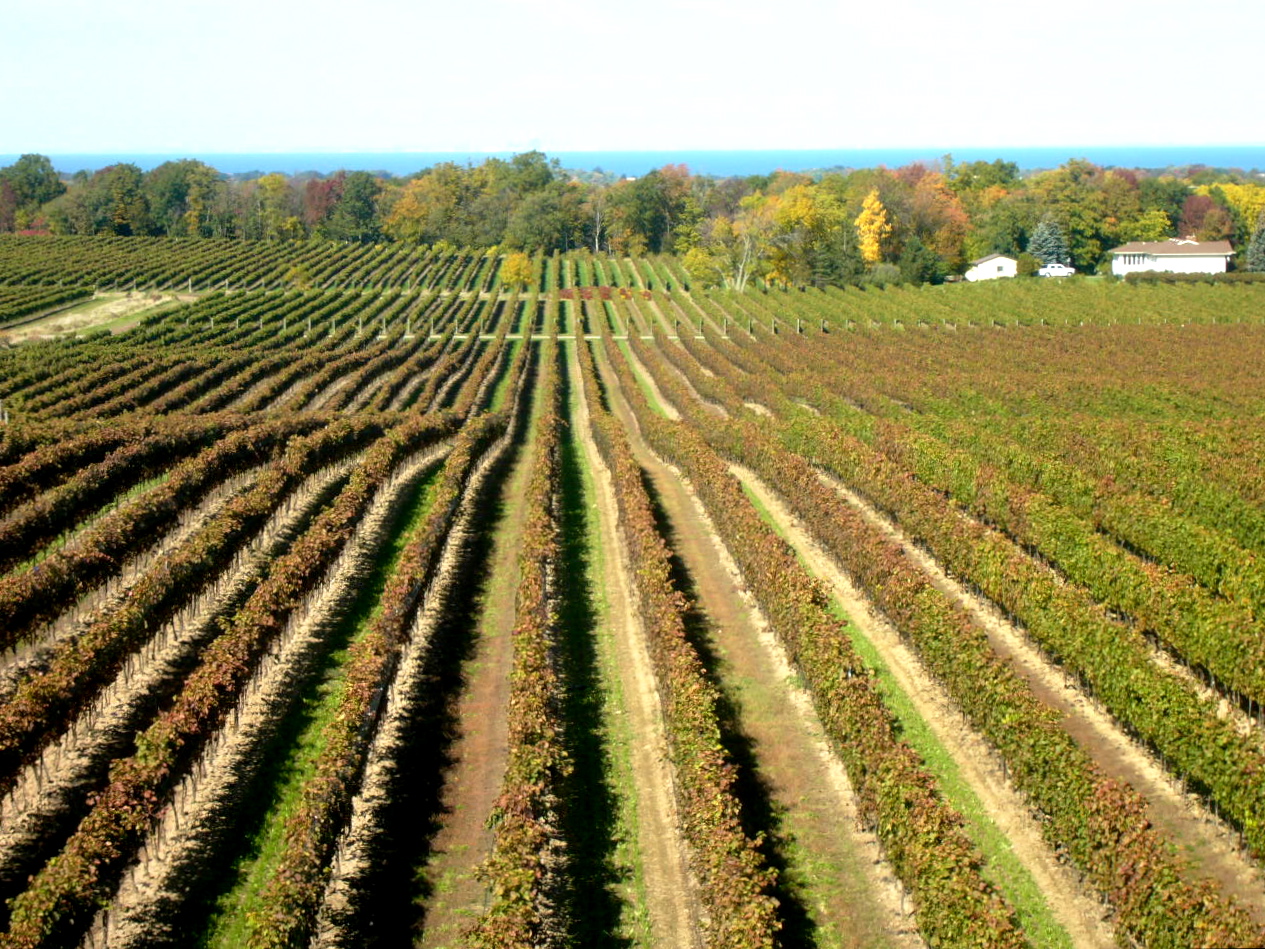
The view from Flatrock Cellars, Jordan, Ontario - October 11, 2008

The view from Flatrock Cellars, Jordan, Ontario - October 11, 2008

I will be posting some of the recipes in coming days, with the exception of the butternut squash gratin, which requires further testing.  It tasted ok, but had some texture issues so it will go back to the drawing board (or kitchen, as it so happens). Many thanks to Jenn for her assistance in the kitchen yesterday and to everyone else for being a good sport and putting up with my culinary experiments!  

I have a lot to be thankful for in my life, including great friends and family so it’s nice to take the time to stop and reflect upon that.

Ciao, best wishes and bon appetit!

Trish


Farmer’s Market Report

11 09 2008

As summer winds down and crops are being harvested, there is still a lot going on at the farmer’s markets in Southern Ontario.  Here are some observations about what’s happening this week:

  • Strawberries – I’ve been ignoring strawberries since June, when they were at their traditional seasonal peak.  I’ve seen them at one of the markets throughout the summer and assumed that they were some sort of import or hydroponic strawberry.  I finally asked one of the vendors what the story is.  It turns out that they’re a type of strawberry called Everbearing.  Everbearing strawberries are grown just like traditional June Bearing strawberry plants (ie, in fields) but they produce berries throughout the summer.  I bought a few to see how they compared to June Bearing strawberries but unfortunately the batch I got were sour and white in the middle. However, that may have been an anomaly so if I see them again, I might give them another try.

  • Other Fruit – Apples are turning up everywhere but I think of them more as an autumn fruit so I haven’t purchased any for cooking yet.  Once the days cool down a bit, I will be testing some great apple recipes such as tarts, crumbles and applesauce.  I did buy some honeycrisps and cortland apples for eating last week and they were perfect – crisp, firm, tart and juicy. There were also lots of plums and pears, which I will be experimenting with in the weeks to come.  
  • Herbs – There was an abundance of herbs available, especially basil.  They were being sold in bunches with the roots still attached.  This is ideal for making large batches of pesto to freeze or can. For a tasty pesto recipe, see Ricotta Gnocchi with Pesto.  

  • Tomatoes, Corn and Peppers – The tomatoes I picked up yesterday were some of the best I’ve tried this summer.  They were juicy and sweet, unlike some of the mealy ones I had gotten earlier in the season.  Corn is still abundant, as are green and red peppers.  I picked up some red shepherd peppers and despite their crazy shape, they were very sweet.   For a great Roasted Red Pepper Soup recipe, you can check out one I developed for Suite101.com.   If you you’re looking for tomato recipes, why don’t you try a Caprese Salad, Tomato Salad with Goat Cheese, Tomato and Ricotta Tart, Corn and Tomato Salad or Slow Roasted Tomatoes (I really like tomatoes, if you hadn’t noticed!)

It’s a great time to enjoy the abundance of the season so take advantage of it if you can!

Ciao,

Trish


News

26 08 2008

Exciting news!  In addition to regular updates here at The Seasonal Gourmet, I am now writing regular articles for Suite101.com as well (http://www.suite101.com/profile.cfm/trishcoleman).  All material on Suite101.com is original and different from what appears on this site so check it out!

Trish


Coming Soon…

25 07 2008

It’s been a pretty busy summer for The Seasonal Gourmet and unfortunately my computer has been causing technical difficulties which left me out of commission for a couple of weeks.  However, I’m testing new recipes with the great produce that’s now in season and just returned from two fantastic weeks in Spain.  I’ll be reporting soon on my amazing gastronomic adventures in Barcelona and San Sebastian and developing some new recipes based on the cuisines of the Catalan and Basque regions.  I’m also working to improve my photos (and will hopefully get a new, more reliable computer soon!) so I can post more regularly.  Stay tuned and check back soon for updates!


Delicious jamon iberico and Spanish cheeses at La Boqueria in Barcelona, Spain


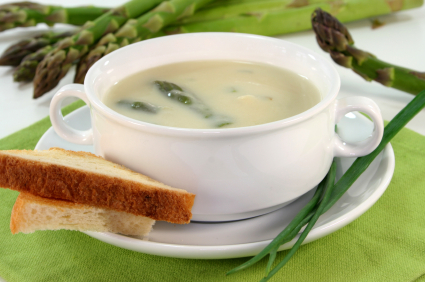
Asparagus Soup

1 06 2008

Asparagus is without a doubt one of my favourite vegetables.  So you can imagine how pleased I am that we’re in the heart of asparagus season and locally grown stalks are available everywhere.   They make an excellent accompaniment to grilled or roasted meats, as the basis for a salad or stir fry or are delicious just on their own!  To get the asparagus season started, here is a simple asparagus soup that makes a nice lunch with a light sandwich or is great way to begin a spring-inspired dinner.

Asparagus Soup

Makes four 1-cup servings

(Can be made VEGETARIAN)

  • 1 Tablespoon neutral oil, such as safflower or canola
  • 3 leeks
  • 1 clove of garlic, peeled and roughly chopped
  • 1 bunch (approx. 12 oz or 2 cups chopped) asparagus, woody ends discarded and cut into 1″ pieces
  • 1 medium russet potato, peeled and cut into 1/2″ dice
  • 3 cups chicken OR vegetable stock (homemade or canned, try to use low-sodium stock)
  • 1/2 cup half-and-half (see ‘Helpful Tips’ at the bottom for further suggestions)
  • Salt & pepper, to taste
  1. Place leeks on a cutting board.  Cut off and discard green leaves and root ends, leaving just the white bulbs.  Slice the bulbs lengthwise down the middle.  Rinse well under running water, making sure to clean out all the layers.  Return to cutting board and lay the flat side down.  Cut into ‘rings’, approximately 3/4″ thick.
  2. In a large saucepan, heat oil on medium-high.  Add leeks and garlic and saute until the leeks are soft and just begining to brown, approximately 4 minutes (be careful they don’t start to burn!)
  3. Add asparagus pieces, potato and stock to pot.  Cover and simmer on medium heat until asparagus and potatoes are tender, approximately 15 minutes.
  4. Once vegetables are tender, remove from heat and reserve a few of the tips for garnish.  Carefully puree vegetable mixture with an immersable hand blender or in a blender until smooth.
  5. Return puree to saucpan and add half-and-half.  Season with salt and pepper to taste.  Garnish servings with reserved asparagus tips.

Helpful Tips:

  • The soup can be made in advance and re-heated for service, making an excellent starter course for a spring dinner party
  • Be careful not to overcook the asparagus – it will start to become an unappetizing colour!
  • When pureeing soup, be careful not to fill the blender too full.  You may have to puree the soup in batches
  • As a healthier alternative, you can substitute low-fat canned evaporated milk for the half-and-half.  It won’t be quite as good though!  Or, you could make it extra decadent by using whipping cream (35%) to produce a rich, silky soup.

Asparagus Soup


Why Eat Seasonally?

29 05 2008

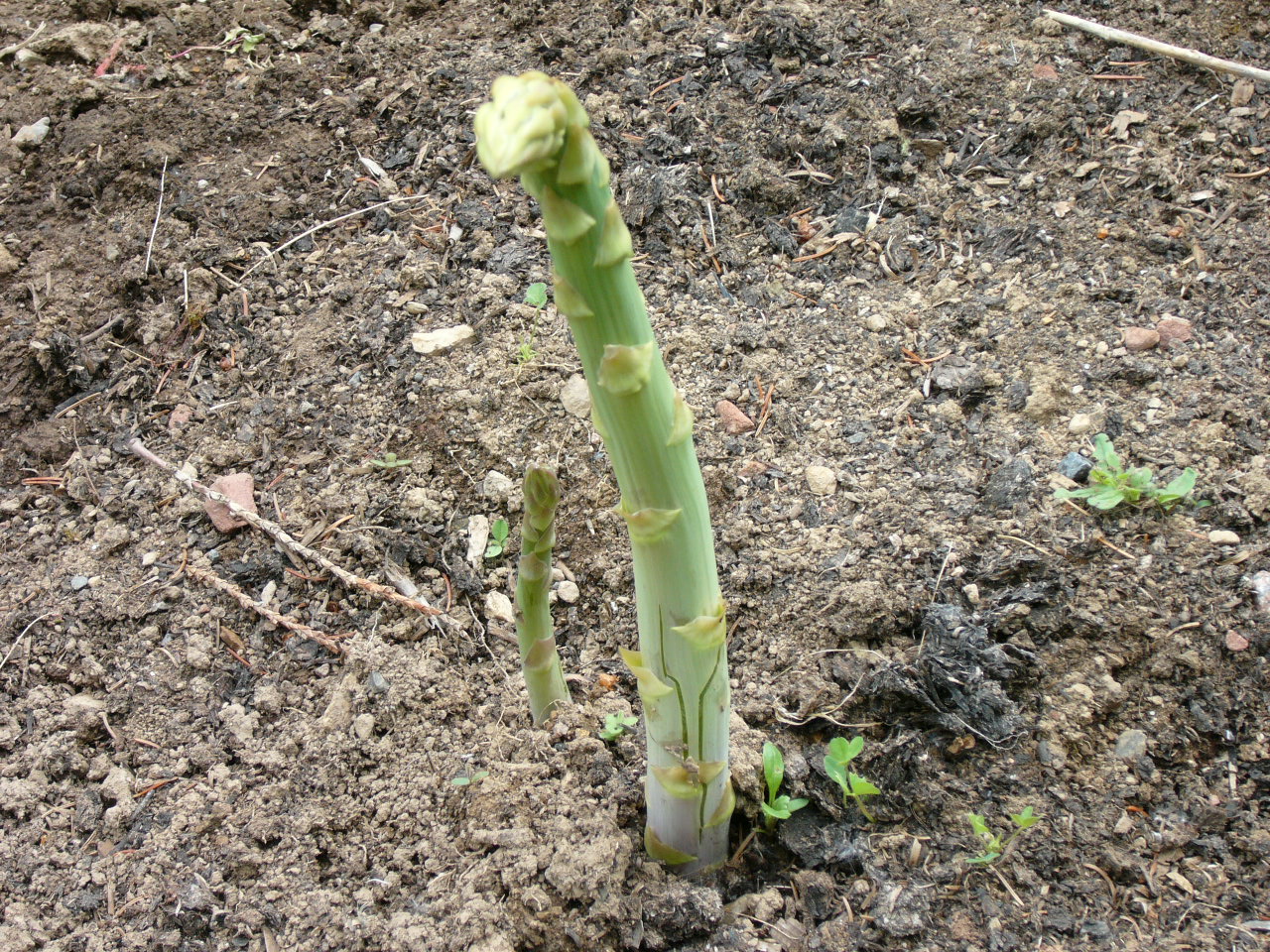
Walk into any supermarket today and you can find a vast array of produce from around the world.  While this gives us a huge variety from which to choose, it can also lead to inferior tasting produce arriving in stores thousands of miles from where it was grown.   When you eat food that has been grown locally in its proper season, the difference in taste is astounding: food actually tastes the way it’s supposed to!  You cannot compare the flavour of an imported strawberry in January to one that was grown locally in June.   The pure deliciousness of in-season fruits and vegetables means that as a cook, your job becomes much easier.  In the spring, for example, fresh steamed asparagus with a pat of butter and some salt and pepper makes a delicious side dish with minimal effort. 

There is also an economic factor – food grown locally in its season is generally less expensive than imported produce.   In addition, with the recent focus on environmental issues, locally grown means less transportation and therefore less fuel consumption. 

I’ll be the first to admit that for years I did not take much notice of what was in season throughout the year.  If I felt like having asparagus in December I thought, ‘why not?  They have it at the store’.  Of course it’s imported from Peru and costs dearly but you can get it.  Since I’ve started paying attention to when produce is at its peak, I’ve eaten much better.  Sometimes it reaches the point of ridiculous: I ate so many peaches during the brief peach season last summer that I ALMOST got sick of them!  They were truly divine – plump, juicy and bursting with flavour.  Once you’ve had them at their best, you’ll never be satisfied with an anemic imported peach in January. 

Of course living in a northern climate places severe restrictions on what is available throughout the winter.   It can be difficult to live on meat and root vegetables for the duration of the season but there are ways to make the best of the situation.   For example, there are some excellent canned tomatoes and you can always get greenhouse and imported stuff, it just won’t be as delicious as during the summer.  Cooking methods such as braising and stewing can turn simple ingredients into mouth-watering meals.   Certainly no one is saying that you have to follow a rigorous 100-mile diet or eat only things you grow yourself!  Rice, citrus fruit, sugar, coffee, chocolate and olive oil are just some of the foods in the Canadian diet that make our culinary lives much richer.  However, I hope to encourage people to try and make the best of what we have available when it comes into season because our summers are short but the bounty is plentiful.  And, of course, delicious. 

Bon Appetit & Enjoy!


Greetings!

27 05 2008

Welcome to The Seasonal Gourmet, a blog dedicated to bringing you fresh, original recipes inspired by our wonderfully diverse seasons.  It’s Spring in Canada so that means we’re starting to see the very first fresh local vegetables hit the market.   So far I’ve been experimenting with fiddleheads, rhubarb, ramps (wild leeks) and lots and lots of asparagus!  I’m just getting things set up so check back soon when I will start posting my latest culinary discoveries as we move into summer.