Farmers’ Market Report – July 8th, 2010

8 07 2010

Zucchini blossoms are a rare and delicious summer treat.

Welcome to my first Farmers’ Market Report for Summer 2010!  The markets are at their peak for the next couple of months and this week’s offerings did not disappoint.  In fact, growing conditions in Southern Ontario have been so good this year, there were a few surprises.  Here is a rundown of some of this week’s highlights:

Corn
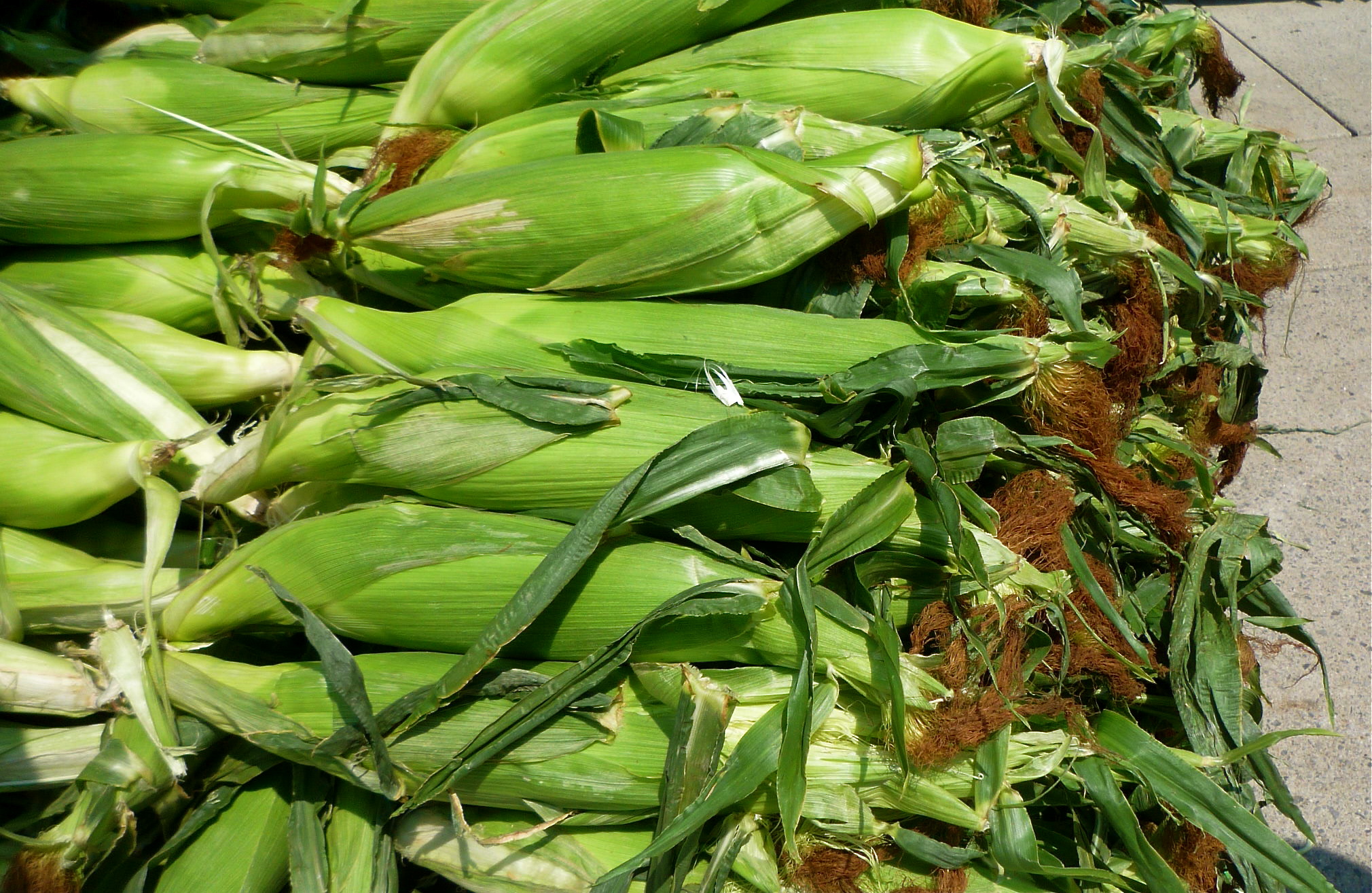
Corn has arrived at Ontario markets earlier than usual this year.

I was a bit stunned to see the first local corn at the markets already.  Speaking with some farmers, I learned that’s about two weeks earlier than normal this year.  I bought six ears to experiment with, crossing my fingers the quality was going to be decent. The ears were on the small side but the kernels were very tender.  It wasn’t as flavourful as I’d hoped but because it’s so early, I’m sure later harvests will be sweeter. My favourite way to eat corn is boiled, rolled in butter and then topped with salt and pepper. However, if you’re looking for something more elegant, try my recipe for Corn with Red Pepper and Herbs.

Peaches

Like corn, peaches are also early this year.  I didn’t buy any this week but we’ve been having a heat wave so hopefully that bodes well for upcoming weeks (peaches love hot, dry weather).  Peach Tiramisu is an elegant, no-bake dessert that showcases fresh peaches beautifully.

Apricots

Apricots were abundant at this week's market.

I often find raw apricots kind of bland with a bit of a mealy texture but the ones I bought today were pretty tasty.  They had a nice sweet-tartness to them so I ate a few out of hand.  I chose ones on the smaller side but the farmers were selling larger ones as well.  Apricots are ideal for both sweet and savoury recipes; why not make some Spicy Apricot Glazed Grilled Shrimp?

Herbs

Fresh herbs were in abundance this week including basil, mint and dill.  I keep an herb pot during the summer for day-to-day herbs but if I decide to do any large batch pickling or pesto, I’ll head to the farmer’s market to buy large amounts at a good price. To make use of summer herbs, check out my recipes for Pesto Sauce and White Bean Dip with Fresh Herbs.

Summer Squash
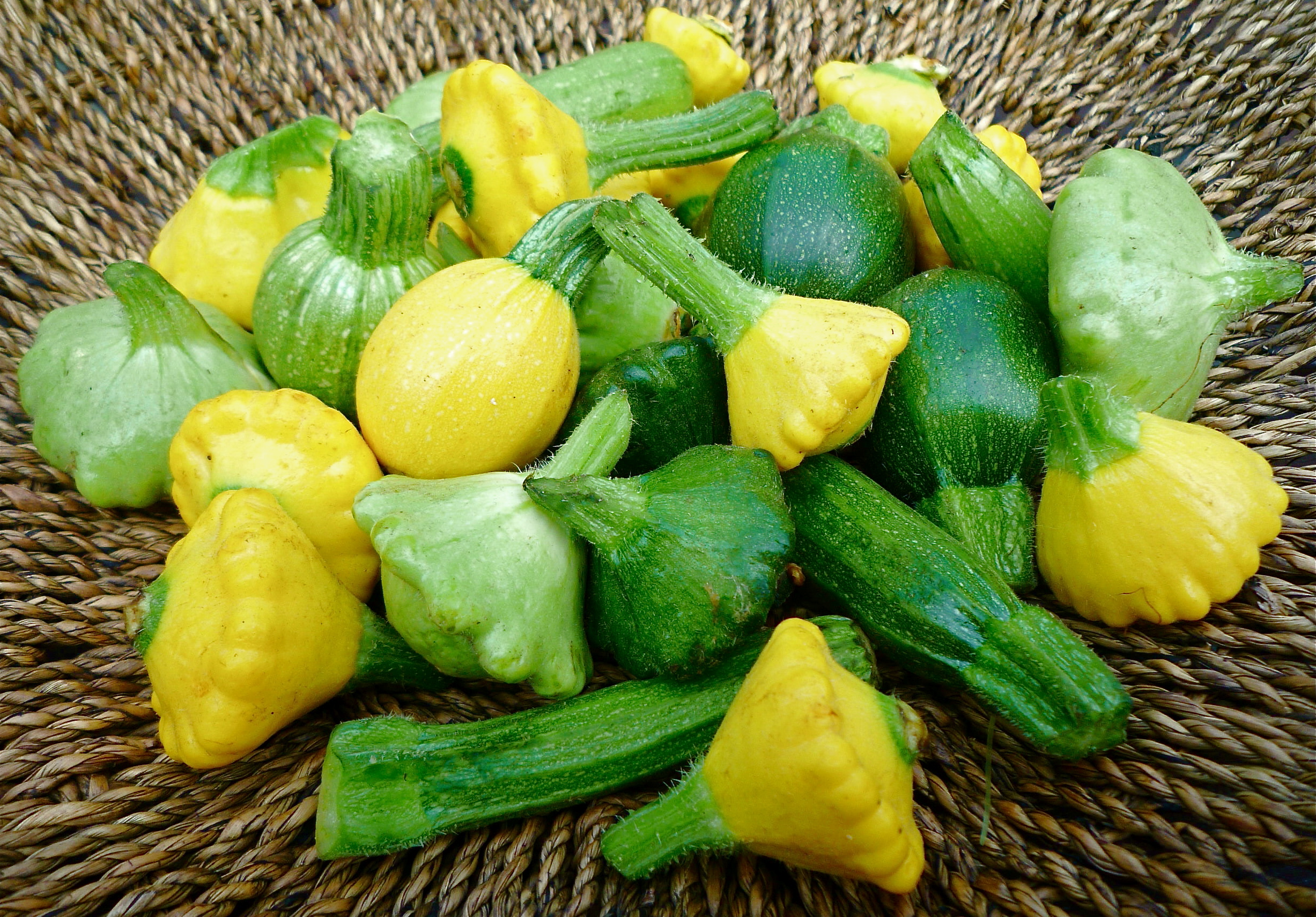
Pattypan squash and baby zucchini.

I have a feeling that zucchini are going to take over many gardens this summer, judging by the number and size of them at this week’s market.  Many of the yellow and green zucchini on display were already getting a little big for my taste (smaller ones tend to be less watery and are better for most recipes).  Pattypan squash were also abundant this week. You can make the most of summer squash by making Zucchini Pie with Fresh Basil or a moist Zucchini Bread with Cream Cheese Frosting.  I was also excited to find zucchini blossoms at a local grocer this week.  They are fragile and rare but will occasionally turn up at local markets.  To use them, try my recipes for Stuffed Zucchini Blossoms.

I discovered another summer squash this week that I was not familiar with: vegetable marrow (see photo below).  I asked the farmer about them and learned that they are very similar to zucchini and are often stuffed with a ground meat mixture.  It seems to be a popular vegetable in England.  You can find a recipe for stuffed vegetable marrow here: Recipe for Stuffed Marrow with Sausage Meat.
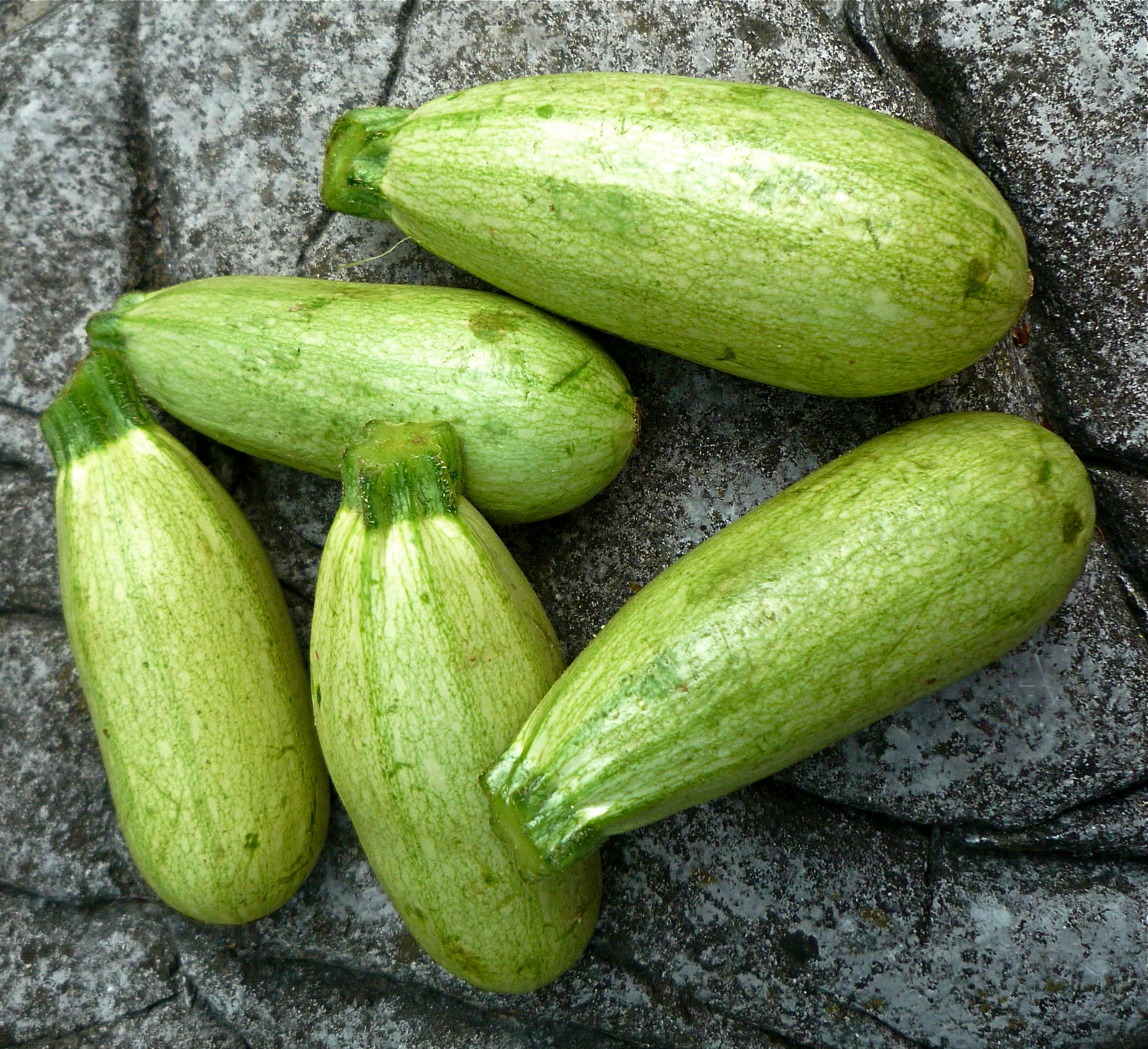
Vegetable marrow are similar to zucchini and are delicious stuffed.

Cucumbers

My husband loves cucumbers and often eats sliced cukes with a dash of salt and pepper as a snack.  They also add a fresh note to sandwiches and salads.  A crisp Asian Summer Slaw makes a great no-cook dinner.  Some of the stalls were selling dill alongside baby cucumbers – one-stop shopping for pickle makers.  Pick up some smoked salmon to make a Smoked Salmon and Cucumber Salad that is accented with fresh dill.

Cherries

Both sweet and sour Ontario cherries were abundant this week.  While sweet cherries are imported from the U.S. each spring, sour ones are harder to find.  My grandmother had a sour cherry tree in her yard so they were the only kind we ever had when I was growing up.  They’re not very good raw but once cooked and sweetened, they have a tartness that is addictive.  For a classic sour cherry pie recipe, check out this one from Epicurious.com: Classic Sour Cherry Pie with Lattice Crust.  If you have sweet cherries, why not make a Cherry Clafouti with Almonds or a simple Cherry Almond Bread?

Asparagus

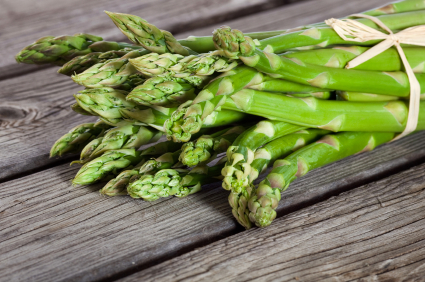
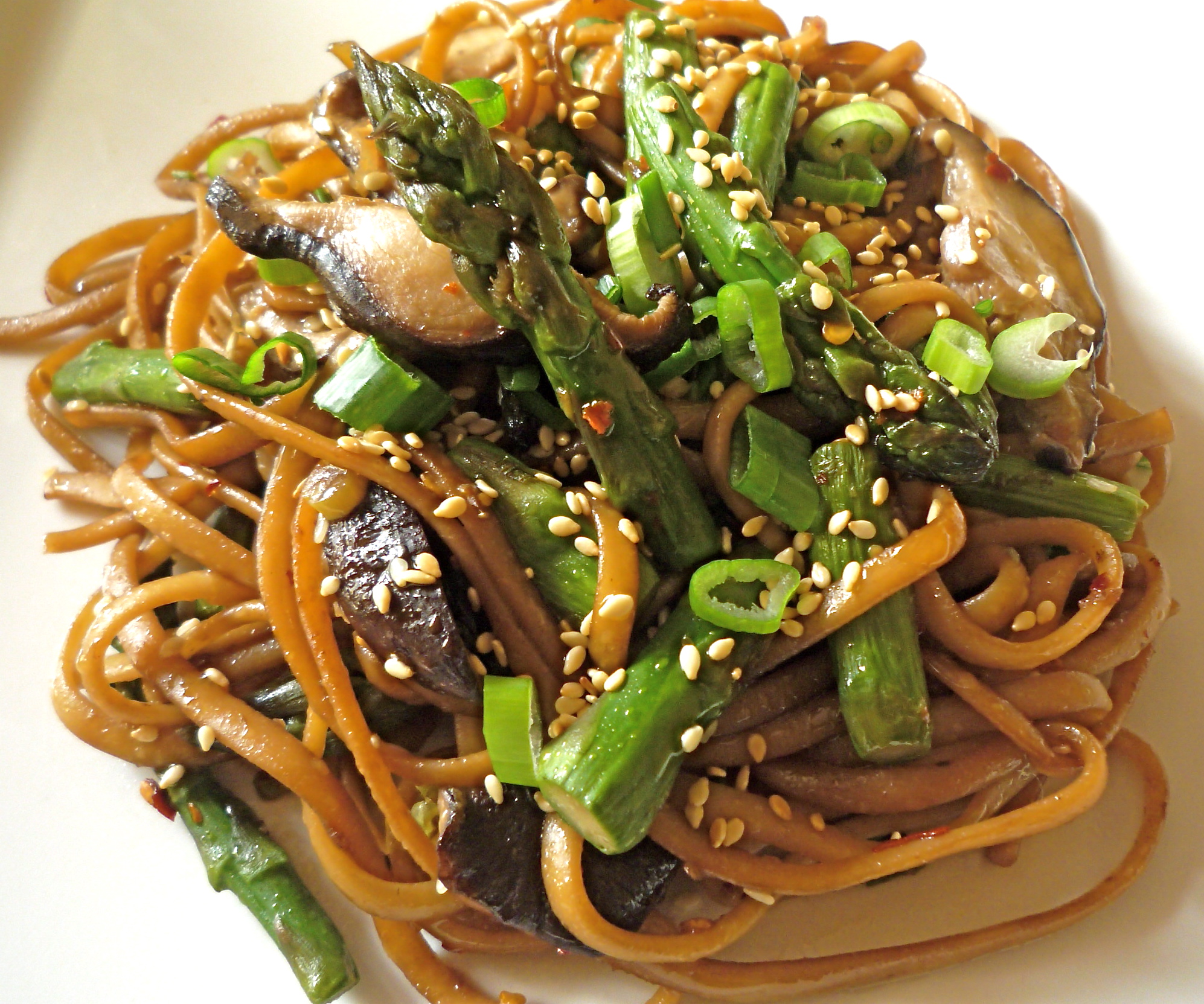
I was told that this is probably the last week for asparagus this year.  Usually by the end of the season, asparagus is starting to look tired but not this year.  The stalks were thick, robust and vibrant.  This was an exceptional year for asparagus and I enjoyed it in a variety of dishes.  Check out the Asparagus Archives for some delicious ideas ranging from Sesame Noodles with Asparagus and Mushrooms to a rich and decadent Roasted Asparagus Lasagna.

Until next week,

Bon Appétit and Enjoy!


Asian Summer Slaw

7 07 2010

Beat the heat with a refreshing salad of seasonal vegetables and an Asian-style dressing.

We’re having a major heat wave in Southern Ontario, with high temperatures and humidity not seen here since 2007.  While this is good for growing things such as peaches, tomatoes and grapes, it can be a challenge when trying to decide what to eat for dinner each night.  No one wants to run a hot oven when the temperature is soaring so we look for things that are fresh and cooling.

So what should we eat?  Salads, of course!  Salads are a great option at the peak of summer because a lot of local produce is now available at the market.  A vibrant salad packed with fresh vegetables and lightly tossed with an Asian-inspired dressing is the perfect dish for dinner. It pairs well with grilled meats and rice dishes or you can add some grilled shrimp or chicken to make it a substantial main dish on its own. Cooked whole-wheat spaghettini or chow mein noodles would also be a nice addition.

The prep work for this salad takes a bit of time but none of it is difficult.  You could use bagged shredded coleslaw mix in place of chopping the cabbage and carrots. The dressing can be made in advance and refrigerated until ready to use.  However, don’t dress the salad too far in advance or it will get soggy and limp.

Asian Summer Slaw

Makes 4 to 6 side dish servings (can be made as a main course as well, see above)

(VEGETARIAN)

Dressing:

  • 1/2 cup Hellman’s/Best Foods style light mayonnaise
  • 2 teaspoons sugar
  • 2 Tablespoons rice wine vinegar
  • 1 Tablespoon sodium-reduced soy sauce
  • 1 clove garlic, very finely minced
  • 1 teaspoon finely minced fresh ginger
  • 1/2 teaspoon sesame oil
  • 1/2 teaspoon red pepper flakes (or more, if you prefer a bit of heat)
  1. In a small bowl, add all ingredients and mix until thoroughly combined.  Keep refrigerated until ready to use.

Salad:

  • 3/4 cup snow peas (about 15), trimmed
  • 1/2 large red bell pepper, cut into thin strips
  • 1 small or 1/2 a large carrot, peeled and cut into matchsticks
  • 4 green onions, chopped (white and light green parts – save the dark green tops for garnish)
  • 1 cup sliced cucumbers – cut about 1/4″ thick (about 1/2 a large cuke)
  • 1 cup bean sprouts
  • 2 cups shredded Napa or green cabbage
  • 2 teaspoons toasted sesame seeds
  1. To blanch snow peas: Prepare a bowl of cold water and add a few ice cubes. Set aside.  Bring a small pot of water to a boil. Add snow peas and cook for 1 minute.  Drain peas and plunge them immediately into the ice water to halt cooking.  Drain and dry them once they cool and add to a large salad bowl.
  2. Add the red pepper strips, carrot, green onion, cucumber, bean sprouts and cabbage to the bowl.  Use salad forks (or spoons) to toss all ingredients until combined.  Add dressing to the salad a little at a time and stir to coat the vegetables, making sure you don’t overdress the salad (you probably won’t use all of the dressing. Extra dressing can be kept covered in the fridge for a couple of days).  Stir in sesame seeds and garnish with green onion slices.
  3. Serve as a side dish or add some protein and noodles as described above.

Bon Appétit and Enjoy!


A Few of My Favourite (Canadian) Things…

2 07 2010

Maple syrup in a maple leaf bottle

A belated Happy Canada Day to all of my Canadian readers!  I must admit that I started to write this yesterday (Canada Day) and got distracted by various holiday celebrations, including a great fireworks display over Lake Ontario.

Canada Day is the one day of the year when we pull out our flags to celebrate our country and all the things that make it great (or just enjoy a day off in the middle of the week).  Canada is easy to stereotype but there’s a lot more going on here than hockey, moose, Celine Dion and beer (although there’s plenty of those too).  The culinary scene in Canada has never been so diverse and interesting and I’m constantly finding inspiration from local chefs, farmers, producers and writers.  Here are a few of my favourite Canadian food-related things:

Canadian Wines

A selection of Ontario wines

People outside of Canada might not even be aware that we have a number of wine producing regions that are growing rapidly. British Columbia and Ontario lead the way with dozens of wineries, ranging from small family-run producers to larger, corporate-owned vineyards.  Canadian icewines have won international awards and we also produce some top-notch whites including riesling (a favourite of mine in the summer).  To learn more about the largest wine regions of Canada, visit www.winebc.com and www.winesofontario.com

Unique Dishes

A take-out container of poutine

Every nation has dishes that are considered specialties of that country.  Because Canada is so spread out and diverse, a number of iconic dishes can be found across the country including poutine (french fries topped with cheese curds and gravy), donairs (spiced meat wrapped in a pita and topped with a sweet garlic sauce), smoked meat, Bloody Caesars, butter tarts, and Nanaimo bars.  A recent Globe and Mail feature asked what we thought our national dish might be: My National Dish (click through the slide show of Contenders at the bottom).  I’d rather not choose one – I like them all!

Great Products

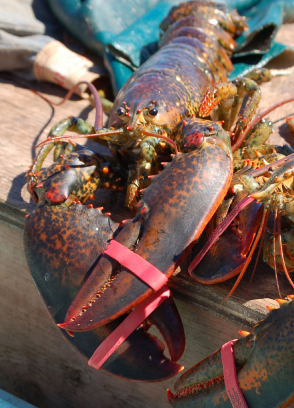
Atlantic lobsters are served in restaurants around the world

Despite a relatively short growing season, Canada has great produce.  During the peak summer months, farmer’s markets are full of locally grown fruits and vegetables that range from the familiar to more exotic fare such as bitter melon and rapini.  We also have some of the world’s best seafood, fished from both the east and west coasts.  Prince Edward Island oysters, B.C. smoked salmon and Atlantic lobster are served at fine restaurants around the world.  Maple syrup is another famous Canadian export that is readily available at any grocery store across the country. Canadian artisan cheese makers are beginning to make their presence felt in the world with a Quebec produced goat cheese, Le Cendrillon, winning the title of Best Cheese in the World at the 2009 World Cheese awards.  Many provinces are now producing interesting and unique cheeses from goat, sheep and cow’s milk.

Another Canadian product I’ve been experimenting with over the past few months is duck. Brome Lake in Quebec’s Eastern Townships is famous for its ducks and many products are now easier to find in stores outside of the province.  I’ve been testing recipes using confit legs, smoked breasts and duck foie gras I’ve purchased at the St. Lawrence Market and A Taste of Quebec in Toronto.  There is even a store dedicated to duck products on Boulevard St-Laurent in Montreal called  Le Canard Libéré.

For some delicious recipes using Canadian products, check out some of these recipes:

Home Grown Talent

Some of Canada’s food personalities have recently gained more recognition abroad with the launch of the Cooking Channel in the United States.  Although their programs have been airing on Food Network Canada for a while, TV chefs such as Chuck Hughes (Chuck’s Day Off), David Rocco (Dolce Vita), Laura Calder (French Food at Home) and Roger Mooking (Everyday Exotic) will gain a much wider audience in the U.S.  Laura Calder also recently won a James Beard Foundation Award for her program, beating out popular nominees The Barefoot Contessa and Iron Chef America.  Other prolific Canadian food personalities include Lucy Waverman, celebrity chef Lynn Crawford, who recently launched a new tv show and a restaurant, and Michael Smith, who competed on Iron Chef America and cooked for the 2010 Vancouver Olympics.

Local Restaurants

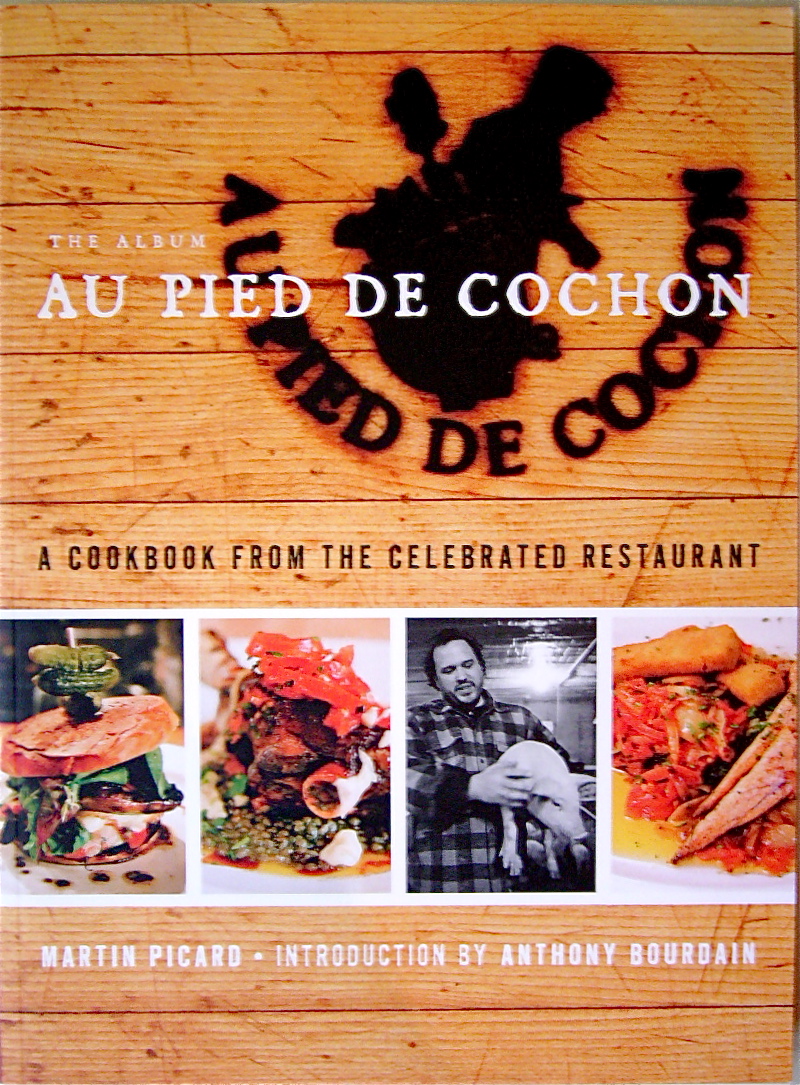
The Au Pied de Cochon cookbook

The restaurant scene in Canada has never been so exciting.  Many of the country’s top chefs are championing the use of local products and creating dishes that are uniquely and distinctly Canadian.  Chef Martin Picard of Montreal’s temple of decadence, Au Pied du Cochon, uses local products to fuel his over-the-top cuisine. The menu features such madness as poutine topped with foie gras, cromesquis (fried cubes of foie gras that explode and melt in your mouth) and towers of Canadian seafood in the summer.  The last time I was there, I watched the chefs plate an entire pig’s head that had been cooked in their wood-burning oven.  Toronto’s Black Hoof restaurant is curing their own meats for charcuterie plates while Vancouver’s C Restaurant is featuring the best of local seafood in artistic presentations.  These are just a few examples – there are many other innovative Canadian restaurants from coast to coast who are shaping the culinary direction of our nation.

Diversity

Le Petit Alep, a Syrian/Armenian restaurant in Montreal

One of the great things about living in Canada in general is the great cultural diversity of our people.  In major cities such as Toronto, Montreal and Vancouver, you can sample the cuisines from dozens of nations – the world is your oyster, so to speak. You can have dim sum for lunch, sushi for dinner and Lebanese sandwiches as a midnight snack, if you so choose.  Many restauranteurs are using local ingredients in the preparation of ‘ethnic’ dishes (such as Vij’s in Vancouver), creating local/global hybrid dishes that are unique and interesting. As our population continues to grow, the fusion of various influences will only make eating ‘Canadian’ food more exciting.

Bon Appétit and Happy Canada Day!


Welcome to Summer!

21 06 2010

Summer produce should be hitting its peak within a few weeks.

Today is the first day of summer, which is always exciting.  Kids are almost finished school for the year and the weather is heating up.  Farmer’s markets are underway for the season, although it will likely be a few weeks until they hit their peak (lots of strawberries and asparagus right now though).  It was a busy spring – I had guests visiting, made a couple of trips to Montreal and my husband was stuck in Vancouver on business for a lengthy stretch.  Summer is a time when we can (hopefully!) relax a little and keep cooking and entertaining simple.

I hosted a casual brunch for ten last weekend and chose a menu inspired by what’s in season.  Many of the components can be made in advance and warmed as guests arrive.  I served everything buffet-style, which allowed everyone to take what they wanted and kept things informal and relaxed.  Here is what I served:

Early Summer Brunch Menu

Cherry Almond Bread

Asparagus Quiche

Ham and Cheese Tart (I left out the leeks and added some finely diced onion)

Green Salad with Basic Vinaigrette

A cheese plate, composed of local cheeses and garnished with fresh grapes

Bagels with cream cheese (Chive Cream Cheese topped with smoked salmon is a nice variation)

Sliced Montreal Smoked Meat

Build-Your-Own Strawberry Shortcakes

Mimosas

Coffee

A special thanks to my mom for helping with all of the preparation and cleanup!

I’ll be starting my annual Farmer’s Market Reports later this week so check back for some great recipe ideas for what’s in season.

Bon Appétit!

Trish


Strawberry Mojito

29 05 2010

Strawberry mojitos are very refreshing on a hot afternoon.

The weather in Ontario this May has been incredible – unseasonably warm (hot even!) and very dry, which is unusual.  It feels like it could be mid-July instead of the end of May.  If this is any indication of what’s ahead, we’re in for quite a summer.

When the weather heats up, naturally we look for ways to cool down.  Iced tea, ice cream, lemonade and popsicles are just some of the treats that keep us cool.  For many adults, enjoying some frosty beverages on a patio is the perfect way to spend a lazy Saturday afternoon with friends.

I was at the farmer’s market this morning and local strawberries were abundant. There were also a number of vendors selling bunches of fresh mint.  It was then that I had a light-bulb moment: hot weather + front porch + strawberries + mint = strawberry mojitos! A mojito is a Cuban cocktail traditionally made with rum, lime, mint , sugar and sparkling water.  I first learned to make them while attending a wedding in Cuba. The resort we were staying at had a demonstration one day on how to make Cuban cocktails such as Mojitos, Cuba Libres and Hemingway Specials.  The key to making a proper mojito is to muddle the mint well. There are wooden muddlers that you can buy but a wooden spoon will work just fine.

Balance is important in this drink – you don’t want to venture into Girl Drink Drunk territory.  Keep the sugar to a minimum and let the strawberries and lime add a sweet-tart note.  To keep things easy, I use simple syrup to sweeten the drink instead of cane syrup or bar sugar (a quick dissolving sugar).  It’s very easy to make and can be used in a number of cocktails.

Strawberry Mojito

Makes 1 drink – can easily be multiplied

  • 5 large mint leaves
  • 1 to 1-1/2 oz. simple syrup (see recipe below)
  • 3 large or 5 small very ripe strawberries, hulled and cut into a small dice
  • 1/2 oz. fresh lime juice – from about 2 limes
  • 1-1/2 oz. white rum
  • Club soda
  • Ice
  • Fresh mint and a strawberry to garnish
  1. In a highball glass, add mint leaves and 1 oz. of simple syrup. Use a muddler or wooden spoon to mash the leaves in the syrup until they are broken up.
  2. Add the strawberry pieces and mash them with the spoon until they are broken up and juicy.
  3. Add ice cubes and pour in lime juice and rum.  Stir until combined and top with club soda.  Taste and add a bit more simple syrup if desired.
  4. Garnish with fresh mint leaves and a strawberry.

Simple Syrup

Simple syrup is one part water, one part sugar so it can be adapted to any quantity.  For a half cup of syrup you’ll need:

  • 1/2 cup sugar
  • 1/2 cup water
  1. In a small saucepan, add sugar and water and bring to a simmer on medium heat
  2. Stir sugar until it dissolves.  Remove from the heat and let the mixture cool before using.  Syrup can be stored in the fridge for a few days.  Extra syrup can be used in a number of other cocktail recipes.

Cheers and Enjoy!


Tempura Chive Blossoms

26 05 2010

Chives are easy to grow and very versatile.

Chives are one of my favourite herbs and they couldn’t be easier to grow.  Stick some in a pot or garden and they will reappear each spring without any tending, spreading and becoming more robust each year.  The green chive stems can be used in a number of dishes and make a great garnish but their pretty purple blossoms are edible as well.

Chive blossoms: pretty decoration or delicious snack? They're both!

Chive blossoms can be dipped in a simple tempura batter and fried to make a delicious appetizer with a delicate oniony flavour. Tempura is a method of battering and frying seafood and vegetables that is popular in Japanese restaurants.  It sounds exotic but requires nothing more than some pantry basics.  Serve with cold beer, sake or sparkling wine.

Tempura Chive Blossoms

(VEGETARIAN)

Makes 30 to 35 blossoms

  • 30 to 35 large chive blossoms with about 1″ of chive stem still attached
  • 1 cup ice cold water (in a 2 cup measuring cup, add one cup of ice cubes and one cup of water – measure out 1 cup of water when ready to use)
  • 1 large egg
  • 1 cup all-purpose flour
  • 1 teaspoon baking powder
  • Pinch of salt plus extra for finishing
  • Oil for frying (preferably a neutral oil such as safflower)
  • Chopped chives for garnish
  • Lemon wedges (optional)
  1. In a large bowl, add ice water and egg.  Beat until smooth and thoroughly combined.
  2. Add flour, baking powder and a pinch of salt.  Whisk batter until completely smooth and combined.
  3. Carefully place chive blossoms in batter and gently stir until blossoms are coated.
  4. Heat enough oil in a large, heavy bottomed saucepan to measure about 1″ deep.  Heat on high heat until it reaches 350 degrees Fahrenheit or a small piece of bread can be fried to golden brown in about 10 seconds.
  5. Carefully place about 10 of the blossoms in the oil, wiping off any excess batter against the edge of the bowl as you lift them out. You can use the stems to handle them.
  6. Reduce the heat slightly to medium-high and fry the blossoms until golden brown, about two minutes.  Use a slotted spoon or spider to remove the blossoms and place on a paper towel-lined plate.
  7. Repeat with remaining blossoms, working in batches.
  8. Sprinkle cooked blossoms generously with salt and serve immediately.  Garnish with chopped chives and serve with lemon wedges if desired.

Bon Appétit and Enjoy!

Tempura Chive Blossoms


Strawberries and Cream Cupcakes

20 05 2010

Strawberries and cream is a classic combination.

I was very excited yesterday to find the first Ontario strawberries of the season at the market.  They were considerably more expensive than the anemic imported strawberries sitting next to them but their sweet flavour was worth the extra couple of dollars. They actually tasted the way strawberries should taste and not like half-ripe, flavourless berries that were shipped hundreds of miles!  Hopefully the great weather we’ve been having this spring means we’ll have a long season to enjoy them.

Bigger isn't always better: The imported strawberry (left) may be big, but it doesn't have the juicy, bold flavour of the small, locally grown berry (right).

A perfectly ripe, in-season strawberry is pretty much perfect as-is but you can have fun with them too.  They’re great in pies, shortcakes, jam or even cocktails but one of my favourite ways to enjoy them is sprinkled with a bit of sugar and topped with real whipped cream.  Strawberry and vanilla-flecked cupcakes topped with creamy frosting and fresh berries turn this idea into a fun dessert that is perfect for summer gatherings.  They’re sure to be a hit with kids of all ages (the last time I made them, they disappeared within minutes!).

Click here to get the recipe from Suite 101.com: Strawberries and Cream Cupcakes

Bon Appétit and Enjoy!

A Strawberries and Cream cupcake


Asparagus 101

16 05 2010

It’s no secret that I love, love, love asparagus.  Each spring, I anxiously await the arrival of local asparagus in the markets and then spend the next six weeks or so thinking up new ways to enjoy it.  Luckily, asparagus is low in calories and packed with vitamins so there’s no reason not to indulge!

Local asparagus in season has a sweetness and vibrant flavour that isn’t found in imported spears that have travelled hundreds of miles.  If you don’t believe me, do a blind taste test with imported asparagus vs. local – I guarantee you will be able to tell the difference.  The best way to enjoy asparagus at its peak is simply cooked and dressed with just a bit of butter or olive oil and a sprinkling of salt.  A squeeze of fresh lemon is also delicious.

How to Prepare Asparagus for Cooking

Asparagus doesn’t require much prep work to get it ready.  Wash the spears and dry them thoroughly.  The woody ends are tough so it’s best to remove them.  If you hold an asparagus spear and bend it, it will naturally break where the tough part ends. However, I usually just trim the ends – cut where the ends turn from woody and pale to green and vibrant, usually an inch or two from the bottom.  The spears can be peeled if the skin is tough and stringy, which sometimes happens with thicker spears. However, I usually don’t bother.

How to Cook Asparagus

Asparagus cooks quickly so it’s a great way to add a vegetable to the dinner menu. It’s also very versatile so it can be used in soups, lasagnas, pastas, tarts, quiches or stir fries.  There are a number of ways it can be cooked:

Roasted: Toss asparagus with a bit of oil and roast in an even layer on a baking sheet at 425 degrees Fahrenheit for 12 to 15 minutes.

Steamed: Steam spears in a steamer basket or small amount of water until just tender, about 5 to 7 minutes.

Grilled: Prepare a hot grill and brush asparagus with a small amount of oil.  Grill for about 2 to 3 minutes per side (you might want to use a grill pan, to keep the spears from falling through the grate).

Stir-Fried: Heat a small amount of oil in a skillet on high heat.  Add asparagus and stir fry for about 2 minutes.  Add a tablespoon of water or broth and cook until just tender, about 3 to 4 more minutes.

Asparagus Recipes

For more great asparagus recipe ideas, check out some of my archived recipes (including a couple of new ones!):

Bon Appétit and Enjoy!

Sesame Noodles with Asparagus and Mushrooms


Rhubarb Refresher

15 05 2010

A Rhubarb Refresher is a delicious cocktail made with rhubarb, ginger and rum

Local rhubarb has just started appearing at markets in Southern Ontario and other areas won’t be far behind. The bracingly tart stalks are delicious in pies, tarts, drinks or even savoury dishes, provided you sweeten the fruit a bit.

This drink is a little sweet, a bit tart and has some heat from the ginger. It pairs well with rum to make a refreshing springtime cocktail that is perfect for entertaining.  For a non-alcoholic version, skip the rum and top the rhubarb-ginger syrup with club soda and a squeeze of lemon.

Rhubarb Refresher

Makes 2 drinks

  • Ice
  • 1-1/3 cups Rhubarb-Ginger Syrup (see recipe below)
  • 3 oz. amber rum
  • A generous squeeze of lemon
  • Club soda, to top drinks
  • Lemon wedges for garnish
  1. In a cocktail shaker, add ice, rhubarb-ginger syrup, rum and a squeeze of lemon. Shake well and strain into two low-ball glasses or martini glasses.  Top with club soda and garnish with lemon wedges.

Rhubarb-Ginger Syrup

Makes about 1-1/3 cup

  • 4 cups chopped rhubarb, cut into 1″ pieces (about 3 to 4 stalks)
  • 3/4 to 1 cup sugar, to taste
  • 1 cup water
  • 2″ piece of fresh ginger (about the diameter of a nickel), peeled and grated
  1. In a saucepan, add all ingredients and bring to a simmer on medium-high heat. Let simmer for 15 minutes.
  2. Mash fruit well with a spoon.  Strain into a bowl through a fine mesh strainer, using a spoon to extract as much juice as possible (the leftover fruit solids are delicious to eat).
  3. Let syrup cool and use as desired.  It will keep covered in the fridge for a few days.

Cheers and Enjoy!


Fiddlehead Salad with Sesame Vinaigrette

12 05 2010

Fiddleheads are only available for a short time each spring so enjoy them while you can!

When I was growing up in rural New Brunswick, we would pick fiddleheads every spring along the river near my parents’ house.  Because fiddleheads aren’t grown commercially, they are truly a seasonal treat and are only available for a short time each year.  However, many supermarkets and farmer’s markets sell them and sometimes frozen fiddleheads can be found out of season. They are delicious in soups, salads, quiches, pickled or just cooked simply and topped with a bit of butter. Be sure to cook them well – there have been some reports of food borne illness related to undercooked fiddleheads. Cooking them thoroughly will also remove any bitter flavour that may be present in the ferns.

This salad makes a great side dish for an Asian inspired dinner.  Why not serve it with some grilled salmon with a light teriyaki glaze and steamed rice?  Pair with a crisp white wine such as a dry riesling.

Fiddlehead Salad with Sesame Vinaigrette

(VEGETARIAN)

Makes 4 servings

  • 4 cups of fiddleheads, cleaned and trimmed of any brown parts
  • Large bowl of ice water
  • 1-1/2 teaspoons toasted sesame seeds
  • 3 large green onions (scallions) cut into thin slices, white parts only – reserve some chopped green ends for garnish

Vinaigrette:

  • 2 teaspoons rice vinegar
  • 3 Tablespoons peanut oil or other neutral oil such as canola or safflower (avoid using peanut oil if there is a concern about peanut allergies)
  • ½ teaspoon Asian sesame oil
  • 1 Tablespoon dark sodium-reduced soy sauce
  • ¼ teaspoon red pepper flakes (or more, to taste)
  • 1 teaspoon sugar
  • 1 clove garlic, very finely minced

Directions:

  1. Prepare a large bowl of ice water and set aside.
  2. Fill a saucepan with enough water to just cover 4 cups of fiddleheads and bring to a boil. Add fiddleheads and cook until just tender, about 5 minutes. Drain fiddleheads and plunge immediately into the ice water to stop cooking. Drain again and place on a dishtowel or paper towel to dry thoroughly.
  3. In a small bowl, prepare vinaigrette. Add rice vinegar, peanut oil, sesame oil, soy sauce, red pepper flakes, sugar and garlic and whisk until well combined.
  4. Place cooked fiddleheads and green onion slices in a bowl and toss with vinaigrette until dressing evenly coats the fiddleheads. Place salads on a plate and garnish with toasted sesame seeds and a sprinkling of green onion slices.

This article first appeared on Suite 101.com

Bon Appétit and Enjoy!

Fiddlehead Salad with Sesame Vinaigrette