Sour Cream and Chive Noodles

11 04 2011

Chives are easy to grow in a pot and require little maintenance

The first green item of spring has arrived: Chives!  The oniony herb is usually the first thing to appear in my herb garden each spring after a very long winter so I think it’s worth celebrating with a new recipe.

This simple pasta dish only takes minutes to put together and makes a great side dish for chicken or beef. Think of this dish as an alternative to a baked potato with sour cream and chives.

Sour Cream and Chive Noodles

Serves 4 to 6 as a side dish

(VEGETARIAN)

  • 8 oz. (227 grams) dry egg noodles (equals about 4 cups of dry noodles)
  • 2 teaspoons unsalted butter
  • 1/4 cup chicken or vegetable stock or milk
  • 1/2 cup sour cream
  • 1 teaspoon dijon mustard
  • 1/2 cup chopped chives, plus extra for garnish
  • Salt and pepper, to taste
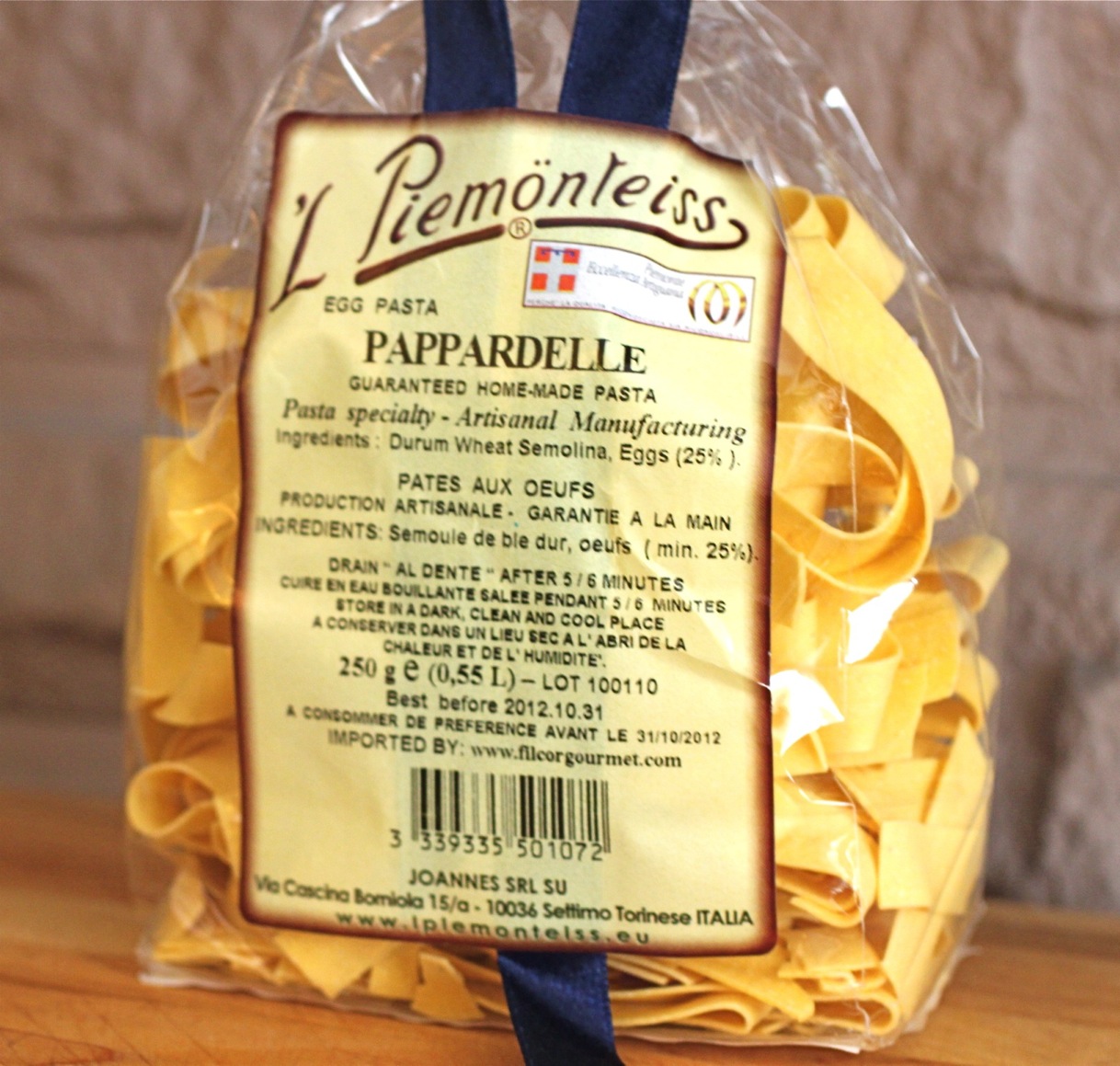
  1. Cook the noodles according to package directions (usually 5 to 6 minutes for al dente noodles).  Drain the water once cooked and return the noodles to the pot.
  2. Add the butter and stir until melted.  Pour in the chicken or vegetable stock (or milk) and add the sour cream and dijon.  Add the chives and stir until the noodles are thoroughly coated.
  3. Season with salt and pepper to taste.  Garnish with additional chopped chives and serve immediately.

Bon Appétit and Enjoy!

For more great ideas using chives, check out the Chive Archives.

Sour Cream and Chive Noodles make an easy and delicious side dish

Get updates from The Seasonal Gourmet on Facebook and Twitter.  Join the conversation today!

Copyright Trish Coleman. Please contact the author to obtain permission for republication.


Herb Roasted Chicken

3 04 2011

Crispy skinned and juicy, an herb roasted chicken makes a delicious and elegant dinner

Roast chicken is a classic dinner and perfect in any season.  However, I particularly enjoy it in early spring because it’s a bit lighter than some of the heavier dishes we enjoyed through the winter yet is still hearty and comforting when the weather remains cool. It’s also versatile and can be served with any number of side dishes, from Roasted Green Beans with Shallots to Celery Root Slaw.  And of course mashed potatoes are a must to soak up the delicious gravy. For more great ideas on how to use leftover roast chicken, check out my article Three Delicious Ways to Use a Rotisserie Chicken.

Bigger Isn’t Always Better

To keep the breast meat from drying out and the cooking time reasonable, select a smaller chicken weighing around 3 lbs. (1.5 kg). It will only take about 80 minutes to roast, which keeps the white meat from becoming stringy and dry. If you’re serving a crowd, consider roasting two smaller birds instead of one that’s twice the size so the roasting time will remain relatively short and the meat will stay juicy.

Boost the Flavour

Tucking herb infused butter under the skin before roasting keeps the meat moist but also adds flavour. Filling the cavity with fresh herbs, onion and garlic helps flavour the chicken and adds depth to the juices, resulting in delicious gravy. Use fresh herbs instead of dried for a brighter flavour. Fresh sage, rosemary, thyme and parsley are readily available year round at most supermarkets.

Juicy Herb Roasted Chicken

Serves 4 to 5

  • One chicken weighing about 3 lbs. (1.5 kg.)
  • 6 sprigs fresh thyme
  • 2 sprigs fresh rosemary
  • 2 sprigs fresh sage
  • 1 small onion, peeled and cut into quarters
  • 2 garlic cloves, peeled and lightly crushed
  • 2 Tablespoons olive oil, divided
  • Pinch of salt and pepper

Herb Butter:

  • 3 Tablespoons unsalted butter at room temperature
  • 1 teaspoon finely chopped fresh sage
  • ½ teaspoon finely chopped fresh rosemary
  • 1 teaspoon finely chopped fresh flat leaf (Italian) parsley
  • ½ teaspoon finely chopped fresh thyme
  • ½ garlic clove, very finely minced
  • Pinch of salt and fresh ground pepper

Gravy:

  • 1 cup chicken stock, preferably sodium-reduced
  • 3 Tablespoons flour
  • 2 Tablespoons dry white wine (optional)
  • Salt and pepper, to taste

To Make Herb Butter:

  1. In a small bowl, add all herb butter ingredients and use a fork to mix until combined. Wrap herb butter in a piece of plastic wrap and form into a ‘log’ about 3” long. Place in the freezer until firm, about 15 minutes. (Herb butter can be made in advance and refrigerated until use).

Preparing and Roasting the Chicken:

  1. Preheat oven to 450 degrees Fahrenheit. Make sure the cavity of the chicken is empty and pat the skin completely dry with clean paper towels or kitchen towels. Drizzle one tablespoon of olive oil in the bottom of a small roasting pan and place chicken in the pan.
  2. Stuff the cavity with sprigs of herbs, garlic cloves and quartered onion. Remove the herb butter from the fridge and slice the log into ‘coins’ about ¼” thick. Carefully lift the skin covering the breasts and slip the herb butter rounds under the skin, making sure to cover as much of the breast meat as possible. Make sure the skin covers all of the breast and butter.
  3. Rub the chicken with remaining tablespoon of olive oil and sprinkle with a pinch of salt and fresh ground pepper.
  4. Roast in the oven for 20 minutes at 450 degrees Fahrenheit. After 20 minutes, reduce the oven temperature to 350 degrees. Set a kitchen timer for 1 hour.
  5. After one hour, check on the chicken. Use a thermometer to test the internal temperature, at a thick part near the leg. It should read 170 degrees Fahrenheit when ready. If the chicken is not done, return to the oven and roast for another 10 to 15 minutes.
  6. Once the chicken has reached 170 degrees, remove from the roasting pan and set it on a carving board to rest.

To Make the Gravy:

  1. In a measuring cup, combine three tablespoons flour with one cup of chicken stock and whisk until smooth. Place the pan used to roast the chicken on a burner and bring the chicken juices to a simmer. Whisk in flour/stock mixture, add wine and cook until beginning to thicken, about 3 to 4 minutes. Season with salt and pepper to taste and strain the gravy through a sieve to remove lumps. Serve over carved chicken.

Bon Appétit and Enjoy!

Get updates from The Seasonal Gourmet on Facebook and Twitter.  Join the conversation today!

Copyright Trish Coleman. Please contact the author to obtain permission for republication. This recipe first appeared on Suite 101.com.


Asian Spiced Sticky Maple Sauce

29 03 2011


Maple syrup is delicious and versatile

It’s maple season!  March and April are the peak times for maple syrup production in eastern Canada and the northeastern United States.  Warm days + cool nights = excellent sap flow.  It’s a time consuming and laborious process: it takes about 40 gallons of sap to make just one gallon of syrup. However, the results are well worth it and there are countless delicious recipes that showcase this beautiful sweet elixir.

I enjoy maple syrup in many forms: as a topping for pancakes and french toast, cooked into desserts and occasionally in savoury dishes. Savoury dishes (ie. not desserts) are a less common way to use maple but the results are just as delicious. This Asian-inspired sauce is absolutely fantastic on chicken and pork. Note that the sauce is quite sweet so it should be brushed onto the meat in the last few minutes of cooking or it will burn to a crisp.

Most ingredients should be readily available at supermarkets but if you can’t find shao hsing rice wine (a.k.a. shaoxing or Chinese rice wine), you can substitute dry sherry or gin (or just leave it out). Chinese five spice powder can be made from common spices can’t find it already blended.

For more great maple ideas, check out the Maple Archives.

Asian Spiced Sticky Maple Sauce

Makes about 1 cup

  • 2 teaspoons neutral oil such as canola or safflower
  • 3 cloves garlic, very finely minced
  • 1-1/2 teaspoons finely minced ginger (about a 1″ piece of fresh ginger, peeled and minced)
  • 5 green onions, finely chopped (white and light green parts only, save the green tops for garnish)
  • 1 teaspoon (more or less, to taste) red pepper flakes
  • 1/3 cup sodium-reduced soy sauce
  • 1/2 cup hoisin sauce
  • 1 cup maple syrup
  • 1/4 cup ketchup
  • 1/2 teaspoon sesame oil
  • 2 Tablespoons shao hsing (shaoxing) Chinese rice wine (see above for substitutions)
  • 1 Tablespoon white vinegar
  • 1-1/2 teaspoons Chinese five spice powder
  • To garnish: toasted sesame seeds and chopped green onion tops (optional)
  1. In a medium saucepan, add the oil and heat on medium-high. Add the garlic, ginger and green onion and reduce the heat to medium. Sauté until softened, stirring constantly to prevent burning, about two minutes.
  2. Add the red pepper flakes and cook for another 30 seconds.
  3. Pour in the soy sauce, hoisin, maple syrup, ketchup, sesame oil, rice wine and white vinegar.  Stir until smooth.  Add the Chinese five spice powder and stir to combine.
  4. Simmer the sauce on medium-low heat until it begins to thicken, about 15 minutes. Stir occasionally.
  5. Remove the sauce from the heat and let cool a bit.  Strain the sauce to remove the ginger and onion chunks, if desired.
  6. Brush sauce onto grilled, baked or roasted meats in the last 10 minutes of cooking. Sauce can be kept covered in the fridge for a few days.  Garnish the finished dish with toasted sesame seeds and chopped green onion tops.

Suggestions: The sauce is delicious on pork, chicken, beef, shrimp and firm tofu.

Bon Appétit and Enjoy!

Pork ribs are delicious with Asian Spiced Sticky Maple Sauce

Get updates from The Seasonal Gourmet on Facebook and Twitter.  Join the conversation today!

Copyright Trish Coleman. Please contact the author to obtain permission for republication.


Barolo-Braised Beef with Pappardelle

24 03 2011

Beef braised in barolo and served with pappardelle

As many of you know, I recently returned from a trip to Piedmont, Italy. The fantastic food and wine of the region has inspired me so I’ve been working on my own interpretation of recipes that reflect the foods of the region using ingredients that are accessible to North American cooks.

A popular dish in the Piedmont region is Brasato al Barolo, which is beef braised in Barolo wine. Unfortunately, Barolos can be quite expensive so you can easily substitute any inexpensive dry red wine, as long as it’s decent enough to drink.  I used a bottle of Cantina Terre del Barolo Barbera d’Alba 2008, which retails for $13.95 in Ontario. Luckily, the recipe only calls for two cups so you’ll have the rest of the bottle to enjoy with dinner!  I call for short ribs because they braise beautifully, resulting in a tender and flavourful dish.

To build flavour and add umami to the dish, I’ve used porcini powder.  Porcini are mushrooms that grow abundantly in Italy and are common in many Italian dishes. Unfortunately, fresh porcini are often difficult to find in North American stores because they are very perishable. However, many stores sell packages of dried porcini (I’ve seen them at gourmet stores, Italian specialty shops, some supermarkets and fruit and vegetable markets). It’s very easy to make porcini powder from dried mushrooms: just add a few to a mortar and use the pestle to grind them to a powder (if you don’t have a mortar-and-pestle, just crush them with a rolling pin or the flat side of a large knife). Extra powder can be kept in a sealed container and used in soups, stews or pasta sauces.

Porcini powder is easy to make with dried mushrooms and a mortar-and-pestle

A Note About Authenticity: Italians typically serve Brasato al Barolo with polenta instead of pasta (pasta is usually served as a separate first course).  However, egg noodles are delicious with the sauce, creating a rich and hearty main dish. Look for long, flat noodles made with eggs.  The beef will taste even better after a day or two so plan ahead and make extras!  Leftover shredded meat also makes a great filling for ravioli or agnolotti.

Pappardelle is delicious with wine-braised beef

Barolo-Braised Beef with Pappardelle

Makes about 6 servings

  • 2 Tablespoons extra virgin olive oil
  • Salt and pepper
  • 4 large meaty bone-in beef short ribs, each weighing about 10 to 12 ounces (300 to 340 grams)
  • 4 oz. (113 grams) slab bacon, cut into 1/2″ cubes
  • 1 medium onion, diced
  • 1 large carrot, diced
  • 2 ribs of celery, diced
  • 2 cloves of garlic, chopped
  • 3 Tablespoons tomato paste
  • 1 Tablespoon flour
  • 2 cups Barolo, Barbera D’Alba or other dry red wine such as Côtes du Rhône
  • 2 cups beef broth
  • 1/2 cup espresso or very strong coffee (equals about two shots of espresso)
  • 2 teaspoons porcini powder (made from about 6 dried mushrooms, see above)
  • 2 sprigs of fresh rosemary
  • 4 sprigs of fresh thyme
  • Salt and pepper, to taste
  • 1 lb. (500 grams) pappardelle or other flat egg noodles
  • Parmesan cheese to finish
  1. Preheat the oven to 350 degrees Fahrenheit.
  2. Pat the short ribs dry with clean paper towels. Sprinkle with salt and fresh ground pepper. In an enameled cast iron pot (5.5 quarts or larger) or oven proof pot with a lid, add the olive oil and heat on medium-high.
  3. Add the short ribs. Let the ribs brown, about three to four minutes per side. Turn the ribs so that all sides brown. Remove from the pot and set aside.
  4. Add the bacon to the pot and sauté until it’s beginning to crisp. Add the onion, carrot, celery and garlic and cook until tender, stirring occasionally, about five minutes.
  5. Stir in the tomato paste.  Add the flour and cook for two minutes, stirring constantly so it doesn’t burn on the bottom of the pan. Pour in the wine, beef broth and coffee.
  6. Add the herbs and the porcini powder, stirring to combine. Return the browned short ribs to the pot.
  7. Bring the sauce to a gentle simmer and place the lid on the pot. Put the pot into a preheated oven (350F).  Cook for two hours.
  8. Check on the ribs after two hours. Stir to ensure nothing is sticking to the bottom.  Return to the oven for another 30 minutes.
  9. Check on them again after 30 minutes – the ribs should be getting very tender and almost falling off the bone. Spoon some liquid over them (you can add another 1/2 cup of stock if the sauce is getting low).  Return to the oven for another 20 to 30 minutes or until they are fork-tender and falling off the bone.
  10. Remove the pot from the oven. Use tongs to extract the ribs from the sauce. Place them in a bowl and set aside. Strain the sauce into a large sauce pan, using a large spoon to press all of the liquid through a strainer. Heat the sauce on medium-low heat.  Spoon off as much fat from the top of the sauce as possible (you can also cool the sauce overnight – the fat will harden and can easily be removed).
  11. Place the cooked ribs on a cutting board. Remove any bones, fat and connective tissues and discard. Use two fork to shred the meat. Chop the meat into bite sized pieces and return the meat to the pot of simmering sauce. Season to taste with salt and pepper and heat through while preparing the pasta.
  12. Cook the pappardelle or other egg noodles according to package directions (usually about 6 minutes). Drain well. Toss the pasta with the braised meat and sauce and top with shaved parmesan cheese before serving.

Bon Appétit and Enjoy!

Get updates from The Seasonal Gourmet on Facebook and Twitter.  Join the conversation today!

Copyright Trish Coleman. Please contact the author to obtain permission for republication.


Curried Parsnip Soup

22 03 2011

Parsnips are often overlooked but they are surprisingly delicious and versatile

We have finally welcomed spring after a long winter. Unfortunately, in many areas, there will not be a lot of new local produce available for at least six to eight more weeks.  However, there is an overlooked vegetable that is usually the first crop harvested each spring (sort of): Parsnips!

Parsnips are root vegetables that look like white carrots, although they taste a bit nuttier and sweeter.  In Ontario, parsnips are typically planted in the spring.  While most of crop is harvested in the fall and stored for the winter (much like potatoes and carrots), some parsnips are left in the ground through the winter and harvested in March and April. As a result, parsnips are considered both a winter and spring vegetable.  They are also delicious but sadly under appreciated. They can be used in soups, stews, dips and pasta sauces.

This soup is the perfect antidote to grey March days.  It’s hearty and warming and can be dressed up with the addition of seafood or shredded duck confit (the original recipe called for mussels but the soup is delicious without them). Be sure to use vegetable stock and skip the garnishes if serving vegetarians.

Curried Parsnip Soup

Makes about 6 cups

  • 1-1/2 Tablespoons butter
  • 1 medium onion, diced
  • 1 lb. (454 grams) medium sized parsnips, peeled and cut into rounds 1/8” thick (equals about 8 parsnips)
  • 1 medium tart apple (such as a Granny Smith), peeled, cored and diced
  • 1 teaspoon curry powder
  • 1/8 teaspoon ground nutmeg
  • 4 cups chicken stock or vegetable stock (preferably low-sodium)
  • 1 cup whipping cream
  • Salt and pepper, to taste
  • Items to garnish (optional) – shredded duck confit, steamed mussels or sautéed scallops
  1. In an enameled cast iron pot or medium stockpot, heat butter on medium until melted. Add onion and sauté until soft and translucent, about 5 minutes.
  2. Add parsnips and stir into the onions. Let parsnips cook until softened, about five minutes. Stir occasionally to prevent burning and sticking. Add the apple cubes and cook for another minute. Add curry and nutmeg and stir through until combined.
  3. Add stock and bring to a gentle simmer for 15 minutes, until parsnips are very tender. Remove parsnip mixture from the heat. Using a regular blender or immersion blender, carefully puree soup until very smooth. Return pureed soup to the pot and place back on medium heat.
  4. Add cream and stir through. Heat the soup until it’s warmed through and season with salt and pepper to taste.
  5. To serve: ladle some soup into each bowl.  If using any of the garnish ideas, place a couple of cooked mussels, sauteed scallops or a small amount of shredded duck confit in the centre of each serving.

Bon Appétit and Enjoy!

Get updates from The Seasonal Gourmet on Facebook and Twitter.  Join the conversation today!

Curried Parsnip Soup can be dressed up with steamed mussels, sautéed scallops or shredded duck confit

This recipe first appeared on Suite 101.com.

Copyright Trish Coleman. Please contact the author to obtain permission for republication.


It’s Spring!

21 03 2011

It will still be a while until new produce is available but we can start planning ahead

Welcome to spring!  We finally made it through winter (and it was a pretty tough one for many areas, weather-wise).  As exciting as the start of a new season is, the reality is that where I live we won’t have consistently nice weather and new produce for a while yet. However, we can start to transition into the new season by thinking about what lies ahead.  Here are some of my favourite spring recipes to get you in the mood for what’s to come:

Tempura Chive Blossoms

Pickled Radishes

Rhubarb Refresher (cocktail)

Crustless Asparagus Quiche

Sesame Noodles with Asparagus and Mushrooms

Roasted Asparagus Lasagna

Baby Red Potato Salad with Mustard Vinaigrette

Spaghetti with Creamy Wild Leek Pesto

Strawberries and Cream Cupcakes

Quick Strawberry Jam and Easy Drop Biscuits

Cherry Clafouti with Almonds

Bon Appétit and Enjoy!

Get updates from The Seasonal Gourmet on Facebook and Twitter.  Join the conversation today!


Cock-A-Leekie Pie

17 03 2011

Happy St. Patrick’s Day!

Today is the day we celebrate all things Irish whether you have Irish blood or are just Irish in spirit.  If you’re spending the evening at a pub or having a quiet night at home, an Irish-inspired dinner is a must to celebrate.  And of course, don’t forget the beer!

This is basically a pot pie, made with chicken, leeks and potatoes.  To save time, you can use leftover cooked chicken (a supermarket rotisserie chicken works well). However, if you don’t have a cooked chicken, you can poach some breasts and/or thighs quite easily:

Poaching Chicken: Select chicken breasts or thighs with the bone-in and skin on (you’ll need about 3 large breasts to yield enough meat for the pie).  Place the chicken pieces, skin side down, in a large pot and cover with chicken stock (about 3 cups). Peel and quarter a small onion and add to the pot.  Add a sprig of fresh sage and two sprigs of time.  Cover and simmer gently on medium-low heat (don’t bring to a hard boil).  Simmer for 20 to 30 minutes, depending on the size of the pieces, or until the meat is just past pink.

Use tongs to remove the cooked chicken from the broth.  Let the chicken cool on a cutting board and bring the stock to a hard boil for five minutes.  While the stock is boiling, remove the chicken skin and discard. Use two forks to pull the meat from the bones and chop it into smaller pieces with a sharp knife. Place cooked meat in the casserole dish (as directed in the recipe below). Strain the stock and use the reserved stock in the recipe.  Extra stock can be kept in the fridge for a few days.

Cock-A-Leekie Pie

Serves 4 to 6

  • 3-1/2 cups cubed cooked chicken meat (white, dark or a combination – see above for instructions on how to poach chicken)
  • 1-1/2 cups cubed red potatoes (cut into 1/2″ cubes) – no need to peel them
  • 5 medium leeks, white and light green parts only, roots trimmed and cut into thin rings
  • 2 Tablespoons butter
  • 2 teaspoons chopped fresh thyme
  • 2 teaspoons chopped fresh sage
  • 1/2 package frozen puff pastry, thawed OR homemade pastry to cover a casserole dish

White Sauce:

  • 4 Tablespoons butter
  • 1/4 cup flour
  • 1 cup chicken stock
  • 1-1/4 cups milk
  • 1/4 cup heavy cream
  • Salt and pepper to taste
  1. Preheat the oven to 425 degrees Fahrenheit.
  2. Add cubed potatoes to a large saucepan and add just enough cold water to cover them. Cover the pot and heat on high until the water comes to a boil.  Cook the potatoes until just tender (do not overcook), about 12 to 14 minutes.  Drain and set aside.
  3. In a large skillet, add the butter and heat on medium-high until melted. Add the sliced leeks.  Sauté until tender, stirring occasionally, about 5 to 7 minutes. Add the chopped thyme and sage and cook for another minute.
  4. Remove the leeks from the heat and spoon into an oven-proof casserole dish. Add the potatoes and chopped chicken and set aside while preparing the white sauce.
  5. To make the white sauce: In a large saucepan, melt the butter on medium-high heat.  Stir in the flour and reduce the heat to medium.  Cook the flour-butter mixture for 2 minutes, stirring constantly.
  6. Whisk in the chicken stock and stir until the mixture is smooth.  Add the milk, a half-cup at a time, whisking continuously.  Let cook until the sauce begins to thicken, about 3 to 4 minutes.
  7. Stir in the cream.  Cook for another couple of minutes.  Season with salt to taste.
  8. To Assemble the Pie: Pour the white sauce over the potatoes, leeks and chicken that are in the casserole dish. Stir to combine. Roll out the thawed puff pastry dough (or other dough) to fit the top of the casserole dish. Lay the pastry over the top of the casserole dish and use a knife to make a few slashes in the top so steam can escape.
  9. Bake the pie for 20 minutes at 425 F or until the top is puffed and golden.  Remove from the oven and let cool slightly before serving.

Bon Appétit and Happy St. Patrick’s Day!

Get updates from The Seasonal Gourmet on Facebook and Twitter.  Join the conversation today!

Cock-a-Leekie Pie with a green salad

Copyright Trish Coleman. Please contact the author to obtain permission for republication.


Radicchio and Scamorza Risotto

15 03 2011

Scamorza Affumicate: A smoked cheese that is similar to mozzarella and provolone

I recently returned from a trip to northern Italy and have been busy working on my own versions of some of the dishes I enjoyed there. One of those dishes was a smoky risotto with sautéed radicchio that I had one day for lunch.  It was a cool, rainy day and the hearty richness of the risotto paired with a glass of Piedmontese wine was the perfect way to warm up.

Sourcing Ingredients

Scamorza is a cheese that is similar to provolone or mozzarella.  The smoked version (affumicate) is darker in colour and has a firm smoky rind and soft interior. Scamorza affumicate can be found at many cheese shops but you can substitute smoked mozzarella or smoked provolone if you can’t find it.  The scamorza rind is edible but won’t melt as easily so it can be trimmed if desired.

Radicchio at an Italian market

Radicchio is a leafy vegetable that is related to chicory.  Raw radicchio can be quite bitter but it mellows when sautéed or grilled. It can usually be found near the lettuce or cabbage in supermarkets and is easily recognizable by its bright purple leaves.

If it is your first time making risotto, you might find this primer helpful for information about ingredients: Basic Risotto.

Radicchio and Scamorza Risotto

Makes about 4 servings as a starter

(VEGETARIAN)

  • 2 Tablespoons extra virgin olive oil
  • 1 small onion, finely diced
  • 2 cups chopped radicchio (about 1 small head), plus extra for garnish and to make radicchio ‘cups’ (optional, see below)
  • 1 cup raw carnaroli rice (you can use arborio if carnaroli isn’t available)
  • 1/2 cup dry white wine
  • About 3-1/2 to 4* cups chicken or vegetable stock – be sure to use vegetable stock if cooking for vegetarians
  • 4 oz. (113 grams) smoked scamorza cheese, cut into 1/2″ cubes (equals about 3/4 cup of cubed cheese)
  • 1 Tablespoon unsalted butter
  • Salt, to taste
  1. In a large deep skillet or enameled cast iron pot, heat olive oil on medium-high heat.  Add onion and cook until it’s beginning to soften, about two minutes.  Add the radicchio and sauté for another two minutes, stirring occasionally.
  2. Add rice and sauté for another 2 minutes, stirring periodically.  Pour in the wine and stir the rice.  Reduce heat and let simmer gently until the wine is completely absorbed, about 3 minutes.
  3. Once the wine has completely absorbed, add 1/2 cup of the stock.  Let the rice simmer gently, stirring occasionally.  Once the stock has almost fully absorbed (about 4 minutes), add another 1/2 cup of the stock.
  4. Repeat the process of adding the stock a half-cup at a time once it has almost absorbed. Continue until the rice is creamy and cooked through but still has a very slight ‘bite’ in the middle of the grains (al dente).  Stir the rice on occasion and keep an eye on it.  It will take approximately 6 to 7* additions of stock in half-cup increments (*Note: the rice may require a little more or less stock, depending on how absorbent it is).
  5. Once the rice is cooked to the desired tenderness, remove the pan from the heat and add the butter and cheese. Stir into the risotto until completely melted.  Season with salt to taste.
  6. To serve: If you want to make radicchio ‘cups’, trim off the root end of a fresh head of radicchio. Carefully peel back the whole leafs, making sure not to tear them. Arrange three or four leaves on a plate in a circle to make a cup shape. Fill with risotto and garnish with a small amount of fresh chopped radicchio.

Bon Appétit and Enjoy!

Get updates from The Seasonal Gourmet on Facebook and Twitter.  Join the conversation today!

Radicchio and Scamorza Risotto in a radicchio cup

Copyright Trish Coleman. Please contact the author to obtain permission for republication.


Lemon-Ricotta Pancakes with Strawberry Sauce

8 03 2011

Lemon-Ricotta Pancakes with Strawberry Sauce

March 8th is Pancake Day (a.k.a. Shrove Tuesday)!   It’s a great excuse to whip up some pancakes for breakfast (or have ‘breakfast-for-dinner’ if there’s no time in the morning).  Adding lemon zest and a bit of fresh juice gives these breakfast treats a hint of lemon flavour that is perfect with strawberry sauce. Fresh strawberries aren’t in season in most areas yet but frozen ones work just as well. Of course, maple syrup also pairs well with the pancakes and is seasonally appropriate.

Ricotta is a soft, mild cheese that can be found in the dairy case of most supermarkets. However, it’s also possible to make it at home and doesn’t require any exotic ingredients: Home-Made Ricotta.

Lemon-Ricotta Pancakes with Strawberry Sauce

Makes about 10 pancakes (recipe can be halved or doubled)

The Strawberry Sauce can simmer while you’re preparing the batter and cooking the pancakes (see recipe below).

Lemon-Ricotta Pancakes

  • 2 cups all-purpose flour
  • 1 Tablespoon baking powder
  • 3 Tablespoons sugar
  • 1 teaspoon salt
  • Finely grated zest of one medium lemon (about 2 teaspoons of zest)
  • 2 cups milk (1% or 2%)
  • 2 eggs
  • 3 Tablespoons unsalted butter, melted
  • 2 Tablespoons fresh lemon juice
  • 3/4 cup ricotta cheese
  • Oil for cooking
  • Strawberry Sauce (see below for recipe)
  • Lemon zest, powdered sugar or fresh strawberries as garnish (optional)
  1. In a large bowl, add flour, baking powder, sugar, salt and lemon zest.  Use a fork to stir until thoroughly combined. Set aside.
  2. Pour the milk into a large measuring cup.  Break the eggs into the milk and beat with a fork until combined. Melt the butter in the microwave for 1 minute (or in a saucepan if you don’t have a microwave).  Let cool slightly and stir it into the milk/egg mixture.
  3. Slow pour the milk and egg mixture into the bowl of dry ingredients, stirring as you add the liquid.  Add the lemon juice and whisk until the batter is fairly smooth.
  4. Break up the ricotta with your fingers and add to the batter.  Stir until combined (there may be some small lumps of ricotta but that’s ok).
  5. In a large skillet, add a small amount of oil and heat on medium-high until a bit of batter dropped in sizzles. Working in batches, pour three or four circles of batter into the pan.  Cook until browned on the bottom, about 3 to 5 minutes. Reduce the heat slightly and flip the pancakes over.  Continue to cook until the bottom in browned and they are just cooked through.  Move cooked pancakes to a plate and repeat with the remaining batter.
  6. Top with Strawberry Sauce (below) or maple syrup and garnish with lemon zest, powdered sugar or fresh strawberry slices if desired. For an extra decadent treat, add a dollop of lightly sweetened whipped cream to each serving.

Strawberry Sauce

  • 3 cups fresh or frozen strawberries
  • 1/4 cup water
  • 1 teaspoon vanilla
  • 1/2 to 3/4 cup sugar (or to taste)
  1. Add all ingredients to a large sauce pan.  Heat on medium-high, stirring occasionally.  Lower the heat to medium and let the strawberries simmer while the pancakes are cooking (about 15 minutes).  Use a potato masher or fork to crush the cooked strawberries.  Serve over pancakes or waffles.

Bon Appétit and Enjoy!

Get updates from The Seasonal Gourmet on Facebook and Twitter.  Join the conversation today!


Tartiflette

28 02 2011


L'Eglise St. Michel in Chamonix, France

I recently returned from a fantastic two-week trip to Italy and France.  It was the perfect holiday: the architecture and scenery were stunningly beautiful and I never tire of strolling the streets of European cities, window-shopping and people watching.  And then, of course, there was the food.

We spent some time in Torino, Italy (more on that later) and then headed to Chamonix in the French Alps for a bit of skiing. The commune of Chamonix is located in the Haute-Savoie region, just across the border from Italy at the foot of Mont Blanc. The area is surrounded by mountains and has a vibrant scene in the evenings once everyone has retired from the slopes for the day.


Haute-Savoie specialties include excellent cheeses such as Tomme de Savoie, cured meats and wine

The cuisine of the Alps is seasonally-based and includes local wines,cured meats and fantastic cheeses such as tomme, abondance, reblochon and raclette. Dining in Chamonix is typically casual and restaurants often feature fun communal dishes like raclette (a local cheese that is melted and scraped onto potatoes), fondue (both oil-based and cheese-based) and hot stone (pierre-chaud) cooking, where slices of meat or poultry are cooked at the table on a heated stone. Onion and vegetable soups are common starters and potatoes often accompany meals.  However, my favourite local specialty was tartiflette.

Tartiflette: a Savoyard dish made with onions, potatoes, bacon, cream and cheese

Tartiflette, contrary to what I had thought, is not a tart but a dish of potatoes, onions, cream and bacon with cheese melted on top.  Honestly, with those ingredients, you could probably stick an old shoe in there and it would still be delicious!  It’s not light but after a vigorous day of outdoor winter activities, it fits the bill perfectly.

A day of vigorous activity and fresh Alpine air will work up an appetite for the rich foods of the region

In the Savoie region, reblochon is the type of cheese typically used in tartiflette.  It can be found in North America at most good cheese shops, however, if it is not available, you can substitute a tomme, fontina, raclette or brie (bearing in mind that the taste of the finished dish will be different but no less delicious).

Tartiflette

Serves 2 to 4 (it’s quite rich but if diners are very hungry, it will serve 2 – the recipe can easily be doubled)

This recipe is a great way to use up leftover cooked potatoes.

  • 6 oz. (170 grams) slab bacon, cut into a 1/2″ dice
  • 1 medium to large (about 6 oz / 170 g) yellow onion, chopped
  • 2 cups diced peeled and cooked potatoes (cut into a 1/2″ dice) – about 2 large potatoes
  • 3/4 cup half-and-half
  • Salt and pepper, to taste
  • 7 to 8 oz. (200 to 226 g) reblochon cheese (see above for substitutions)
  1. Heat a large skillet on medium-high heat and add the diced bacon. Cook the bacon until almost crisp, stirring occasionally, about 5 minutes.
  2. Add the chopped onion to the bacon. Reduce the heat to medium and cook until softened, about 3 to 4 minutes.
  3. Add the cooked potato chunks to the skillet and stir until the mixture is combined.  Pour in the half-and-half and simmer gently on medium-low heat for about 5 minutes. Season with salt and pepper to taste.
  4. While the mixture is simmering, prepare the cheese. Slice the reblochon into thin slices about 1/4″ thick. Use a sharp knife to trim off the rind if desired (the rind is edible but it may be quite strong tasting and have a slightly gritty texture).
  5. Spoon the potato mixture into individual oven-proof dishes or one large casserole dish (if the skillet has an oven-proof handle, you can keep it in the pan if desired). Lay the sliced cheese in an even layer over the potato mixture.
  6. Place the oven rack in the top position and turn on the broiler. Broil the tartiflettes until the cheese is melted and bubbling, about 3 minutes (watch carefully – it can burn in an instant!)
  7. Let cool slightly and serve with a lightly dressed green salad.

Bon Appétit and Enjoy!

Copyright Trish Coleman. Please contact the author to obtain permission for republication.

Get updates from The Seasonal Gourmet on Facebook and Twitter.  Join the conversation today!

Serve tartiflette with a lightly dressed green salad to cut the richness